Most people do not know this, but the Gospel of Thomas alone contains 114 distinct sayings attributed to the biblical figure, and that kind of direct inner teaching was not built for a controlled religious pipeline. When we talk about gnostic gospels suppressed, we are talking about a long process, not one flashpoint, and we are talking about texts that point you inside, not to an institution above you.

Key Takeaways
| What the word “gnostic” means | In many texts, knowledge is inner realization, not only belief. |
| Where the texts were found | The Nag Hammadi library was discovered in Egypt in 1945. |
| Which gospels are often discussed | The Gospel of Thomas, the Gospel of Philip, and the Gospel of Mary. |
| What the excluded texts emphasize | Direct, personal access to the divine within, self-knowledge, and inner transformation. |
| How the canon formed | The New Testament canon formed gradually through debate over centuries, not one single moment. |
| What we connect it to | Kingdom-within language becomes inner power, and we connect that to inner imagination as the mechanism. |
- Q: What are the gnostic gospels? A: They are a group of early Christian and related writings, often stressing inner knowing.
- Q: Why do people say gnostic gospels suppressed? A: Because over time, certain texts lost out during canon formation, and some communities used different criteria for inclusion.
- Q: Where does the “kingdom within” idea fit? A: We look at Luke 17:21 in The Kingdom of God Is Within You, The Esoteric Meaning of Luke 17:21.
- Q: What happens when God becomes internal? A: It changes how people relate to authority, ritual, and mediation, and that is part of our reading of this history.
1, The four Gospels were never the whole story, gnostic gospels suppressed starts with a missing map
Most people picture the Bible as if it simply fell into place. It did not.
Yes, the New Testament includes four Gospels. But those are only a slice of what early Christian communities read and discussed. Other writings circulated too. Some were called Gospels, some were sayings collections, some were teaching texts, some were visions.
This is the first key point behind gnostic gospels suppressed. The story you inherited, the four-book lineup, is not proof that those were the only options. It is proof that the final lineup won through a long process.
And that long process matters because the excluded texts do not read like neat copies of the same message. They emphasize inner realization. They put the divine closer than the religious system around you wants to admit.
2, The Nag Hammadi discovery in 1945, and what these excluded gnostic gospels actually emphasized
A real turning point for modern readers was the Nag Hammadi library discovery in Egypt in 1945. That find brought a real collection of early texts back into view.
Among the writings often discussed under the umbrella of gnostic gospels suppressed are texts such as the Gospel of Thomas, the Gospel of Philip, and the Gospel of Mary. These are “excluded texts,” meaning they were not part of the final New Testament canon.
What do these texts emphasize?
- Direct, personal access to the divine within, not only a message that must be delivered through a priestly chain.
- Self-knowledge as a path to knowing God, knowing yourself in a way that becomes spiritual perception.
- Inner realization over external mediation, where the key moves happen inside, in the state of the one who reads.
We do not need to invent any secret documents to make this point. The basic pattern is visible in what these texts were trying to do, and it is a pattern that challenges institutional control.
Also, the canon did not form like a decision made in one meeting. The New Testament canon was formed gradually over centuries. Different church leaders debated. Different communities had different practices. Over time, certain texts were given more weight and more authority.
So when people say gnostic gospels suppressed, we are pointing to an outcome of that gradual debate, not to one simple act you can point to on a calendar.
The Gospel of Thomas alone holds 114 teachings that never made the New Testament.
3, TrueCosmic’s reading of this history, why inner access is harder to control
Here is our position. This is TrueCosmic’s reading of this history, not settled scholarly consensus. Historians do hold a range of views on why certain texts were excluded from the canon, and we respect that.
But we still see a clear pattern in what the texts stress, and we see why that would create tension with institutions. The texts that became widely labeled “gnostic” often push you toward an internal spiritual authority. They speak in a way that treats spiritual perception as something you can access through direct realization.
That is harder to manage than a system where the main message flows through an intermediary, where the church has to be the gatekeeper of truth, and where the safest path is the path that stays under clerical oversight.
In our view, this is one reason gnostic gospels suppressed happened over time during canon formation. Not because inner teaching is evil. Because inner teaching reduces dependence on the institution as the only bridge.
So we frame the issue like this: when a message points to self-divinity and inner realization, the reader becomes responsible for their state. They cannot outsource their spiritual knowing as easily.
Notice what we are doing here. We are not claiming one villain, one decree, one secret meeting. We are tracing the incentives and the outcomes. We are also saying this carefully, because historians do not all tell the same story.
Yet the documents themselves give us something to work with. The excluded texts are not just different in wording. They are different in spiritual direction. They teach that the divine is not only something you receive from outside. It is something you encounter from within.
When that message spreads, any centralized system faces a problem. It loses control of the bridge.
4, What the suppressed gospels teach, a self-knowledge path that cuts out the middle
Let us keep it concrete. The excluded gospels and related texts emphasize inner access to the divine.
In many of these writings, the reader is pushed toward self-knowledge. It is knowledge that changes perception, not only knowledge that adds information. That is why they fit so well with a broad mystical style of Christianity and with related esoteric traditions that focus on inner transformation.
We can describe the theme in simple terms.
- You are not waiting for spiritual life to arrive from the outside.
- You are learning to recognize the divine presence within your own awareness.
- You are moving from confusion to realization through inner knowing.
This is where gnostic gospels suppressed becomes more than a history lesson. It becomes a question about your relationship to authority and your relationship to the divine.
In the same way that the kingdom language in earlier teachings points inside, these texts invite you to practice inner attention. You do not just read. You turn inward and see what you are really doing with your mind.
Now, we also connect this to a broader inner-spiritual technology that TrueCosmic teaches, because inner realization has mechanics. Decisions act as waves of probability until your focused imagination collapses them into a physical experience. That is a modern way to describe an ancient move, and it is part of why we treat these texts as spiritually relevant, not museum pieces.
5, The kingdom within in the Gospel of Thomas, and the inner power we link to imagination
In TrueCosmic teaching, the “kingdom within” idea is not poetry only. It is a precise pointer. It points to inner access, and it points to the state that you become.
We believe the language found in the Gospel of Thomas about inner reality, about what is “within,” points to inner power. We connect that inner power to the same ability later discussed in the framework of Neville Goddard, where imagination is treated as the active force behind realized outcomes.
Important note. We do not use Neville as the only authority. We place emphasis on the gnostic and hermetic flavor of the tradition, the idea that God is known through inner perception, not only through external rules.
Still, Neville gives modern readers a clear handle on the function of imagination. The point for you is not to worship a teacher. The point is to see the mechanism.
So when you read Thomas and you see inner kingdom language, you should understand it like this, not like a distant promise. The kingdom is your realized inner condition. The divine is your direct access. Your change begins where your attention lives.
And that is why, in our view, texts like this could be threatening to institutions. The church can guide people. But it cannot fully control the inner state of every reader.
This becomes even clearer when you think about the bridge of incidents idea. It is the pattern where inner decisions and states set the conditions for a chain of events. That bridge of incidents becomes a proof in your life, not something you need to borrow from a hierarchy.
That bridge of incidents also shows why inner teaching spreads. Once a person experiences it, they do not stay obedient to the old mediation model as easily.
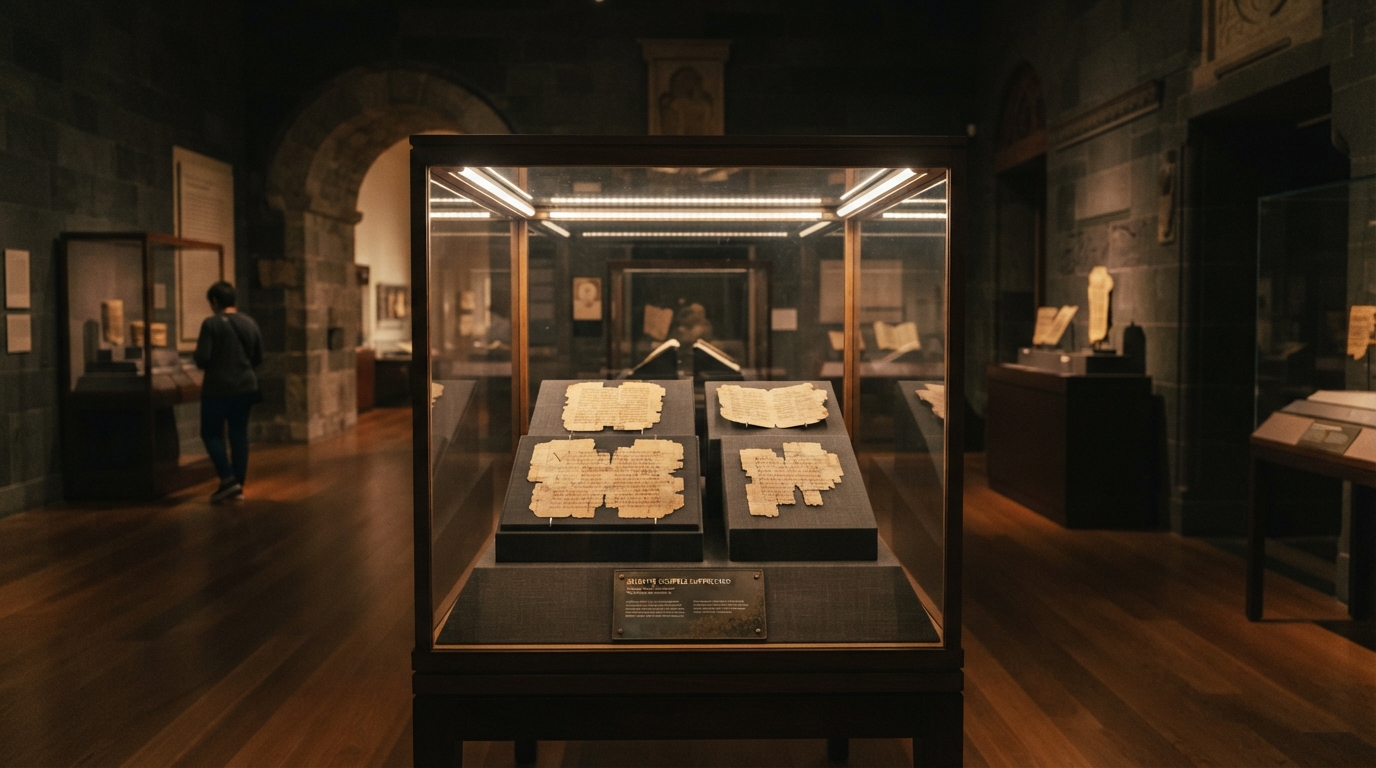
6, How canon formation worked over centuries, debates not a single stamp
To understand gnostic gospels suppressed, you must understand timing. The New Testament canon was not decided in one single moment. It formed gradually.
Early church leaders debated which texts matched their understanding of faith, teaching, and apostolic tradition. Councils and regional leaders played roles. Different communities read and valued different writings for different reasons.
So the excluded gospels were not automatically rejected because they were “old.” They were weighed in a larger struggle over what counted as true doctrine.
That is why our reading stays grounded in broad history. We are not claiming a one-time suppression event. We are describing a long process in which inner-focused texts lost authority compared to the books and teaching lines that supported clearer institutional control.
And if your inner access is the main theme, your faith becomes less dependent on a single approved pathway. That is a problem for any system that needs uniformity.
7, Why the “suppressed” story still matters in 2026, and how inner training fits it
In 2026, more people are asking questions that older religious scripts did not answer well. Many people feel drawn to esoteric interpretations, but they also want clarity about church history and canon formation.
This is where the topic stays alive. The suppressed texts show that inner access was always on the table. They show that some early teachers spoke like God was not far away. They spoke like knowing was an inward act.
And because people are seeking practical spiritual results, they also notice something else. Inner truth changes behavior. It changes emotional patterns. It changes how you respond to rejection. It changes how you hold your attention. It changes how you expect life to unfold.
In our framework, that change is not random. It is tied to the psychological map of consciousness. It is tied to how your inner state becomes your outer experience. It is tied to the bridge of incidents idea, where inner decisions shape the chain of events that follow.
Now we bring it home with a direct instruction. The current reality is not the truth. It is the past hardened into what you now see.
Your job is not to wait for a new outer signal. Your job is to change the inner state that produces the next wave of probability. When you decide on a specific outcome, you are using your imaginative power to collapse the quantum wave of possibilities. That is not a slogan. That is a disciplined inner act.
If you keep living as if the divine must come through a mediator only, you will keep outsourcing your power. We reject that. We focus on the internal bridge.
That is why, when we talk about gnostic gospels suppressed, we also talk about inner training. The kingdom within is not only doctrine. It is practice.
If you want a TrueCosmic-style lens on spiritual interpretation of kingdom-within ideas, we recommend reading The Kingdom of God Is Within You, The Esoteric Meaning of Luke 17:21.
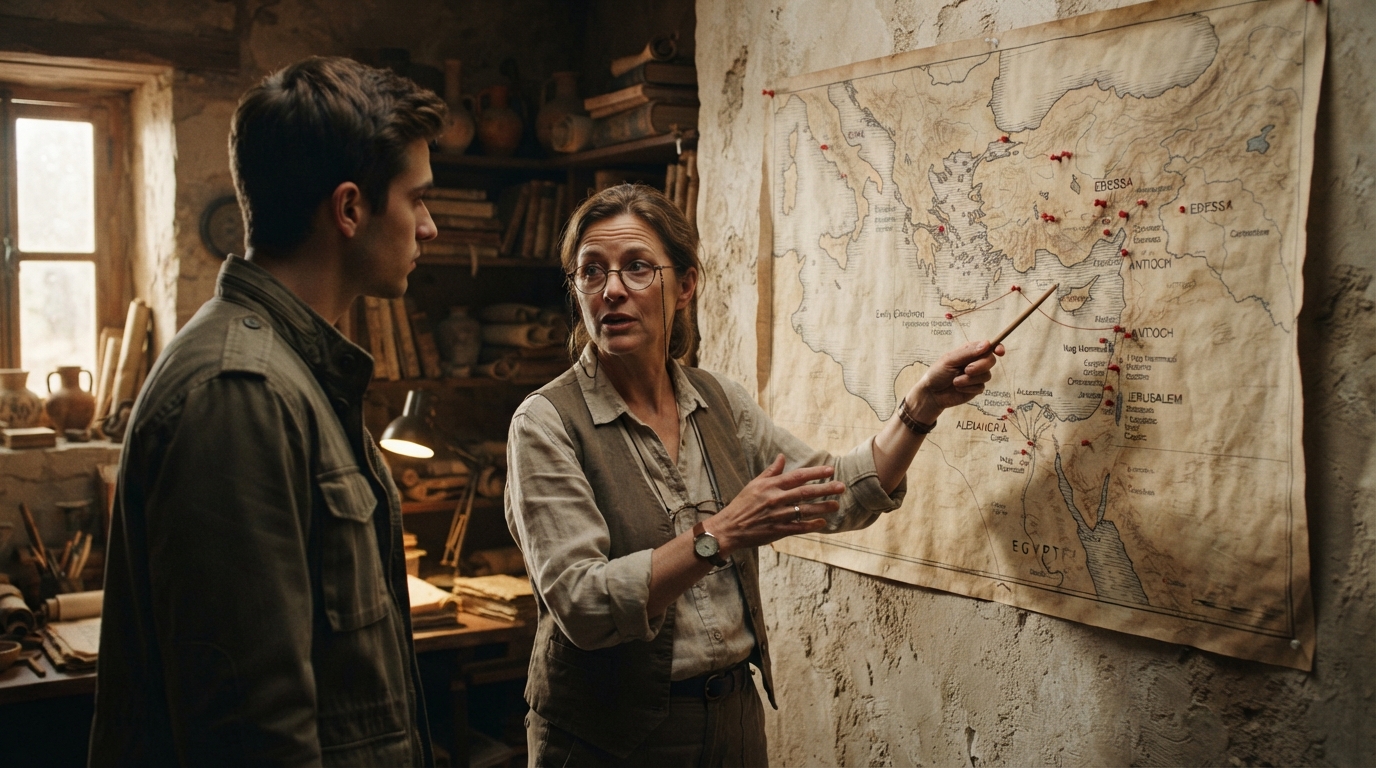
8, If you are worried this turns you away from scripture, here is what we mean
Some people hear “inner divinity” and they fear it is rebellion. It is not.
It is a different way to read. We must strip away the dogmas of mainstream religion to see the esoteric wisdom beneath. That does not mean you throw away scripture. It means you read it as a psychological map of consciousness.
And once you see it as a map, you understand why a message of inner access can feel sharper and more dangerous to institutions. It makes the reader active. It makes the reader accountable. It makes the divine close enough to be real.
If you want our view on church history, fear-based orthodoxy, and what it does to spiritual practice, we cover that theme directly in Is Christ Consciousness Against Christianity, A Clear-Eyed Look at Christ Consciousness vs Christianity.
And if you want more of the inner mechanics side, we connect decision-making, probability, and imagination in Wave-Particle Duality and Decision Making, How Your Imagination Shapes Reality.
Conclusion
So what is the real reason the gnostic gospels suppressed story keeps pulling attention? In TrueCosmic’s reading of this history, it is because texts like the Gospel of Thomas, the Gospel of Philip, and the Gospel of Mary emphasize direct, personal access to the divine within. They highlight self-knowledge as a path to knowing God. They reduce the need for a single intermediary.
Canon formation happened gradually over centuries through debate, so the outcome grew slowly. But the pressure was real. Inner access is harder to control than external mediation. And that is why we believe these kinds of writings lost authority over time.
Today, in 2026, we connect “kingdom within” language to inner imagination, because the inner state is what shapes the bridge of incidents calls into motion. The work is internal, your attention is the lever, and your spiritual maturity shows up when you stop waiting for someone else to give you permission.
Whatever you are facing right now, the solution already lives within you. Do not keep handing your power to fear, to delay, or to a locked gate. Activate the inner state that matches what you truly want, and let your life respond to the new certainty you hold.
Frequently Asked Questions
What does “gnostic gospels suppressed” mean?
“Gnostic gospels suppressed” refers to the outcome where certain gnostic or gnostic-adjacent writings were not included in the final New Testament canon. The idea points to a gradual canon formation process over centuries, where some texts lost authority and access to mainstream use.
What are the gnostic gospels, and which ones are most often mentioned?
In common usage, the “gnostic gospels” are a set of early Christian and related texts that emphasize inner realization. Among the most discussed are the Gospel of Thomas, the Gospel of Philip, and the Gospel of Mary, all connected to the Nag Hammadi discovery.
Why were the Gospel of Thomas, Gospel of Philip, and Gospel of Mary left out of the Bible?
There was not one single event. The New Testament canon formed gradually through debate among early church leaders and councils, and texts were weighed against different criteria for doctrine and authority, in our view these criteria often favored messages that fit easier institutional mediation.
How does the Nag Hammadi discovery in 1945 connect to gnostic gospels suppressed?
The Nag Hammadi library, discovered in Egypt in 1945, preserved a real collection of texts often linked to the “gnostic” label. When modern readers encountered these writings, it clarified what the excluded texts taught, including direct, personal access to the divine within.
What is the Gospel of Thomas?
The Gospel of Thomas is an early sayings collection connected to the Nag Hammadi materials. It is known for inner-focused teaching, and TrueCosmic links its kingdom-within language to inner power, the same power later called imagination, in a way that supports the bridge of incidents.
Does the “kingdom within” idea mean Jesus or scripture supports inner divinity?
In our reading, the “kingdom within” language is best understood as inner realization. For TrueCosmic, the divine is encountered from within through the active force of imagination, which also explains why gnostic gospels suppressed could be difficult for any institution to fully control.

Michael Sutherland is the founder of TrueCosmic and a devoted student and practitioner of Neville Goddard teachings. His path to this work was not academic — it was forged in crisis.
Raised as a devout Jehovah Witness and Baptist, Michael walked away from the church at eighteen and spent the next 25 years in what scripture calls the far country — the prodigal son, wandering. He built a life by the world rules, searching without knowing what he was searching for.
When the biggest crisis of his life arrived, he turned back — not to the church, but to scripture itself. Through Neville Goddard teachings he found what the church had never shown him: that the God of scripture is not an external being to be feared and appeased. God is your own awareness. Your own consciousness. Your own imagination. The I AM within.












0 Comments