
Nag Hammadi: The 1945 Discovery That Reopened the Buried Gospels of Direct Knowing
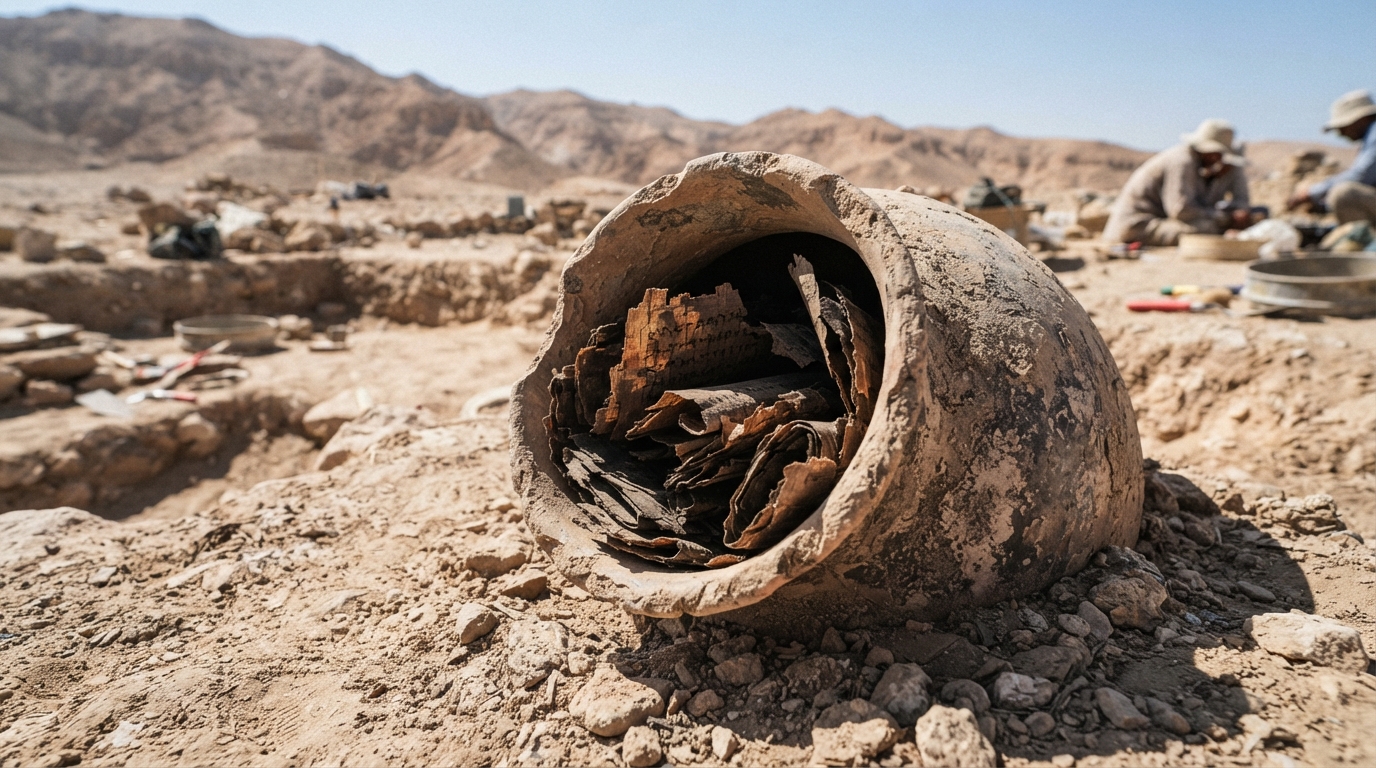
The average annual rainfall across Upper Egypt, the exact region where the Nag Hammadi library was unearthed, is less than 25 millimeters a year. That single fact of climate is the reason a jar of ancient papyrus survived underground for roughly sixteen centuries without disintegrating into dust, and it is why the Nag Hammadi discovery remains one of the most important religious finds of the last hundred years.
What that jar held was not decoration. It was scripture the institutional church had spent centuries trying to erase, and its resurfacing mirrors something we teach constantly here: buried inner truth does not disappear, it waits for the bridge of incidents Neville Goddard manifestation students learn to recognize, the sequence of outer events that finally delivers what was assumed all along.
A farmer’s shovel struck that jar in 1945. What came out of the ground has been rewriting the story of early Christianity ever since, and it is still rewriting it today, in 2026, as more people read these texts not as historical curiosities but as a psychological map of consciousness.
Key Takeaways
- What it is: The Nag Hammadi library is a collection of 13 leather-bound papyrus codices containing over 50 gnostic texts, buried around 400 CE and rediscovered near Nag Hammadi, Egypt.
- When it was found: A local farmer uncovered the sealed jar in December 1945, making this one of the defining archaeological events of the twentieth century.
- Major texts inside: The Gospel of Thomas, the Gospel of Philip, the Gospel of Truth, and the Apocryphon of John are among the most significant works preserved in the find.
- Why it survived: Upper Egypt’s extreme dryness, under 25mm of rainfall a year, kept the papyrus intact for close to 1,600 years underground.
- Why it matters spiritually: These gospels present a Christianity rooted in direct inner experience of consciousness rather than external creed.
- Why it was hidden: Scholars believe monks buried the codices to protect them once church authorities began condemning texts that did not match the emerging orthodox canon, a story we unpack in detail in why these texts were excluded from the Bible.
- Related reading: Our companion piece The Gnostic Gospel of Mary Magdalene explores another suppressed voice from this same tradition, alongside the Gospel of Judas and Gospel of Philip covered elsewhere on this site.
What Is the Nag Hammadi Library?
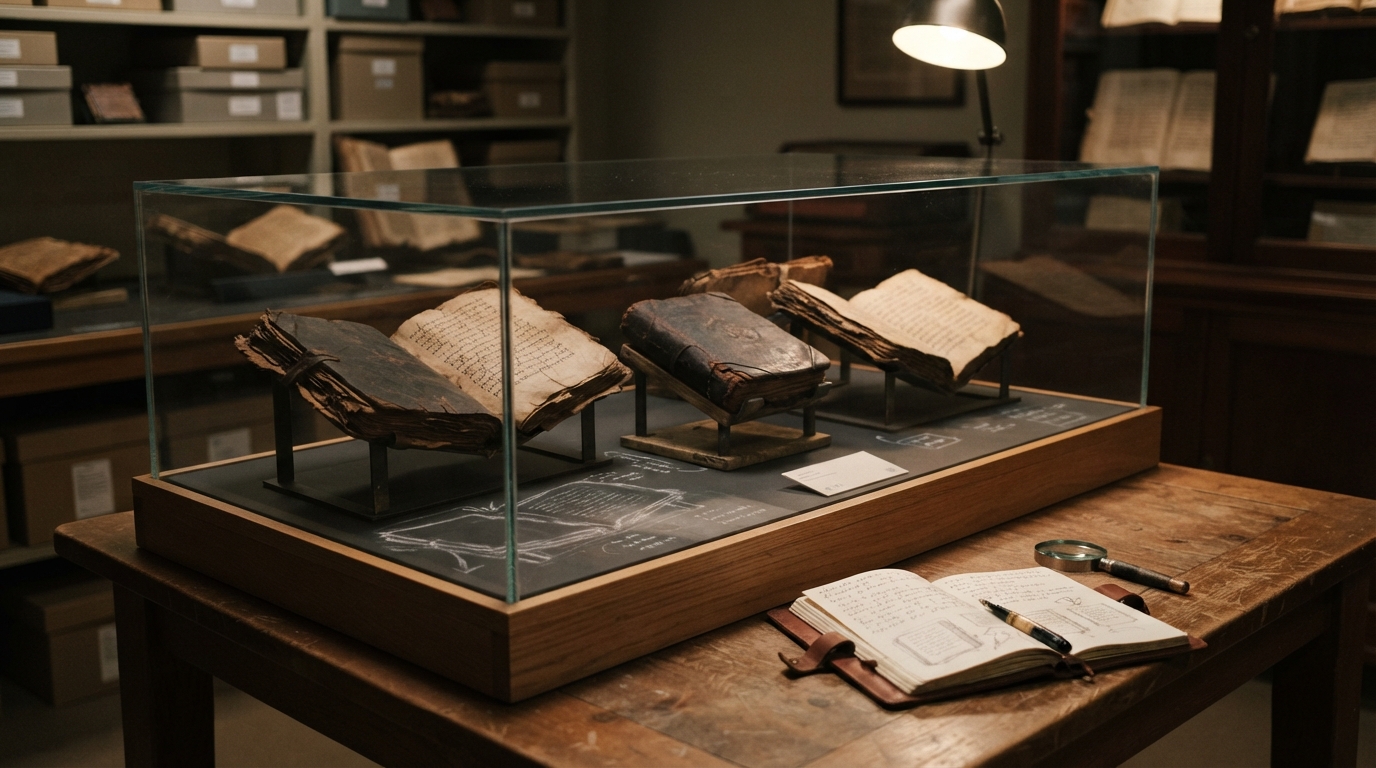
The Nag Hammadi library is a set of 13 papyrus codices, bound in leather and written mostly in Coptic, containing more than 50 individual texts.
These are not fragments. They are nearly complete books, copied by monks sometime in the fourth century from older Greek originals that likely date back to the first and second centuries.
Inside, readers find gospels, secret teachings, poems, and cosmological treatises that never made it into the biblical canon we grew up memorizing in Sunday school.
We are talking about an entire alternate library of early Christian thought, one that treats the divine not as a distant judge but as something discovered from within.
The 1945 Discovery Near Nag Hammadi, Egypt
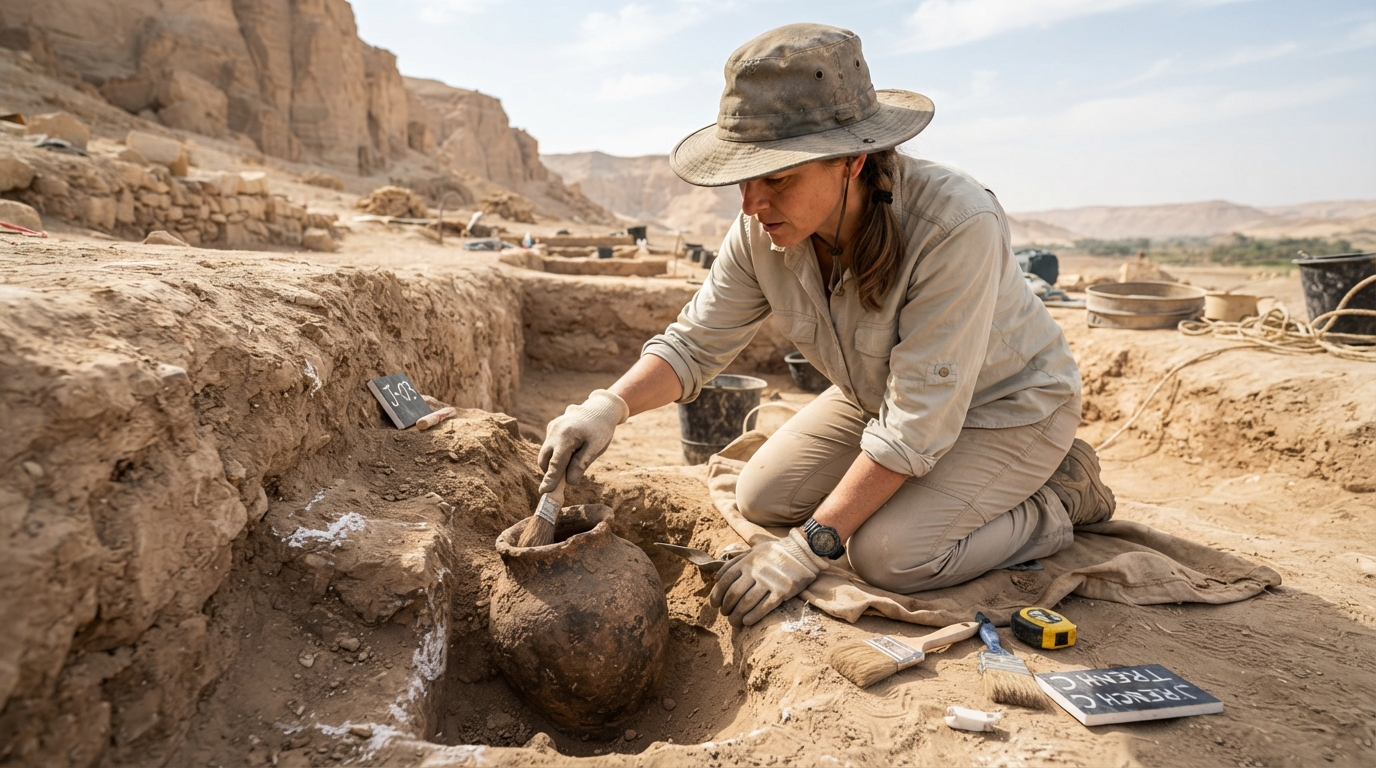
In December 1945, a farmer named Muhammad Ali al-Samman was digging for fertilizer near the town of Nag Hammadi, roughly 500 kilometers south of the Nile delta at Cairo, when his mattock struck a sealed clay jar.
He hesitated to open it, worried it might contain a jinn. He broke it open anyway.
Inside were the 13 leather-bound codices that would eventually reach scholars, dealers, and museums, scattered across a chaotic postwar black market before finally being translated and published decades later.
The isolation of that stretch of Upper Egypt is part of the story. This was not a bustling city corner where every find gets noticed immediately.
It was remote desert land, far from Cairo’s institutions, which is exactly why a jar of condemned scripture could sit untouched for sixteen centuries.
The Major Texts of the Nag Hammadi Library
Not every codex in the jar carries equal weight, but several texts have become essential reading for anyone serious about the roots of gnostic Christianity.
| Text | Core Teaching |
|---|---|
| Gospel of Thomas | A collection of sayings attributed to Jesus, emphasizing that the truth is already inside the seeker. |
| Gospel of Philip | A meditation on union, symbol, and sacrament as inner processes rather than church rituals. |
| Gospel of Truth | A poetic treatise describing ignorance as the true source of suffering, and knowing as the cure. |
| Apocryphon of John | A detailed cosmological account of how consciousness descended into matter and how it returns. |
The Gospel of Judas, uncovered in a separate desert find decades later, and the Gospel of Philip, sealed inside the Nag Hammadi jar itself, are both covered in depth elsewhere on this site as part of this same broader gnostic tradition.
Gospel of Thomas: Direct Knowing Over Doctrine
The Gospel of Thomas contains no narrative. It is a list of sayings, 114 of them, presented as the secret words of Jesus.
One saying puts it directly: “The kingdom of the father is spread out upon the earth, and men do not see it” (Lambdin translation, Nag Hammadi Library). That is not a call to obey an external authority.
It is an instruction to look inward, which is precisely what we mean when we say the Christ is the human imagination, and the God of scripture is your imagination.
Thomas never asks the reader to believe a creed. It asks the reader to recognize something already present, a theme we return to often when reading scripture as a map of consciousness.
Gospel of Philip and the Gospel of Truth: Scripture as Inner Experience
The Gospel of Philip treats sacraments like baptism and anointing as symbols of an internal transformation, not physical rituals with magical properties.
It describes truth as something that comes “naked,” stripped of the dogmas layered on top of it by institutions.
The Gospel of Truth goes further, stating plainly that “ignorance of the Father brought about anguish and terror” (Grant translation, Nag Hammadi Library), calling ignorance itself the root problem of existence, curable only by direct knowing rather than external instruction.
Both texts describe redemption as an event that happens in the mind of the believer, not somewhere far away in the sky or in the future.
We must strip away the dogmas of mainstream religion to see the esoteric wisdom beneath, and these two gospels do exactly that work for us, fourteen centuries in advance.
Apocryphon of John and the Architecture of Consciousness
The Apocryphon of John is the most elaborate cosmological document in the Nag Hammadi library.
It describes a supreme, unknowable source, followed by layers of emanation that eventually produce the material world we mistake for final reality.
This is not far from what we teach when we say the 3D world is a reflection, not a final truth.
The Apocryphon frames matter as crystallised into form from something prior and unseen, a spiritual claim that predates modern physics by nearly two thousand years yet lands on a strikingly similar conclusion.
Why the Nag Hammadi Discovery Matters for Gnostic Christianity
Every text in the Nag Hammadi library shares one radical premise: the divine is not found by obeying an outside authority.
It is found by remembering something buried within.
This is the entire argument of gnostic Christianity, and it is why the Nag Hammadi discovery still matters in 2026, when so many people are quietly abandoning inherited dogma to search for something they can actually verify inside their own experience.
Twenty-five years spent treating God as something outside, something to beg, something to fear, something never truly met, whether raised as a Jehovah’s Witness, a Baptist, or in any tradition built on an external, distant deity, is a common starting point for many who eventually turn to these older gnostic texts.
Reading these gnostic texts does not contradict that earlier journey. It confirms what many already start to sense once they leave organized religion behind: the work is internal, and no priest, council, or committee can hand it to you from the outside.
The Buried Jar as Symbol: The Bridge of Incidents, Neville Goddard, and Manifestation
A jar, sealed and buried in dry sand for 1,600 years, holding truth that the world was not ready to receive.
Then, in a single afternoon in 1945, a farmer’s shovel meets it, and everything changes.
That is not just archaeology. That is the exact pattern behind the bridge of incidents Neville Goddard manifestation students are taught to trust: the outer event that finally delivers an inner assumption that has been quietly persisting all along, unseen, underground, waiting.
The gnostics buried these texts because the world outside was not ready. Centuries later, the world caught up, and the jar cracked open at precisely the moment it needed to.
This is how persistent assumption works inside a single human mind as well. You hold the state. You live in the end.
The 3D world resists at first, exactly like sixteen centuries of dry, silent sand. Then the bridge of incidents arrives, and the wish fulfilled becomes visible to your outer senses.
None of this happens as a single dramatic leap, and it is worth being honest about that. The manifestation myths that promise a new life by tomorrow morning miss the point entirely. The gnostics who sealed that jar did not expect it to surface the next week, and the state you hold today rarely crystallises overnight either. It is closer to the discipline of a concert pianist, who still hits bum notes in rehearsal long after mastering the instrument, refining the same passage night after night until the concert hall finally hears it played without a flaw. Consistency across sixteen centuries of silence, not a single lucky afternoon with a shovel, is what actually delivered this library back into the light.
Decisions act as waves of probability until your focused imagination collapses them into a physical experience, and the Nag Hammadi jar sat as pure probability in the ground until the exact incident occurred to collapse it into discovery.
How the Nag Hammadi Texts Connect to Reality Crafting Today
We do not read the Nag Hammadi library as ancient trivia. We read it as confirmation.
The Gospel of Thomas telling readers the kingdom is already spread across the earth is the same instruction found throughout Neville Goddard’s work on reality crafting and the human imagination: assumption, held with feeling, becomes fact.
Reject the intermittent efforts and the fast food manifestation myths that treat this as a slogan.
The gnostics who buried this jar were not dabbling. They were protecting a serious body of work, and it deserves to be treated with the same seriousness today.

Where to Study the Nag Hammadi Texts Further
For readers who want the full picture of what the Nag Hammadi codices contain and why the institutional church fought so hard to keep them out of the canon, we recommend starting with our companion piece on The Gnostic Gospels.
Our article on The Gnostic Gospel of Mary Magdalene extends this same thread, examining another voice the early church tried to bury alongside the Nag Hammadi jar.
Conclusion
The Nag Hammadi discovery gave the world back a library it was never supposed to lose in the first place.
Thirteen codices, sealed against the dry Upper Egyptian air for roughly 1,600 years, surfaced in 1945 to remind everyone that scripture was once written as an internal map, not an external rulebook.
The Gospel of Thomas, the Gospel of Philip, the Gospel of Truth, and the Apocryphon of John all point to the same buried claim: the divine is not out there.
It is here, waiting the way that jar waited, for the exact bridge of incidents that finally cracks it open.
No matter what you are facing — housed within you lies the solution to every problem and the fulfilment of every desire. The same power that animates and created this entire universe exists in you, at your beck and call. Only you are the operant power. You have to activate it. And when you do, no problem, no circumstance, no situation can stand in its way. Fear not.
Frequently Asked Questions
What is the Nag Hammadi library exactly?
The Nag Hammadi library is a set of 13 leather-bound papyrus codices containing over 50 gnostic Christian texts, buried around 400 CE and rediscovered near Nag Hammadi, Egypt, in 1945.
When and how was the Nag Hammadi discovery made?
A farmer named Muhammad Ali al-Samman found a sealed clay jar while digging for fertilizer in December 1945, and inside were the codices that make up the Nag Hammadi library.
What are the most important texts in the Nag Hammadi codices?
The Gospel of Thomas, the Gospel of Philip, the Gospel of Truth, and the Apocryphon of John are considered the most significant texts found at Nag Hammadi, each emphasizing inner knowing over external doctrine.
Why were the Nag Hammadi texts buried in the first place?
Most scholars believe monks buried the Nag Hammadi codices to protect them once church authorities began condemning gnostic writings that did not match the developing orthodox canon.
Is the Gospel of Thomas part of the Nag Hammadi library?
Yes, the Gospel of Thomas is one of the most studied texts recovered from the Nag Hammadi discovery, and it consists entirely of sayings attributed to Jesus rather than a narrative gospel.
How does Nag Hammadi relate to Neville Goddard’s manifestation teaching?
Many of the Nag Hammadi texts teach that the divine is discovered internally rather than externally, which mirrors the bridge of incidents Neville Goddard manifestation concept where a held inner assumption eventually produces a matching outer event.
Is studying the Nag Hammadi library worth it in 2026?
Yes, the Nag Hammadi library remains essential reading in 2026 for anyone interested in early Christianity, gnostic thought, or the deeper esoteric roots of scripture as a map of consciousness rather than a historical record alone.

Michael Sutherland is the founder of TrueCosmic and a devoted student and practitioner of Neville Goddard teachings. His path to this work was not academic — it was forged in crisis.
Raised as a devout Jehovah Witness and Baptist, Michael walked away from the church at eighteen and spent the next 25 years in what scripture calls the far country — the prodigal son, wandering. He built a life by the world rules, searching without knowing what he was searching for.
When the biggest crisis of his life arrived, he turned back — not to the church, but to scripture itself. Through Neville Goddard teachings he found what the church had never shown him: that the God of scripture is not an external being to be feared and appeased. God is your own awareness. Your own consciousness. Your own imagination. The I AM within.













0 Comments