
Neville Goddard Frank Carter Lectures review: Is This the Best Neville Goddard lecture collection for the Law of Assumption?
About one-third of Amazon shoppers consistently prioritize product reviews and ratings when they buy, and that is exactly why we are doing an honest Neville Goddard Frank Carter Lectures review instead of a hype piece. If you want a best Neville Goddard lecture collection that is closer to the lived, spoken instruction than many polished books, this compiled transcript volume matters.
Affiliate disclosure: This article contains Amazon affiliate links. TrueCosmic may earn a commission from qualifying purchases at no extra cost to the reader.
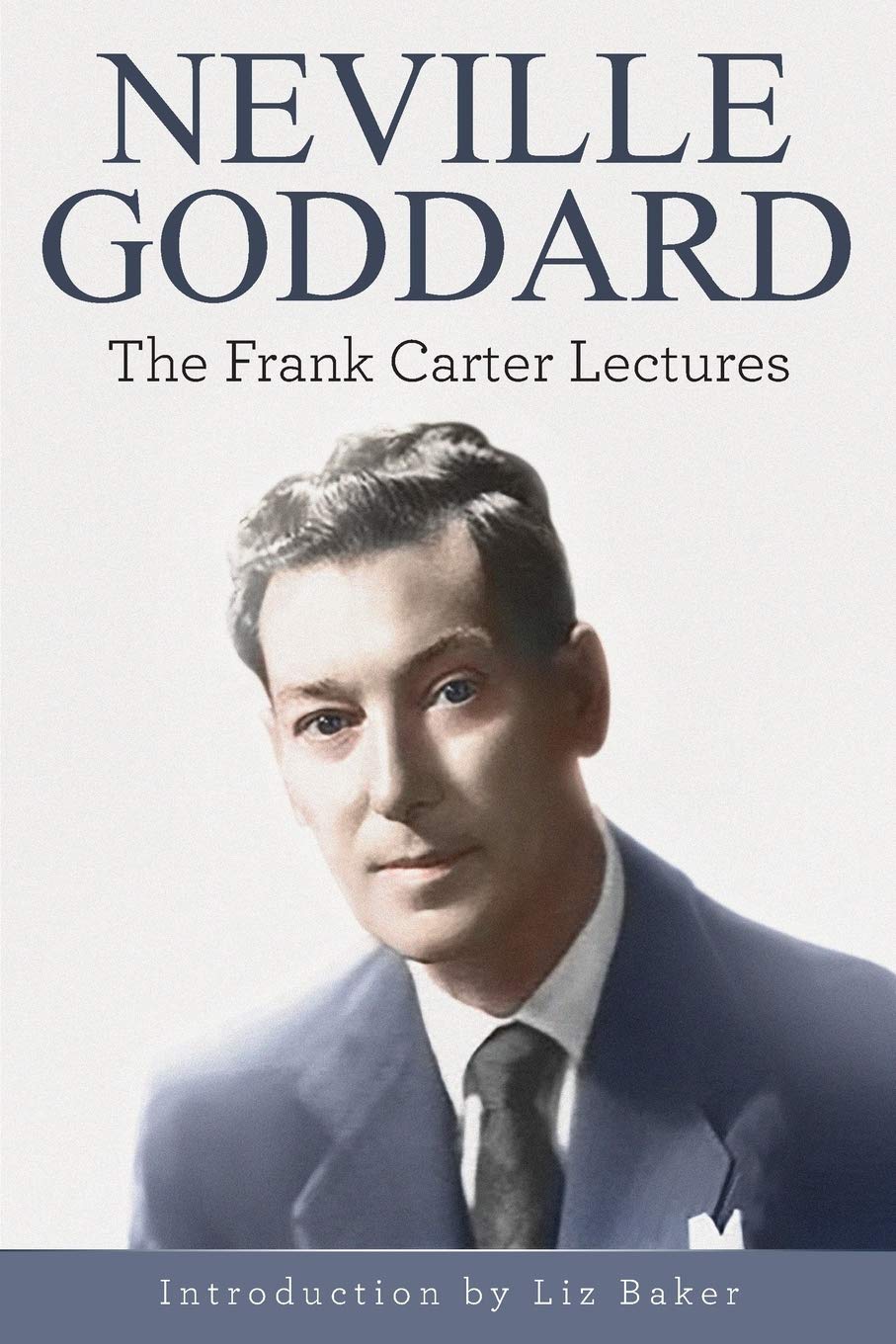
This title is also featured as this month’s pick on the TrueCosmic Library hardback and Kindle recommendations page, where Frank Carter is described as a personal friend who sat with Neville in his final days.
Key Takeaways
| What you’re getting | Why it matters |
|---|---|
| Frank Carter lecture transcripts | A spoken, classroom style that feels different from Neville’s essays. |
| Law of Assumption focus | You keep being brought back to inner state, not tactics. |
| Era-specific examples | You’ll notice older prose and earlier spiritual vocabulary. |
| Good “practice book” | It supports persistent assumption and “living in the end.” |
| Works best with a method | If you already study SATS and decision making, it plugs in cleanly. |
- Beginner-friendly if you’re willing to read slowly and apply one idea at a time.
- Advanced students will value how often it returns to the same core mechanics.
- If you want a complementary foundation, our library page points you to more structured study paths like Neville library resources.
- If you like scriptural framing, pair it with Bible verses on God is your imagination.
- For the “how the decision becomes form” angle, use wave-particle duality and decision making alongside the lectures.
Why this Neville Goddard lecture transcripts volume stands out (and why our Neville Goddard Frank Carter Lectures review is specific)
This particular Neville Goddard Frank Carter Lectures review is about one thing: transcript clarity with lecture cadence. Many Neville compilations are either heavily edited into a book-like format, or they feel like recordings that readers must mentally “translate” back into spoken instruction.
In this compiled transcript collection, the student-teacher dynamic shows through. You are not just reading conclusions, you are hearing the pressure of repetition, the emphasis on inner state, and the “come back to this” nature of the instruction. That matters in 2026 because most people do not fail from lack of information, they fail from lack of sustained practice and focused assumption.
The Christ is the human imagination, and the God of scripture is your imagination. This book keeps returning you to that premise until it becomes instruction, not theory.
What’s actually inside: the kind of lectures, the era feel, and how it differs from Neville’s written books
This volume is a compiled transcript collection of Neville Goddard lectures that were recorded and transcribed by student Frank Carter (edited by Barry J. Peterson, ISBN 1941489370). In practical terms, it reads like classroom teaching, not like Neville’s polished, essay-driven writing.
Kind of lectures: You get recurring themes such as the Law of Assumption, inner correspondence, living in the end, and the psychological reality of decision.
Era and style: The language reflects an older lecture transcription style. Even when it is precise, it can feel less “modern-book smooth” than Neville’s best-known written works like The Power of Awareness or Your Faith Is Your Fortune.
How it differs from the written books: In Neville’s written books, you often get tighter arguments and more curated structure. In Neville Goddard lecture transcripts like this, you experience the rhythm of guidance. It is repeated, it is pressed, it is re-centered. The focus is less on literary polish and more on mental re-patterning.


Who this Neville Goddard Frank Carter lectures book review is best for
If you are asking whether this is a best Neville Goddard lecture collection for you, the answer depends on your relationship with practice.
- Beginners: It can work, but only if you are willing to read slowly and apply one teaching at a time. If you are looking for a simple “steps” manual, you may find the transcript cadence demanding.
- Intermediate students: This is where it really clicks. If you already understand the Law of Assumption at a basic level, the repetition helps you stabilize the inner narrative.
- Advanced students: You will likely appreciate how the lectures keep returning to the same psychological map of consciousness. It is not new content for its own sake, it is reinforcement of what actually governs reality crafting.
In our terms, it is a practice amplifier. It nudges you toward persistent assumption, not intermittent experiments. There is no shortcut version of this.
Standout ideas from the collection worth highlighting (not just “themes”)
Here are the moments that, in a Frank Carter lectures book review, we would highlight as practically useful. These ideas show up in multiple places, but they land especially hard in the transcript style.
1) The 3D world is a reflection, not a final truth
This volume repeatedly treats the outer scene as a reflection, not the final authority. The point is not denial, it is hierarchy. You stop asking the 3D world to validate your inner work, and you start using your inner assumption to govern what you experience.
Whatever contradicting evidence you keep replaying, all of this is old film playing on the screen. The lectures press you to see what is causing the replay.
2) Decisions act as waves of probability until focused imagination collapses them into form
The lecture logic is consistent: decision is not merely a thought, it is a mental action that changes state. When you decide on a specific outcome, you are using your imaginative power to collapse the quantum wave of possibilities.
We connect this directly to decision making and the observer effect framing, which we cover in our wave-particle duality and decision-making article.
3) Living in the end is not visualization theater
Living in the end is presented as a mental condition, not a temporary image you rehearse and then abandon. If you only “do the scene” for a few minutes, then return to fear and doubt, you keep feeding the old map.
The current reality is not the truth. It is the past settled into its current shape. Your inner shift must persist long enough to become your lived reference point.
4) Assumption must be persistent, not reactive
Many lectures come back to persistent assumption, the idea that your imagination is the command center. The transcript style makes this feel less like advice and more like instruction that must be carried into daily life.
I promise you: if you will persist, you will receive your assumption. Not because you “want hard enough,” but because your inner state becomes your habitual perception.

How this connects to TrueCosmic’s practice-based teaching philosophy
We teach that practice is not optional, and this is where a Neville Goddard Frank Carter Lectures review becomes meaningful for our readers.
We do not treat law work as an instant manifestation hobby. We treat it as training of attention and assumption. Like a martial artist, you do not become skilled by reading about a technique once. You become skilled by repeating the same internal actions until they become automatic.
This is exactly why we like transcript-based collections. They keep you returning to the same commands in a spoken tone. It supports what we call “practice over instant manifestation,” because your state needs repetitions, not slogans.
If you want a matching study pathway that stays practical, we also emphasize the inner-state mechanics in our resource on living in the end when you are dealing with 3D feedback. It aligns with how these lectures push you to stop negotiating with outer evidence.
Pros and cons from an honest reader perspective (transcript style reality check)
We are recommending this in a genuine way, but we also need to be clear. A Neville Goddard Frank Carter Lectures review should include the friction, not hide it.
Pros
- Lecture cadence helps retention. The repetition makes it easier to remember the core instruction during daily practice.
- Strong Law of Assumption emphasis. It keeps redirecting you from external “proof hunting” back to inner state.
- Good for persistent study. If you read like a student and apply like a practitioner, it becomes a reliable guide.
- Closer to spoken teaching. It feels more like Neville addressing your mind directly.
Cons
- Older transcription prose. Some sections can read rougher than polished books, and that is not a flaw so much as the format.
- Not the fastest “how-to” read. If you want immediate, modern step-by-step instructions, you may find it slower.
- Requires discipline to apply. This is not a one-session inspiration book. If you want quick comfort, this may frustrate you.
Where it fits alongside other lecture options and Neville’s written works
If you are building a Neville Goddard study shelf in 2026, this best Neville Goddard lecture collection fits as the “spoken reinforcement” layer. It pairs well with written books that lay out core concepts more smoothly.
For example, if you want another core teaching resource from our site that matches the same inner-state discipline, you can explore Neville Goddard The Power Of Awareness as a companion text.
And if you want a more method-focused angle on inner work, you may also look at Neville Goddard At Your Command, then come back to these Neville Goddard lecture transcripts to hear the same principles spoken with lecture intensity.
Our stance stays consistent: we do not separate knowledge from practice. We connect the dots so your assumption becomes your daily perception, not just your reading hobby.

Conclusion: our verdict on the Neville Goddard Frank Carter Lectures review
Our Neville Goddard Frank Carter Lectures review verdict is simple. This compiled transcript collection is a strong choice if you want a best Neville Goddard lecture collection that feels like instruction, not just information. The older transcription style is the main tradeoff, but the repeated, practical emphasis on inner state makes it worth it for serious students of the Law of Assumption.
If you want a book that supports persistent assumption, teaches you to stop treating the 3D world as final truth, and keeps you returning to the same core mechanics, this is one of the more reliable Neville Goddard lecture transcripts to study from.
Final verdict: Worth buying for practice-oriented readers who can handle transcript style, and who want Neville’s spoken emphasis as part of a sustained Law of Assumption routine.
Whatever you are working through right now, the answer already lives inside you, quietly waiting to be claimed. The same power that shaped the world around you is alive within you too, available the moment you turn toward it. You are the one holding that power, so use it. Once you do, nothing in front of you gets the final word. Fear not.
Frequently Asked Questions
Is “Neville Goddard: The Frank Carter Lectures” worth it in 2026?
Yes, if you want a Neville Goddard Frank Carter Lectures review style of learning that emphasizes spoken repetition and inner-state practice. This volume is a solid addition to any Law of Assumption study stack, especially if you prefer Neville Goddard lecture transcripts that feel like classroom teaching.
What makes the Frank Carter lectures book review different from other Neville compilations?
In a Frank Carter lectures book review, the standout factor is the transcript nature, which preserves lecture cadence and re-centering. Many compilations are more polished, but this one keeps more of the “return to the teaching” feel that supports persistent assumption.
Is this book beginner-friendly for the Law of Assumption?
It can be, but only if you read slowly and practice what you learn. The Neville Goddard Frank Carter Lectures review takeaway is that this is not a quick-fix book, it is a disciplined instruction source for inner state.
Will advanced students benefit if they already read Neville’s books like The Power of Awareness?
Often yes, because the best Neville Goddard lecture collection value here is reinforcement through spoken repetition. Advanced students tend to benefit when a text helps them persist rather than when it adds new ideas.
How do Neville Goddard lecture transcripts help compared to written books?
Neville Goddard lecture transcripts can make the teaching feel more direct, more persistent, and easier to internalize as commands for imagination. Written books are cleaner, but lecture transcripts can be better for sustained practice habits.
Is there any drawback to buying the Frank Carter lectures volume on Amazon?
The main drawback is format, because lecture transcript prose can feel older and less polished than a modern book. If your goal is a sleek, lightweight read, the Neville Goddard Frank Carter Lectures review will tell you to expect a more classroom-like style.

Michael Sutherland is the founder of Truecosmic, a global platform dedicated to Neville Goddard’s teachings and the Law of Assumption. Passionate about empowering individuals through conscious creation, Michael blends esoteric wisdom with practical insight to help people transform their lives from within.
Michael Sutherland is the founder of TrueCosmic and a devoted student and practitioner of Neville Goddard teachings. His path to this work was not academic — it was forged in crisis.
Raised as a devout Jehovah Witness and Baptist, Michael walked away from the church at eighteen and spent the next 25 years in what scripture calls the far country — the prodigal son, wandering. He built a life by the world rules, searching without knowing what he was searching for.
When the biggest crisis of his life arrived, he turned back — not to the church, but to scripture itself. Through Neville Goddard teachings he found what the church had never shown him: that the God of scripture is not an external being to be feared and appeased. God is your own awareness. Your own consciousness. Your own imagination. The I AM within.














0 Comments