
The phrase Solomon demons sends most people straight to fiction, video games, or Reddit threads about summoning circles. The real story is quieter, older, and far more interesting than the legend that grew around it.
Key Takeaways
- The biblical Solomon (1 Kings 1-11) is described as wise, wealthy, and the builder of the Temple. He is never described commanding demons.
- The legend of King Solomon and demons developed in three distinct layers, centuries apart, not as one continuous ancient record.
- The first layer is early Jewish tradition, found in the Talmud’s Tractate Gittin, describing a ring used to control the demon Asmodeus.
- The second layer is the Testament of Solomon, a Greek text from roughly the 1st to 5th century CE.
- The third layer is the Lesser Key of Solomon (Lemegeton), a 17th-century grimoire, home of the famous 72 demons of Solomon.
- No serious historical source claims Solomon wrote or possessed the Lesser Key of Solomon. The attribution is a literary convention.
- Our complete guide to esoteric Bible interpretation unpacks Solomon’s wisdom as a state of consciousness, not a set of magical powers.
The Biblical Solomon vs. the Legendary Solomon
Open 1 Kings and read chapters 1 through 11. You will find a king known for wisdom, immense wealth, a fleet of ships, a famous judgment involving two women and a baby, and the construction of the Temple in Jerusalem.
You will not find a single verse describing Solomon binding demons, interrogating spirits, or wielding a magic ring against unseen forces. That is not an oversight. It is because the demon-commanding Solomon is a separate, later figure, built on top of the biblical one by writers working hundreds of years after the events described.
This distinction is the spine of everything that follows. There is the Solomon of scripture: a man whose wisdom is the subject of the text. And there is the Solomon of legend: a magician whose exploits were imagined, elaborated, and eventually catalogued by people who lived long after any historical Solomon would have reigned.
Search interest in solomons demons, solomon and demons, and solomon 72 demons almost always refers to the second Solomon. Understanding how that second Solomon came to exist requires walking through three separate layers of tradition, in order.
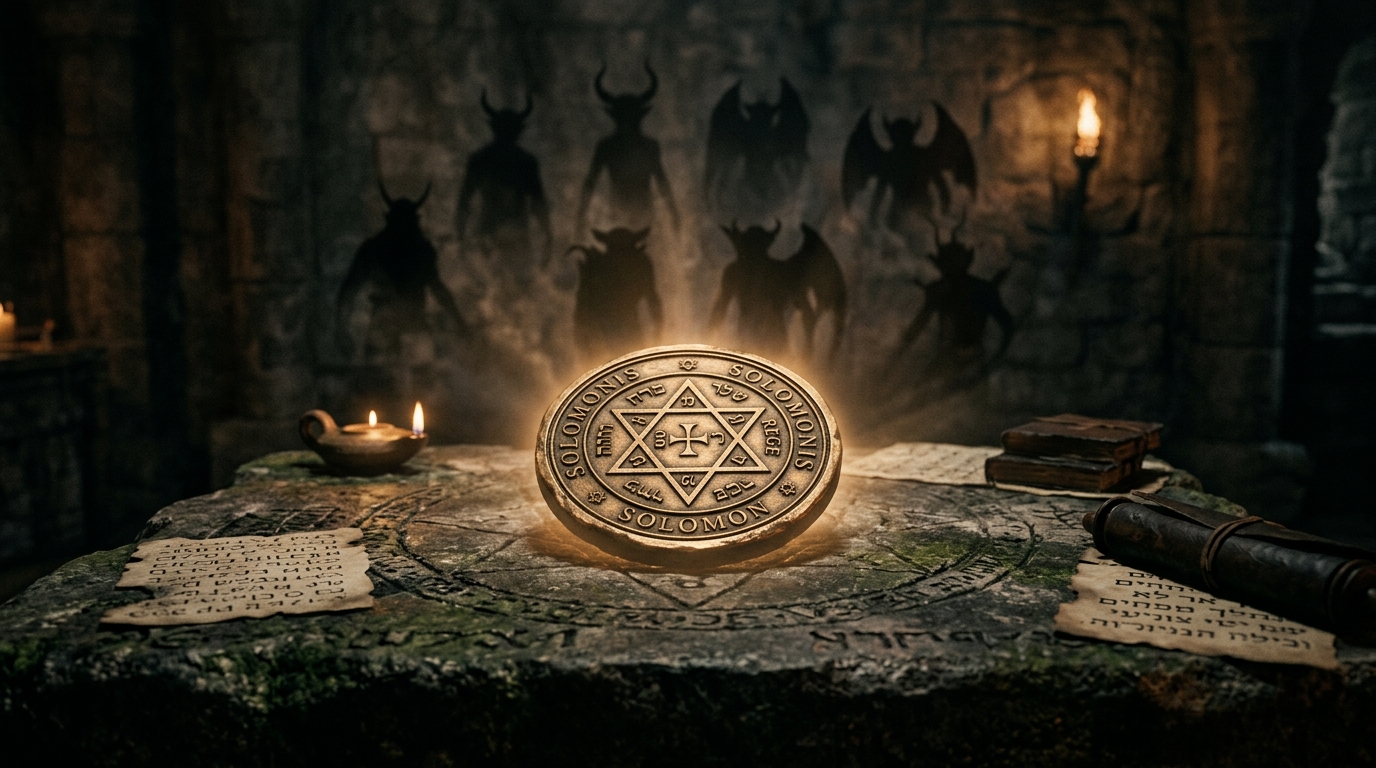
The famous catalogue of 72 spirits comes from a 17th-century grimoire, not ancient scripture.
Layer One: Early Jewish Tradition and the Ring That Controlled Ashmedai
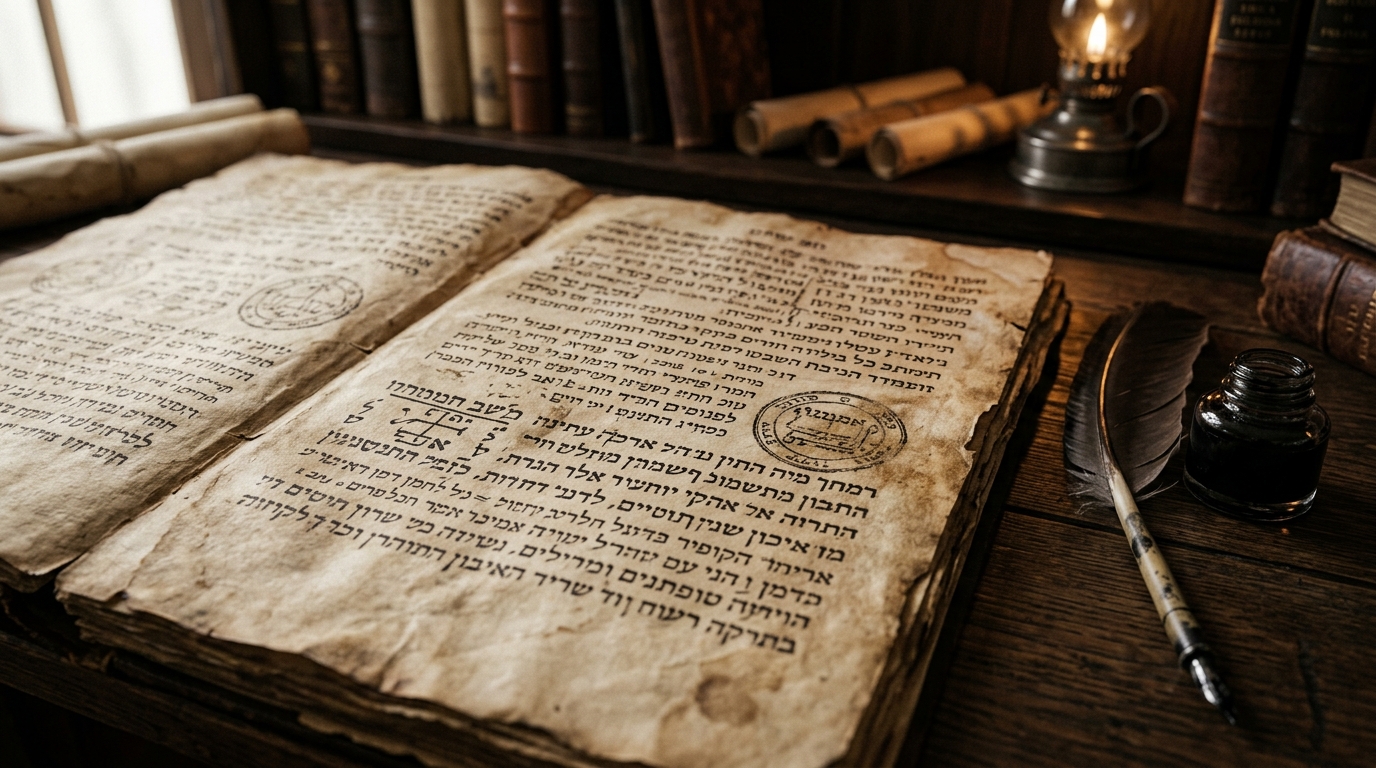
The earliest seed of the King Solomon demons legend appears in Jewish tradition, specifically in the Talmud, Tractate Gittin, along with related early midrashic material.
The story describes Solomon using a ring to gain power over a demon named Asmodeus, sometimes rendered Ashmedai. In the tradition, Solomon needs the demon’s help, or needs to control him, in connection with building the Temple.
This is a folk story layered onto the biblical account. It is not part of 1 Kings itself. It reads as an explanation, a rabbinic elaboration answering a question the biblical text never raised: how exactly did all that construction happen?
Notice what this early layer does not contain. There is no catalogue of demons here, no numbered list, no ranks or titles. There is one ring, one demon, and one construction problem. Everything that comes after builds outward from this small, contained story.
Layer Two: The Testament of Solomon and the First Full Elaboration
The next major development in the legend of solomon and demons is a Greek text called the Testament of Solomon, composed somewhere between the 1st and 5th centuries CE.
The Testament of Solomon is structured as a sequence. Solomon interrogates one spirit after another. Each spirit gives its name, describes the harm it causes, and names the angel or force that defeats it.
This text matters because it is the earliest full-length elaboration of the idea “Solomon commands demons.” The ring from the Talmudic tradition is still present in some versions, but now the story has expanded into an entire interrogation format, a template that later texts would borrow and expand further.
The Testament of Solomon is centuries removed from any historical Solomon, and centuries removed even from the Hebrew Bible’s final compilation. It belongs to the world of late antiquity, a period rich with pseudepigraphal texts attributed to famous biblical figures who never actually wrote them.
Layer Three: The Lesser Key of Solomon and the 72 Demons of Solomon
This is the layer almost everyone searching for solomon 72 demons or lesser key of solomon demons is actually asking about.
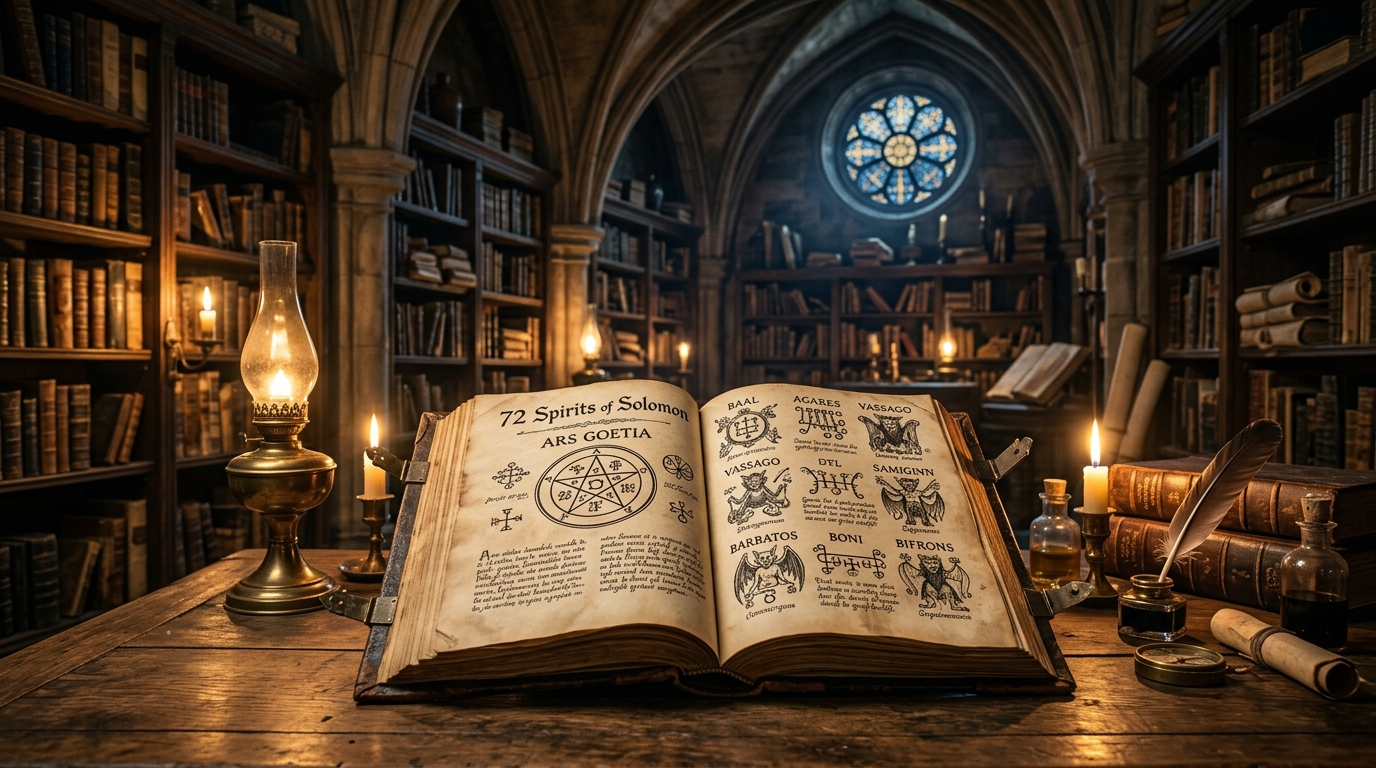
The Lesser Key of Solomon, also called the Lemegeton, was compiled in the mid-17th century. It draws on older manuscript material from the 15th and 16th centuries, but the compilation itself, as a single organized grimoire, is a 17th-century document.
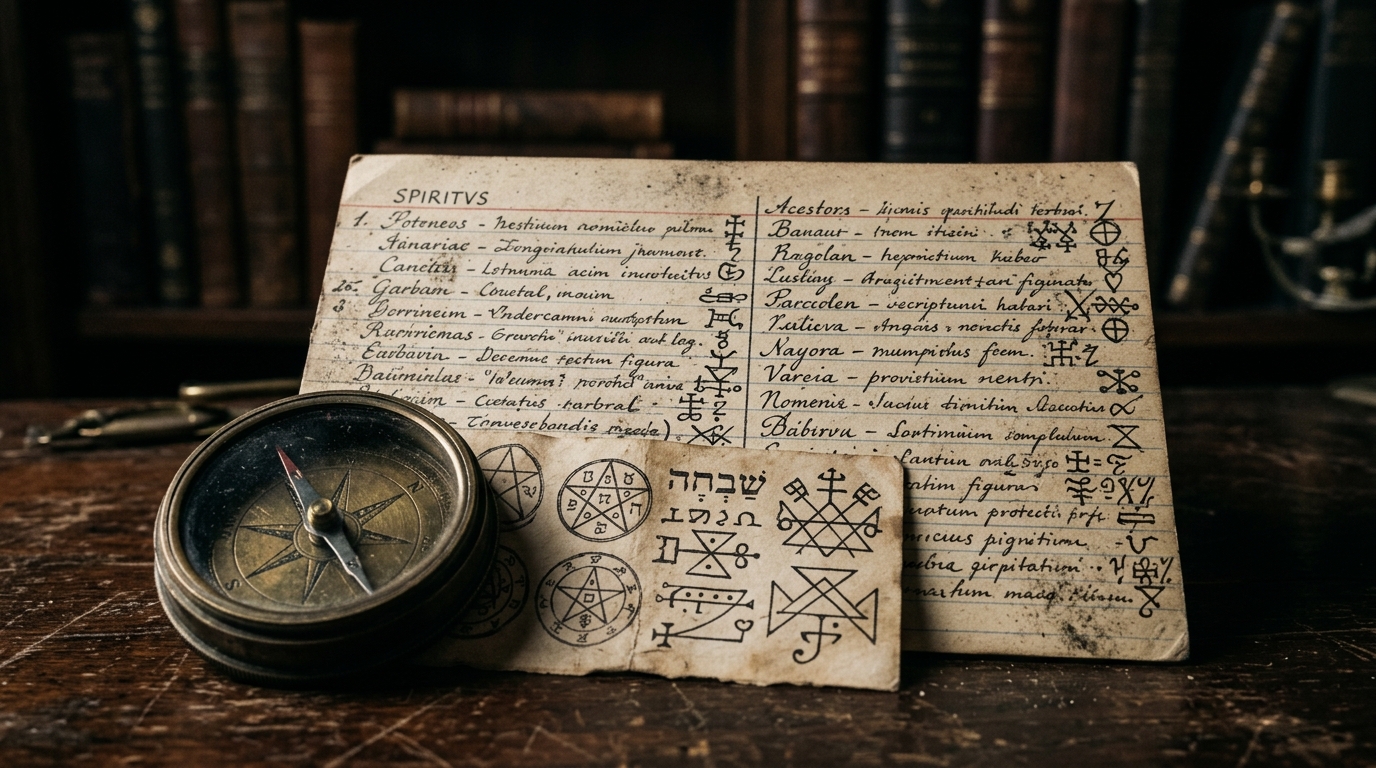
The Lesser Key of Solomon is divided into five sections. The most famous of the five, and the one responsible for nearly all of the modern search interest in this subject, is the Ars Goetia. The Ars Goetia catalogues 72 spirits.
We are stating this plainly and will not go further: we do not list those spirits, their described powers, their ranks, or their sigils here. We do not describe or reproduce any invocation, ritual, or summoning procedure connected to this text, in brief or in full, under any framing. That is a firm line for us, and it will not move.
What we will say is this: a 17th-century compilation is not an ancient text. It is not biblical. It was assembled roughly 2,600 years after the historical period in which a king named Solomon is thought to have reigned, and it borrows his name the way many grimoires of that era borrowed the names of famous, authoritative figures to lend themselves weight.
Why Is King Solomon’s Book of Demons Attributed to Him?
No serious historical source holds that Solomon wrote the Lesser Key of Solomon, possessed it, or even knew of any text resembling it. The attribution is a literary convention, not a historical claim.
This was common practice. Writers in the medieval and early modern periods regularly attached the names of Moses, Enoch, Solomon, and other biblical figures to their own compiled works. A grimoire titled “The Key of Solomon” sounds authoritative. A grimoire titled “A collection of spirit-names assembled by an anonymous 17th-century writer” does not.
So when someone searches king solomon’s book of demons, the honest answer is that no such book exists from Solomon’s own hand or period. What exists is a much later text that used his legendary reputation as a frame.
The legend borrowed Solomon’s name for the same reason a signature borrows credibility: because the name itself was already trusted, centuries before the text that used it was ever written.
King Solomon and Demons Across Different Traditions
The legend did not stay contained to one culture. It spread and took different shapes.
- Jewish folklore preserved the earliest form, centered on the ring and Asmodeus, discussed above.
- Islamic tradition takes this further than folklore alone. The Quran itself, in Sura 38, describes Sulayman (Solomon) having command over jinn, making this the one branch of the legend with direct scriptural grounding in its own tradition.
- Western ceremonial magic picked up the legend through texts like the Testament of Solomon and later the Lesser Key of Solomon, treating Solomon as a symbolic authority figure for magical practice.
- Freemasonry also draws on Solomon, but through an entirely different symbol: the Temple itself, as central architecture and metaphor, distinct from any demon-commanding legend.
Four traditions, four different uses of the same name. None of them are describing the same historical event. Each is doing its own work, in its own century, for its own audience.
King Solomon Magic Ring: Where Does This Detail Come From?
The king solomon magic ring detail traces back to that first layer, the Talmudic Asmodeus story. Later texts, including versions of the Testament of Solomon, kept and expanded the ring detail, often adding a seal or symbol connected to it.
By the time the legend reaches the Lesser Key of Solomon centuries later, the ring has become part of the furniture of the story, repeated and embellished but traceable back to that single early source.
The Wisdom Behind the Legend
Here is what the legend gets right, even while dramatizing something that never happened as literal history. Solomon’s wisdom, as scripture actually describes it in 1 Kings 3, is what gives him authority over his circumstances rather than being ruled by them.
That is the real claim of the text, and it is worth sitting with. The God of scripture is your imagination, and the wisdom Solomon is granted in that chapter is not an external gift bolted onto him from outside. It is a description of awakened awareness, consciousness rightly understood and rightly used.
Later writers took that principle, wisdom as command over circumstance, and dramatized it into literal spirits, literal rings, literal catalogues of 72 named entities. The dramatization is not evidence that any of it happened. It is evidence that the underlying principle was compelling enough to be retold, again and again, in more and more elaborate form.
We treat the Bible as a precise psychological map of consciousness, not a historical record of magical events. Read through that lens, Solomon’s wisdom in 1 Kings 3 was never about ruling demons. It was about the human imagination gaining enough clarity to stop being ruled by the noise of the 3D world around it.
If that framing interests you, our full esoteric Bible interpretation guide works through Solomon, the Temple, and dozens of other figures the same way, as states of consciousness rather than characters in a costume drama. Neville Goddard’s own writing on imagination, collected in works like The Power of Awareness, covers the same ground from a different angle, the same premise that the mind, not the outer scene, holds the real authority.
Why the 72 Demons of Solomon Still Fascinate People Today
Reddit communities discuss it. Novels reference it. Video games build entire boss rosters around the “72 demons” framing. This is not new fascination; it is old fascination wearing new clothing.
What people are actually drawn to, underneath the demon costume, is the idea of mastery over unseen forces. That instinct is not wrong. It is a distorted, dramatized echo of a real and legitimate claim: that consciousness has genuine creative authority over what shows up in a person’s experience.
The mistake is looking for that authority in a 17th-century grimoire’s catalogue of spirits. The legend of solomonic demons makes for compelling fiction precisely because the underlying hunger, for mastery over circumstance, is real. The location of that mastery is simply not where the fiction places it.
Conclusion
The story of Solomon demons is not one ancient record. It is three layers, built centuries apart: a Talmudic ring story, a Greek interrogation text, and a 17th-century grimoire that gave the world its 72 named spirits.
None of these layers describe the biblical Solomon of 1 Kings. All of them borrow his name and his reputation for wisdom to lend weight to material written long after he is thought to have lived.
Read correctly, the entire legend circles back to something scripture already said plainly in 1 Kings 3: wisdom, not spirits, is what gives a person real authority over their circumstances.
No matter what you are facing — housed within you lies the solution to every problem and the fulfilment of every desire. The same power that animates and created this entire universe exists in you, at your beck and call. Only you are the operant power. You have to activate it. And when you do, no problem, no circumstance, no situation can stand in its way. Fear not.
Frequently Asked Questions
Did King Solomon really command demons?
The biblical account in 1 Kings 1-11 describes Solomon as wise and wealthy, the builder of the Temple, but never as commanding demons. The idea of Solomon and demons developed in extra-biblical Jewish tradition, then Greek literature, then later grimoires, centuries after the biblical text was written.
What is the Testament of Solomon?
The Testament of Solomon is a Greek text composed roughly between the 1st and 5th centuries CE. It is structured as Solomon interrogating a series of demons, each one naming itself, describing its harm, and naming the angel that defeats it, making it the earliest full elaboration of the Solomon demons legend.
What is the Lesser Key of Solomon?
The Lesser Key of Solomon, or Lemegeton, is a grimoire compiled in the mid-17th century, drawing on older 15th and 16th century manuscript material. Its most famous section, the Ars Goetia, catalogues the 72 demons of Solomon that most modern searches for this topic are actually referring to.
Is the legend of Solomon and the 72 demons in the Bible?
No. The 72 demons come from the Ars Goetia section of the Lesser Key of Solomon, a 17th-century compilation, not from the Hebrew Bible or the New Testament. The biblical Solomon of 1 Kings never encounters this catalogue.
Why is King Solomon associated with magic?
King Solomon became associated with magic because later writers, across Jewish folklore, Greek pseudepigrapha, and eventually Western ceremonial texts, attached his name to their own material to borrow his reputation for wisdom and authority. This is a literary convention rather than a historical claim about the real Solomon.
Was the Lesser Key of Solomon actually written by Solomon?
No serious historical source holds that Solomon wrote or possessed the Lesser Key of Solomon. It was compiled in the 17th century, roughly 2,600 years after Solomon’s traditional reign, and uses his name the way many grimoires borrowed famous biblical figures’ names for credibility.
Does Islamic tradition also describe Solomon commanding demons?
Yes, and it stands apart from the other layers because it has direct scriptural grounding within its own tradition. The Quran, in Sura 38, describes Sulayman (Solomon) having command over jinn, making Islamic tradition the one branch of this legend rooted in scripture rather than extra-biblical elaboration.

Michael Sutherland is the founder of TrueCosmic and a devoted student and practitioner of Neville Goddard teachings. His path to this work was not academic — it was forged in crisis.
Raised as a devout Jehovah Witness and Baptist, Michael walked away from the church at eighteen and spent the next 25 years in what scripture calls the far country — the prodigal son, wandering. He built a life by the world rules, searching without knowing what he was searching for.
When the biggest crisis of his life arrived, he turned back — not to the church, but to scripture itself. Through Neville Goddard teachings he found what the church had never shown him: that the God of scripture is not an external being to be feared and appeased. God is your own awareness. Your own consciousness. Your own imagination. The I AM within.








0 Comments