

What does the Bible say about witchcraft? It is a question I have a personal stake in, because I have been told many times that what I teach is witchcraft or the occult, most notably by Christians.
I do not dismiss the charge. It deserves an honest answer, and an honest answer means quoting the verses in full, setting them in their context, and then explaining, as carefully as I can, why imagination used for good is not witchcraft at all.
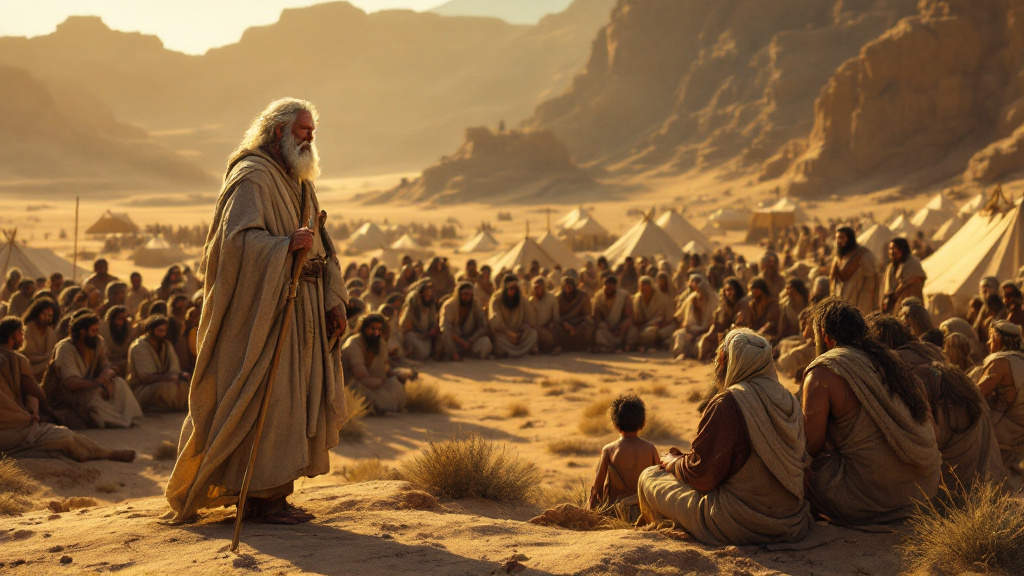
Like every passage of scripture I write about, I read these warnings as carriers of meaning rather than as a legal code from a vanished world. The sages who composed the Bible chose story, law and image on purpose, knowing that an inner truth wrapped in an outer form would travel further than any lecture. Our task is to unwrap that form with care. What we find inside is not a list of ancient taboos but a description of ourselves, and of a power within us that has been asleep, and has too often been feared.
I write for those who still hold the Bible as sacred but have grown weary of the way it was taught to them, or of the hypocrisy they have seen in religious institutions. This is not an attack on anyone’s faith. I honour those who read these verses literally, for that is where we all begin, yet the literal reading is only the first rung: it gives way to the inner reading, as the elder serves the younger.
What does the Bible say about witchcraft? The key verses
The fullest statement comes in Deuteronomy, where Moses lists the practices Israel must not adopt:
“There shall not be found among you any one that maketh his son or his daughter to pass through the fire, or that useth divination, or an observer of times, or an enchanter, or a witch, Or a charmer, or a consulter with familiar spirits, or a wizard, or a necromancer. For all that do these things are an abomination unto the LORD: and because of these abominations the LORD thy God doth drive them out from before thee.” (Deuteronomy 18:10 to 12, KJV)
The harshest line is in Exodus: “Thou shalt not suffer a witch to live.” (Exodus 22:18, KJV)
The New Testament carries the theme forward. Paul lists witchcraft among the works of the flesh:
“Now the works of the flesh are manifest, which are these; Adultery, fornication, uncleanness, lasciviousness, Idolatry, witchcraft, hatred, variance, emulations, wrath, strife, seditions, heresies,” (Galatians 5:19 to 20, KJV)
And in Acts we meet Simon of Samaria, who “beforetime in the same city used sorcery, and bewitched the people of Samaria, giving out that himself was some great one” (Acts 8:9, KJV).
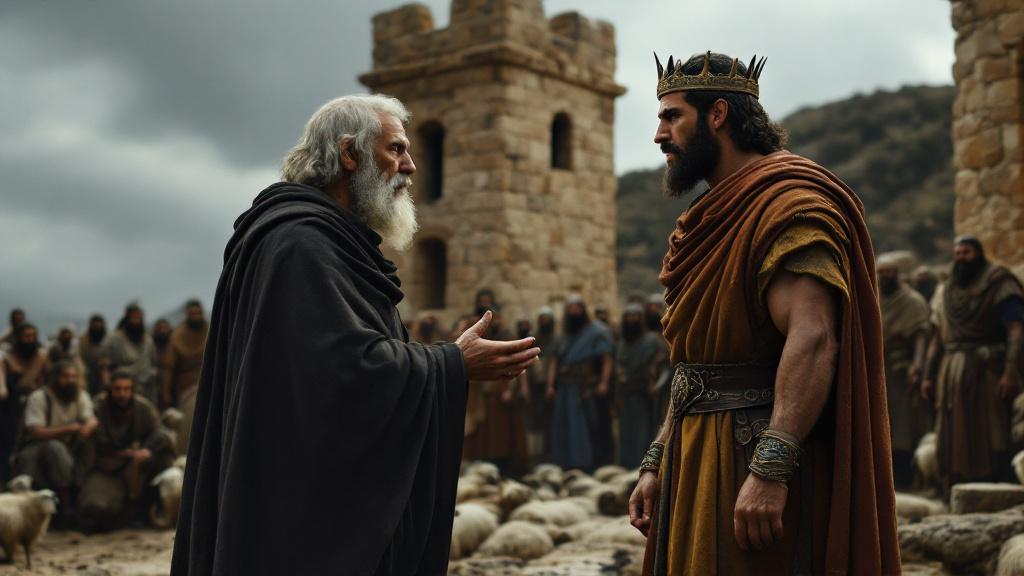
There is one more verse that matters, because it shows the word being used as a measure for something else entirely. When Samuel rebukes Saul, he says: “For rebellion is as the sin of witchcraft, and stubbornness is as iniquity and idolatry.” (1 Samuel 15:23, KJV). Keep that verse in mind. We will come back to it.
The historical context: what was actually forbidden
Read Deuteronomy 18 slowly and a clear pattern appears. Making a child “pass through the fire” is widely understood as child sacrifice. Divination, observing times and enchantment were attempts to read omens or bend events through ritual. A consulter with familiar spirits and a necromancer sought out the dead. The verse is not condemning the human mind. It is condemning a group of practices that all look outward: to spirits, to the dead, to other gods, to charms and rites, for a power that is believed to lie somewhere other than in the one God.
Galatians points in the same direction. The Greek word Paul uses there is pharmakeia, the root of our word pharmacy, and it carried associations with drugs, potions and spells. Notice the company it keeps in his list: idolatry before it, and hatred, strife and wrath after it. Witchcraft, for Paul, belongs with the worship of false images and with the desire to harm.
Then there is the long and painful history of how these verses were used. King James, whose name this translation carries, had himself written a treatise on witchcraft, Daemonologie, in 1597, and in early modern Europe and colonial New England Exodus 22:18 was quoted to justify the trials of accused witches. Neville Goddard was blunt about that inheritance:
“In certain sections of time, if a thought was in conflict with what the churches taught, one could be burned at the stake.” (Neville, in his lecture “Follow Me”)
Why my teaching has been called witchcraft
So when someone tells me that teaching the power of imagination is witchcraft, I hear the echo of that history, and I want to answer it honestly.
Throughout history, so many of mankind’s wars have had their origin in religion, and people have invariably been manipulated by fear, with the threat of eternal damnation and hellfire. Most of the early population was illiterate and could not read, and the few who could used this as a means to control the masses. We no longer have that excuse. As truth seekers we can question everything, and it would be ignorance not to. I chose to do that, and this is what I discovered. I have never been freer.
My quarrel is with the use of fear by institutions, never with the sincere believer sitting in the pew. Many Christians who raise this concern do so sincerely, and that sincerity deserves respect. But fear is a poor teacher, and it has been used for centuries to keep people from the very power scripture describes.
Neville knew that this charge comes to anyone who speaks of that power:
“Every man who awakens to his infinite power is considered mad. His words are considered those of the devil, for his experiences do not conform to what men think Christ is.” (Neville, in his lecture “Follow Me”)
He even recorded the case of a woman who tested his teaching, imagined receiving a gift, and then received exactly that:
“When she received the handkerchief she had imagined, she interpreted it to be some sort of Black Magic and didn’t want to know any more about this teaching.” (Neville, in “Imagination Creates Reality”)
That is the reflex at work. When imagination produces a result, the conditioned mind reaches for the most frightening explanation available.
Is manifesting witchcraft? The distinction that matters
Here is the heart of it. Every practice the Bible condemns as witchcraft rests on the belief that there is another power, outside you and outside God, that can be summoned, bargained with or bent to your will: a spirit, a dead ancestor, a charm, a ritual. Neville taught the very opposite. There is only one power, and it is God, and God is your own I AM, your own imagination. He put the point about its use with great clarity:
“The light that illuminates the room, it could electrocute me if I misuse it, and yet it serves to illuminate the room. I can put it to a thousand purposes, or I could misuse it. That is the same thing that we do with our imagination. The human imagination is God.” (Neville, in his lecture “The Potter’s House”)
And his instruction about how to use it was just as plain: “Now, do not misuse this power, but use it only in love.” (Neville, in his lecture “The Hidden Cause”)
The mystic Manly P. Hall, in The Secret Teachings of All Ages (1928), made the same distinction from the other side. Writing of sorcery, he observed: “Black magic is not a fundamental art; it is the misuse of an art.” He contrasted the magician’s apparatus with “the living of that virtuous life which, without the assistance of complicated rituals or submundane creatures, unfailingly brings man to the state of true individual completion.”
So the line is not drawn between imagination and no imagination. Everyone imagines, all day long. The line is drawn between the one power used in love and attempts to borrow some other power in order to harm or control. Now return to Samuel’s words: “rebellion is as the sin of witchcraft.” In TrueCosmic’s reading, the deepest witchcraft is the turning of attention away from the one God within to any power without, and the deepest rebellion is to believe yourself separate from the source of your own life.
Scripture itself tells you what to do with your mind instead: “whatsoever things are true, whatsoever things are honest, whatsoever things are just, whatsoever things are pure, whatsoever things are lovely, whatsoever things are of good report; if there be any virtue, and if there be any praise, think on these things.” (Philippians 4:8, KJV). That is not a spell. It is the oldest discipline of the imagination there is. I explore the wider question in is manifesting a sin in Christianity.
How to use your imagination for good
This is not a ritual and it requires nothing but your own attention. No objects, no invocations, no spirits, nothing outside the awareness you already are.
- Begin from the one power. Before you imagine anything, rest for a few moments in the simple awareness I AM. Remind yourself that there is no other source to appeal to.
- Test the desire by love. Ask whether what you want would harm anyone or override anyone’s will. If it would, let it go. Use the measure of Philippians 4:8: true, honest, just, pure, lovely.
- Imagine for, never against. If another person is part of your desire, see them well, blessed and glad. Never picture anyone diminished.
- Decide the end, not the route. The biggest mistake is micromanaging how the result arrives. Fix the outcome clearly and leave the means entirely open. For the foundations of this, read what manifesting really is.
- Enter the scene each night. In the drowsy state just before sleep, enter one short scene that implies your wish fulfilled, and feel it as done. Then let sleep take you.
Remember that this is a practice, not a trick. Think of a long-distance cyclist. No one rides across a country on enthusiasm alone. The cyclist trains in the rain as well as the sunshine, learns to pace the climbs, accepts the days when the legs are heavy, and gets back on the saddle the next morning regardless. What carries them over the final hill is not one heroic effort but thousands of patient turns of the pedals. The Law asks the same steady devotion: the nightly return, whether or not you feel inspired.
The lamp taken out from under the bushel
The Jesus of scripture gave an image that answers the fear behind the charge of witchcraft:
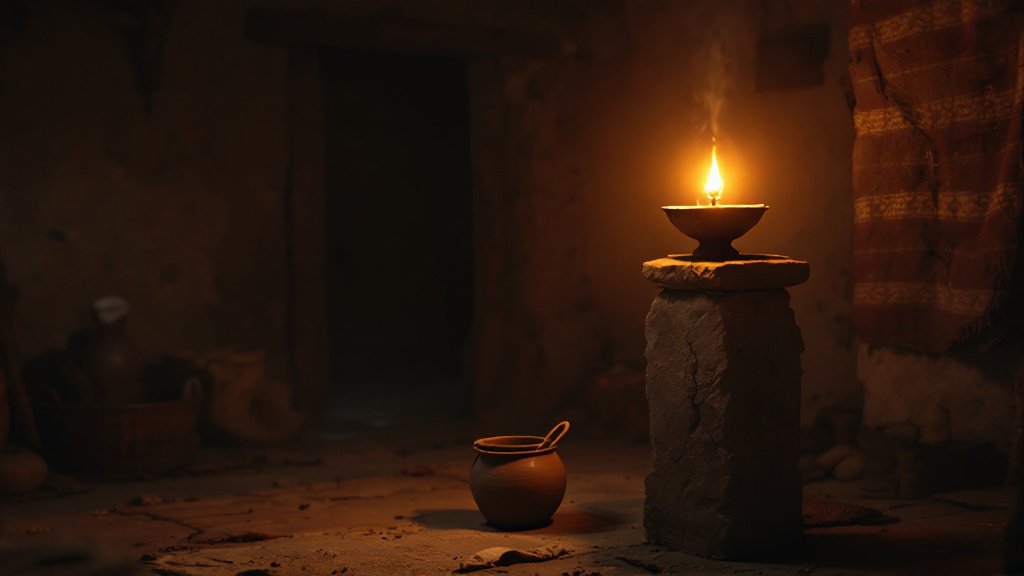
“Neither do men light a candle, and put it under a bushel, but on a candlestick; and it giveth light unto all that are in the house.” (Matthew 5:15, KJV)
For centuries the power of imagination has been kept under a bushel: covered by fear, hidden by threat, called dangerous by those who preferred that it stay out of sight. Unwrapping these verses is the act of lifting the bushel away. The lamp was always lit. It is the same light that made the world, and it was never meant to be hidden. Set it on the candlestick, use it in love, and it gives light to everyone in the house.
Frequently Asked Questions
Is manifesting a form of witchcraft?
Not as the Bible describes witchcraft. The practices condemned in Deuteronomy 18 all seek power from spirits, the dead or rituals outside the one God. Manifesting as Neville taught it appeals to no other power at all; it is the conscious use of your own imagination, which he called God, and he insisted it be used only in love.
What does Deuteronomy 18:10 to 12 forbid?
It forbids making a son or daughter “pass through the fire”, divination, observing times, enchantment, witchcraft, charming, consulting familiar spirits, wizardry and necromancy. The common thread is seeking hidden power or knowledge through rites, omens, spirits or the dead. It is a warning against looking outside the one God.
What is the witchcraft mentioned in Galatians 5:20?
The Greek word is pharmakeia, which carried associations with drugs, potions and spells. Paul places it between idolatry and hatred in his list of the works of the flesh. In context it describes the misuse of power in the service of false gods and harm.
Am I going against scripture if I look for the inner meaning behind these warnings?
Seeking the inner meaning of scripture is ancient; Origen, one of the great teachers of the early church, taught that scripture has a spiritual sense beneath the letter. The literal reading is where we begin, but it gives way to the inner reading. Realising that the true warning concerns where you place your faith, and not your imagination itself, is what sets transformation in motion.
Is the Law of Assumption occult?
The word occult simply means hidden, and Neville taught nothing in secret: he lectured openly for decades. The Law of Assumption involves no spirits, charms or ceremonies, only your own awareness assuming the state of the wish fulfilled. It is the opposite of sorcery, because it recognises one power alone.
Conclusion: what the Bible says about witchcraft, and what it does not
What does the Bible say about witchcraft? It says, clearly and repeatedly, do not seek power from spirits, the dead or other gods, and do not use power to harm. It does not say that your imagination is evil. Used in love, imagination is the very light scripture tells you not to hide.
Whatever stands against you now, the answer to it does not have to be summoned from anywhere. It already lives in you, one with the power that brought the universe into being, and it waits on no one but you. You are the operant power, and the power does nothing until you put it to work. But once you do, no curse, no threat and no circumstance can withstand it. Fear not.

Michael Sutherland is the founder of Truecosmic, a global platform dedicated to Neville Goddard’s teachings and the Law of Assumption. Passionate about empowering individuals through conscious creation, Michael blends esoteric wisdom with practical insight to help people transform their lives from within.
Enter your email and get instant FREE access to your report.
No credit card required. 🔒 Your details are secure. You can unsubscribe at any time.







0 Comments