
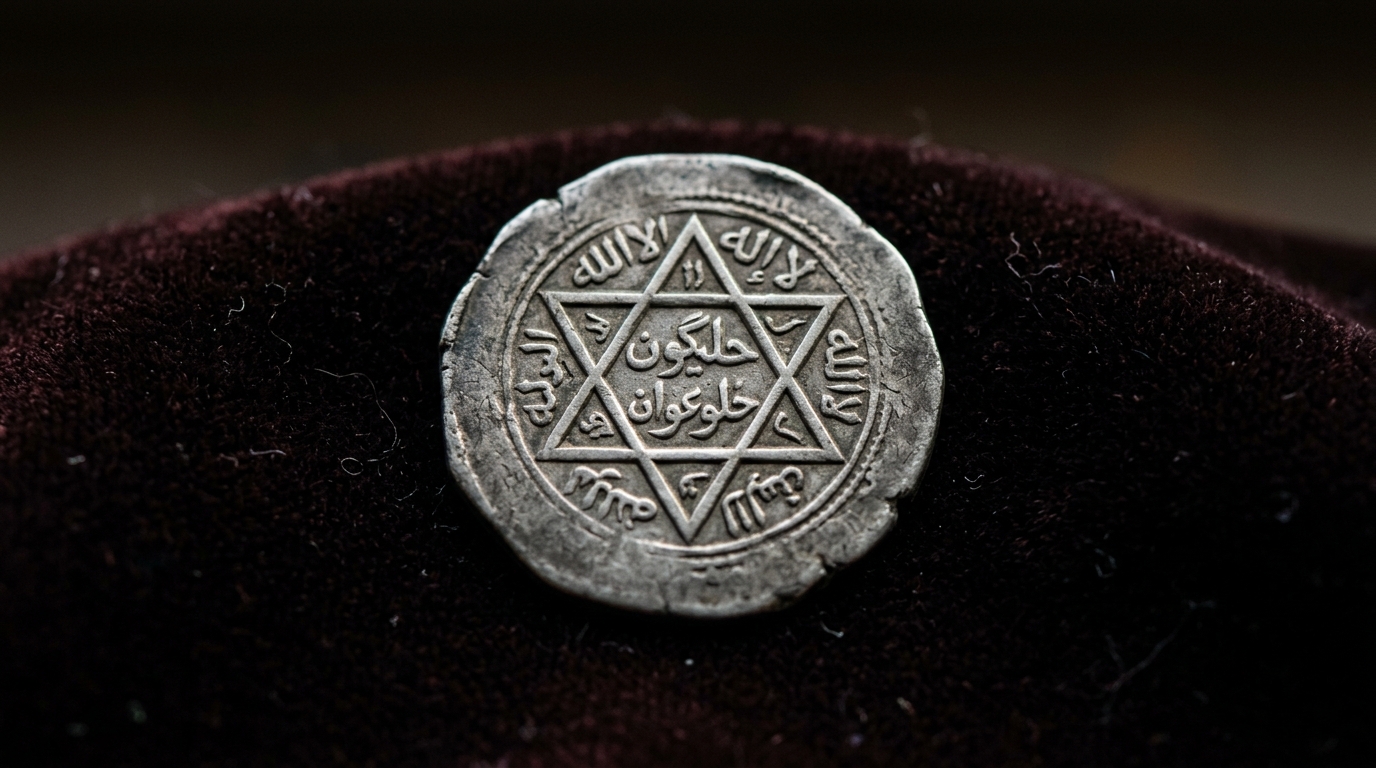
Did you know that a silver dirham minted in the Mongol Empire back in 1258 already carried a six-pointed star, the same design most people now call the Seal of Solomon? That coin was struck centuries before the medieval grimoire tradition even existed, and it tells you something important right away: the Seal of Solomon is older, stranger, and more widely shared across cultures than most people realize. We are going to walk through what this symbol actually is, where the legend really came from, and why the honest answer to “is it in the Bible” is not what most websites tell you.
Key Takeaways
- The Seal of Solomon is not named or described in the Bible. The biblical Solomon of 1 Kings 1-11 is wise, wealthy, and a temple builder. No ring, no seal, no magic symbol appears in that account.
- The legend of a ring giving Solomon power over spirits developed later, in sources like the Talmud’s Tractate Gittin and the Greek Testament of Solomon.
- The symbol appears in two forms: the hexagram (six points, two overlapping triangles) and the pentagram (five points), both historically called by this name.
- The hexagram form is the direct ancestor of the Star of David (Magen David). For centuries the two names described the same symbol.
- The symbol shows up honestly across Jewish amulet tradition, Islamic art and architecture, and Western ceremonial occultism, each with its own use and meaning.
- Its darker “demonic” reputation traces mainly to the medieval grimoire tradition, not to its earlier and more common use as a mark of protection and wisdom.
- For a deeper look at how scripture works as a psychological map rather than a plain historical record, see our piece on Esoteric Bible Interpretation.
What Is the Seal of Solomon?
So what is the Seal of Solomon, in plain terms?
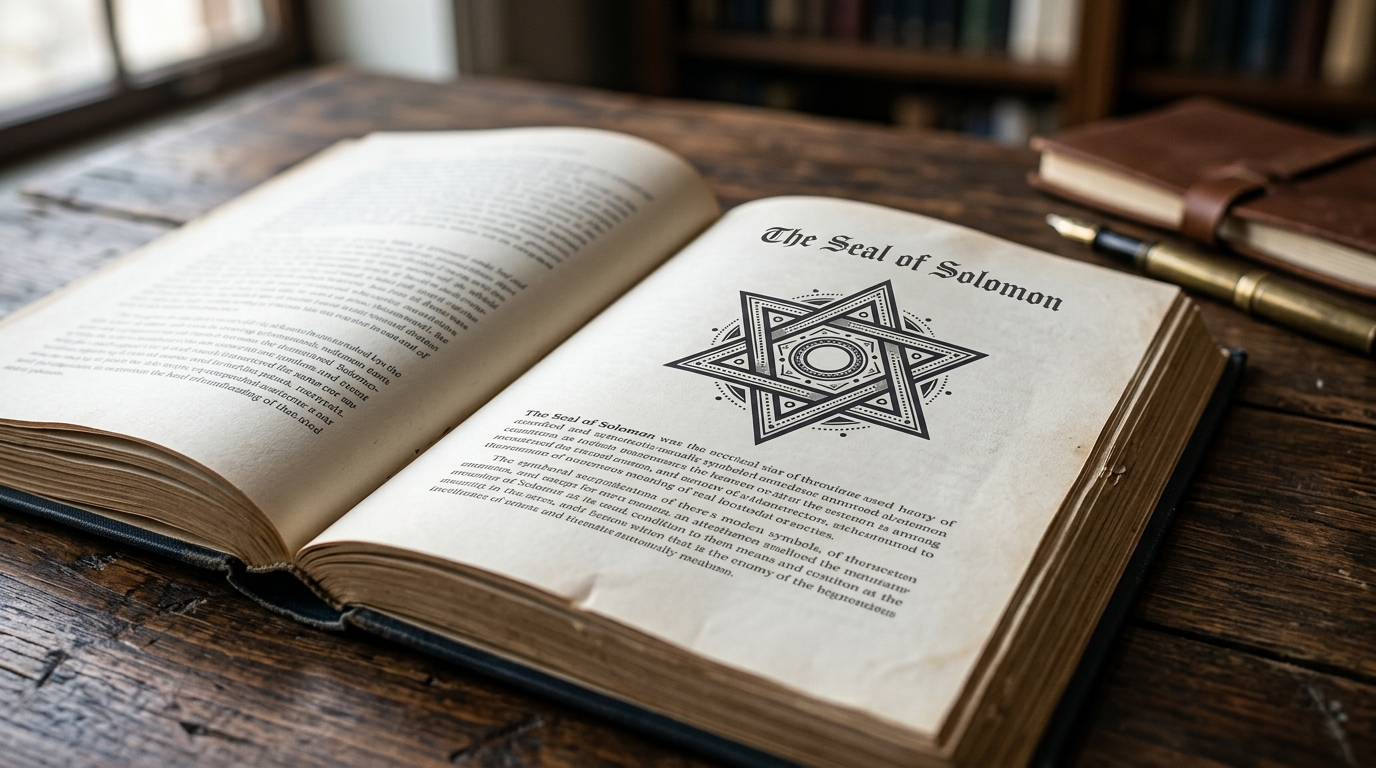
It is a symbol, traditionally shown as a six-pointed star made of two overlapping triangles, though a five-pointed pentagram version also carries the same name in older sources. It is traditionally described as the design engraved on a signet ring belonging to King Solomon.
According to the legend, this ring gave Solomon command over demons, spirits, and even animals. That is the popular story. It is not, however, a story the Bible itself tells.
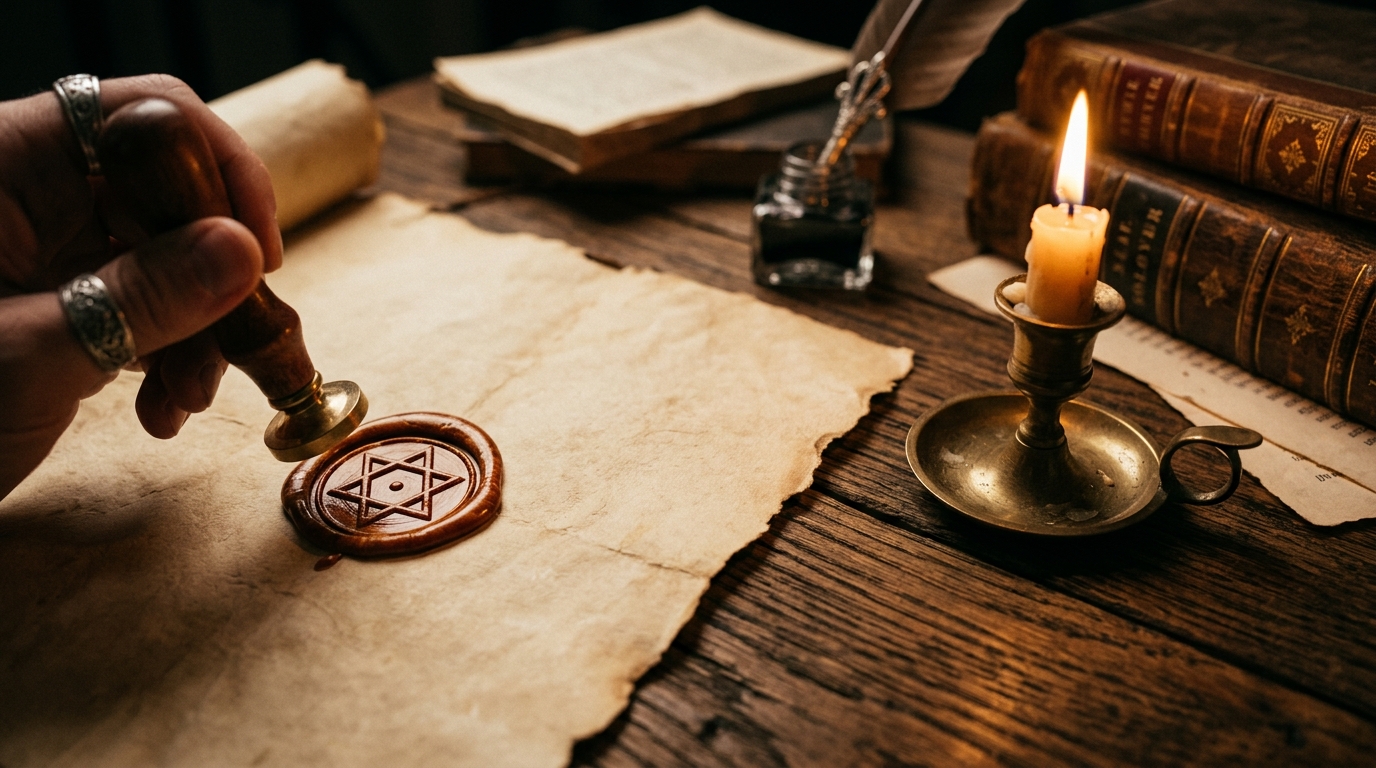
The name “seal” here does not mean an official government stamp the way we’d think of one today. In the ancient world, a seal was a signet, something pressed into wax or clay to mark ownership and authority. Kings used them constantly. The idea that Solomon’s seal carried supernatural authority, rather than merely royal authority, is where the legend takes its real turn.

Is the Seal of Solomon in the Bible? The Honest Answer
This is the question most people actually want answered, so we will answer it directly instead of dancing around it.
No. The Seal of Solomon is not described in the Bible.
The seal of Solomon in the Bible simply does not exist as a described object. Read through 1 Kings 1 through 11 and you will find Solomon asking God for wisdom, Solomon building the Jerusalem Temple, Solomon’s enormous wealth, and Solomon’s many wives and foreign alliances. You will not find a ring. You will not find a hexagram. You will not find a demon-binding seal of any kind.
We say this plainly because the seal of solomon bible connection is one of the most searched, and most misunderstood, questions about this symbol. Websites selling talismans often blur this line on purpose, letting readers assume the ring is scriptural when it is not. We would rather tell you the truth: the seal of Solomon in the Bible is a later legend layered onto a biblical figure, not a detail lifted from the biblical text.
That doesn’t make the legend meaningless. It just means we need to trace where it actually came from, which is exactly what the next section does.
Where the Legend Really Comes From: Talmud, Testament of Solomon, and Beyond
If the ring isn’t in the Bible, where did it come from?
The earliest layers of the legend show up in Jewish rabbinic literature. The Talmud, specifically Tractate Gittin, tells a story about Solomon and Ashmedai, a king of demons, and it is here that the idea of Solomon exercising control over spiritual beings starts to take real shape.
The next major development is the Testament of Solomon, a Greek text composed somewhere between the 1st and 5th century CE. This work goes much further than the Talmud. It describes Solomon receiving a ring from the archangel Michael, a ring engraved with a symbol that let him command demons to help build the Temple.
These two sources, the Talmud and the Testament of Solomon, predate the medieval grimoire tradition (the world of the Lesser Key of Solomon and its 72 named spirits) by many centuries. That later grimoire material builds on this earlier foundation rather than inventing it from nothing.
The pattern is worth sitting with: a biblical king known for wisdom becomes, over hundreds of years of retelling, a king known for supernatural control. The Bible gave the world a wise king. Tradition gave the world a magician.
We cover that later grimoire material, including the full 72 spirits attributed to Solomon’s command, in a separate piece dedicated to that history once it’s published. For now, what matters is understanding that the legend has real, traceable roots, even if those roots are extra-biblical.
Seal of Solomon Symbol: Hexagram or Pentagram?
People often assume the Seal of Solomon symbol has always looked one specific way. It hasn’t.
Historically, two distinct shapes have both carried the name:
- The hexagram: two overlapping triangles forming a six-pointed star. One triangle points up, one points down. This is the form most commonly meant today when people search for a picture of Solomon seal designs.
- The pentagram: a five-pointed star drawn without lifting the pen, historically used in magical texts and also called a Seal of Solomon in several medieval sources.
Both shapes appear on amulets, manuscripts, and ceremonial objects dating back centuries. Neither one is “more correct” than the other historically speaking. What changed over time is which shape stuck in popular imagination, and the hexagram is the one that won out in modern usage.
If you look up any picture of Solomon seal online today, you will almost always see the hexagram version, two triangles woven together. That’s largely because this same shape went on to become one of the most recognized symbols in the world for an entirely different reason, which brings us to the comparison everyone asks about.
Seal of Solomon vs Star of David: What’s the Real Difference?
The seal of solomon vs star of david question comes up constantly, and the honest answer surprises people.
For most of medieval history, “Seal of Solomon” and “Shield of David” (Magen David) referred to the exact same hexagram shape. Medieval Jewish, Christian, and Islamic writers used both names somewhat interchangeably. The symbol itself did not change. What changed was which name got attached to it, and in which context.
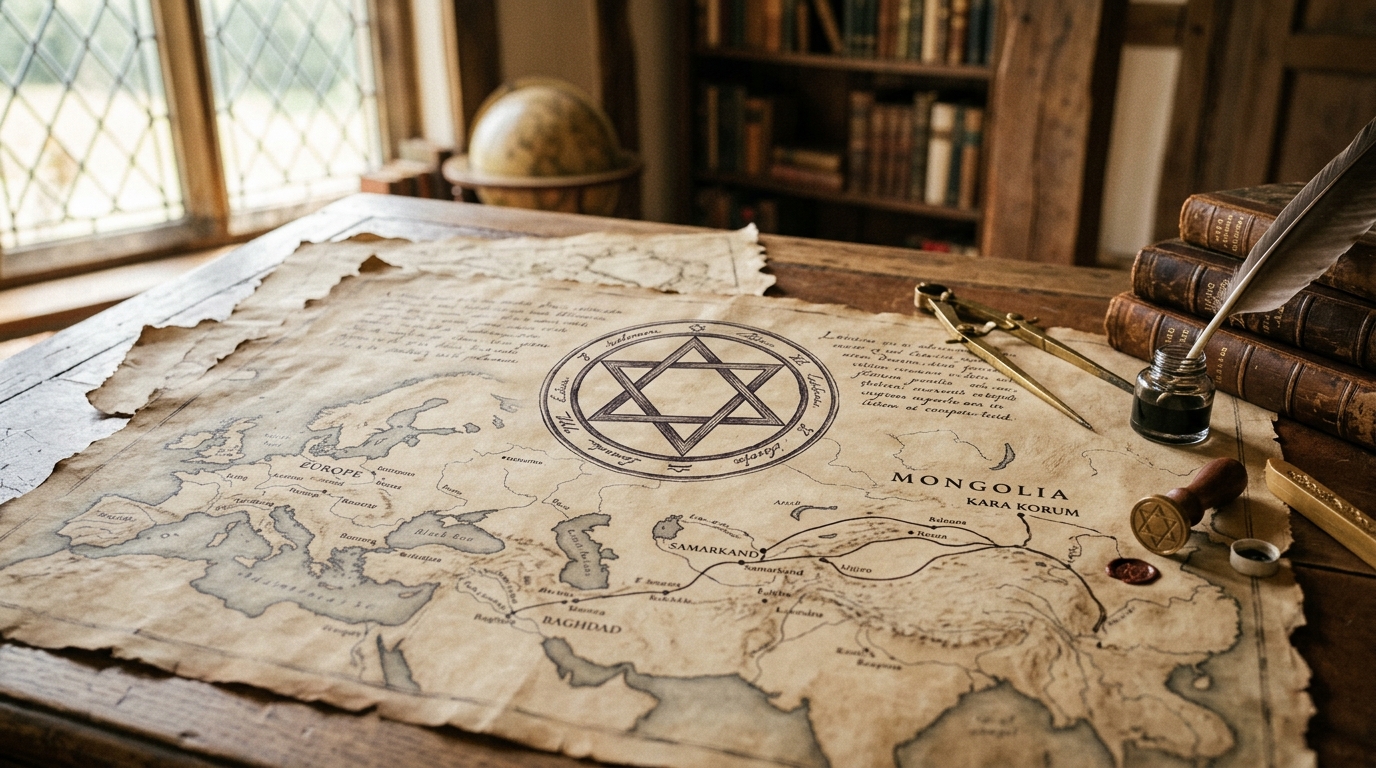
The star of david vs seal of solomon distinction we recognize today is much more recent. It hardened into a firm separation only as the Star of David became a specific marker of Jewish identity, most visibly when it was placed on the flag of Israel in 1948. From that point forward, “Star of David” carried a clear national and religious meaning, while “Seal of Solomon” kept its older, broader associations with protection, wisdom, and ceremonial magic.
So when someone asks about seal of solomon vs star of david, the most accurate answer is this: historically, they were often the same symbol wearing two different names. The split is a matter of history and context, not a difference in the shape itself.
The Seal of Solomon in Islam
The seal of solomon islam connection is real and well documented, and it deserves an honest, uninflated look rather than an exaggerated one.
In Islamic tradition, Solomon (known as Sulayman) is recognized as a prophet, described in the Quran as having been granted authority over the winds, the jinn, and the speech of birds. This is a genuinely Quranic theme, distinct from the biblical account, and it lines up closely with the same idea of Solomon holding supernatural command that we see developing in Jewish sources during roughly the same historical window.
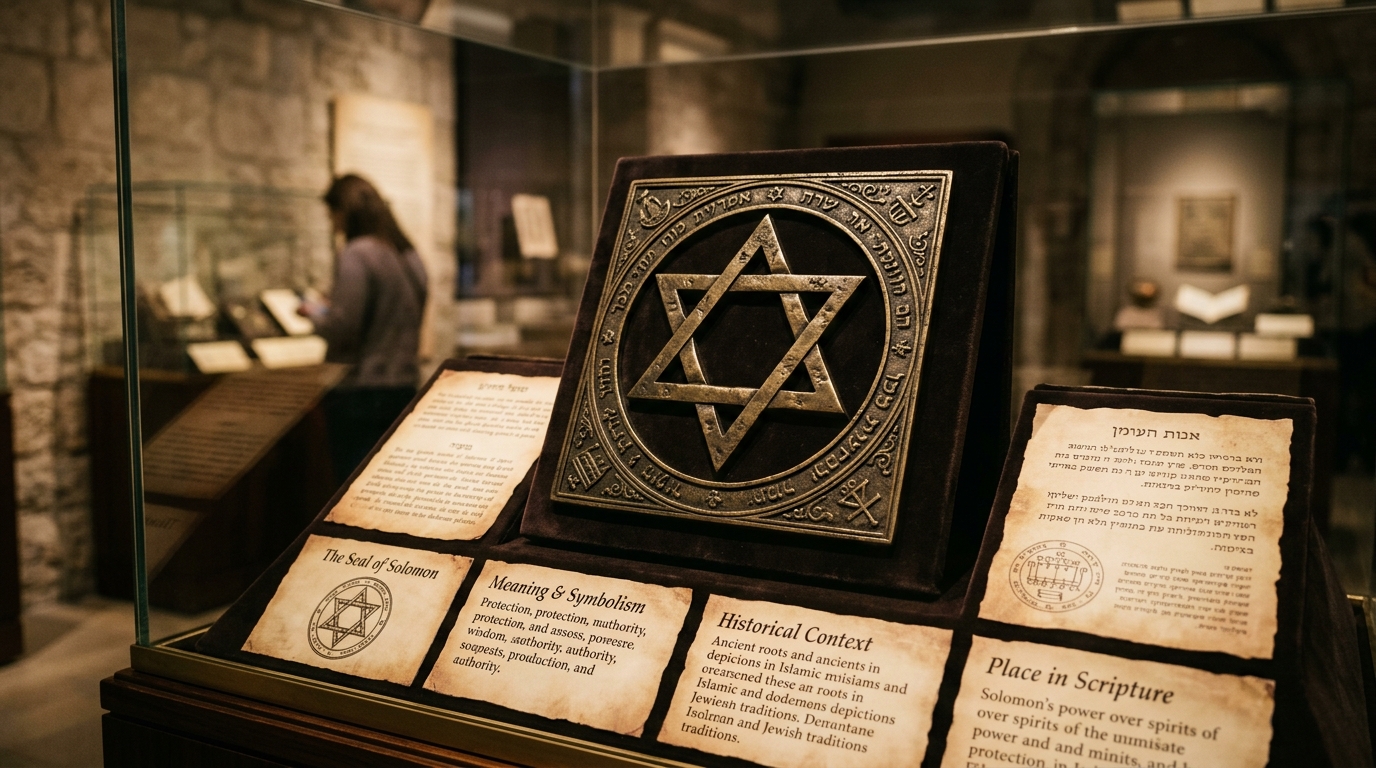
The seal of Solomon in Islam appears widely in art and architecture. You’ll find the hexagram motif worked into mosque decorations, manuscript borders, and ceremonial objects across centuries of Islamic craftsmanship, often simply as a decorative geometric pattern rather than a magical device.
Some Islamic folk traditions also carried forward the ring legend, describing a signet given to Sulayman that let him command jinn. This runs parallel to, and likely draws on, the same well of extra-biblical legend found in Jewish sources like the Testament of Solomon, rather than representing a completely separate invention.
The Seven Seals, the 72 Seals of Solomon, and the Secret Seal of Solomon
Several related phrases circulate around this topic, and they are easy to mix up, so let’s separate them clearly.
- Seven seals of Solomon: this phrase usually refers to a set of seven symbols, each tied to a planet or a specific spiritual purpose, found in later grimoire and amulet traditions. It is a different concept from the single hexagram most people picture.
- 72 seals of Solomon: this refers to the 72 spirits said to be bound by Solomon’s ring in the medieval grimoire tradition, specifically the Lesser Key of Solomon (Ars Goetia). Each spirit is traditionally paired with its own individual seal or sigil.
- Secret seal of Solomon: this term shows up in occult literature to describe supposedly hidden or more powerful variations of the standard symbol, though there’s no single agreed-upon “secret” version across sources.
We go into the 72 spirits and their individual seals in far more depth in a dedicated piece on King Solomon and the 72 demons once that article is published, since that topic really deserves its own full treatment rather than a rushed summary here.
What matters for now is recognizing that the seal of king Solomon isn’t really one fixed thing. It’s a family of related symbols and legends that grew, branched, and multiplied over roughly two thousand years of retelling.
Is the Seal of Solomon Satanic? Amulets, Talismans, and Protection
People search “is the seal of Solomon satanic” often enough that we need to address it directly rather than dodge it.
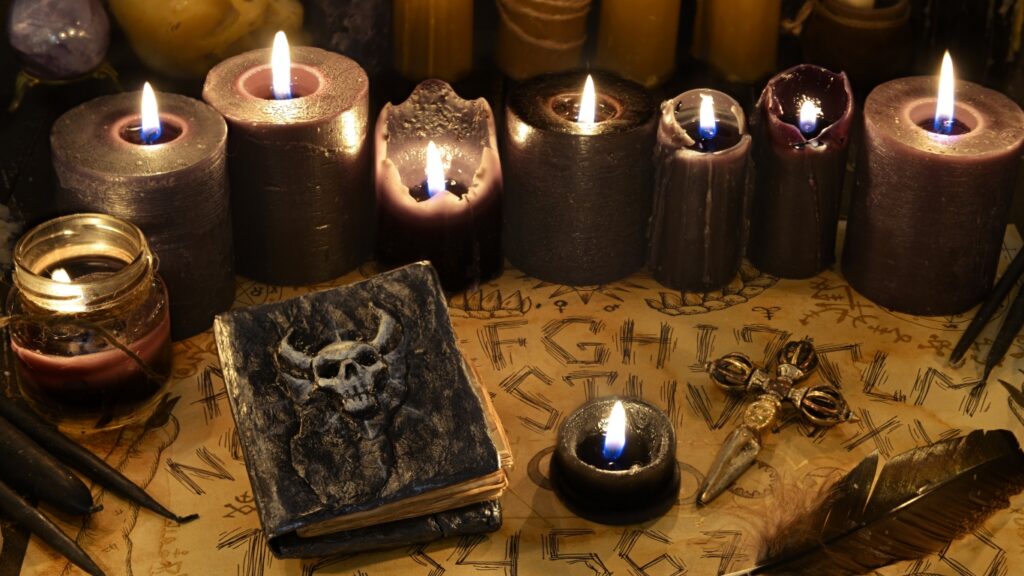
No, the symbol itself is not inherently satanic or demonic. Its reputation for darkness comes mostly from one specific branch of its history: the medieval grimoire tradition, where the symbol got tied to binding and commanding demonic spirits for magical purposes.
But that’s only one thread. The much older and more common use of this symbol, across Jewish amulet tradition and Islamic art alike, has been protective and wisdom-associated rather than malevolent. A seal of Solomon amulet worn or displayed in older Jewish communities was typically meant to ward off harm, not summon it.
The seal of Solomon protection tradition runs deep in folk practice. People wore a seal of Solomon talisman for the same basic reason people have worn protective symbols across nearly every culture in history: as a mark of safety and spiritual standing, not as a tool for calling up trouble.
The honest answer, then, isn’t “good” or “evil.” It’s that the same symbol carries genuinely different weight depending on which tradition is holding it. A seal of Solomon ring worn in medieval Jewish folk practice meant something different than the same shape drawn inside a 16th-century grimoire circle. Context is doing almost all the work here, not the shape itself.
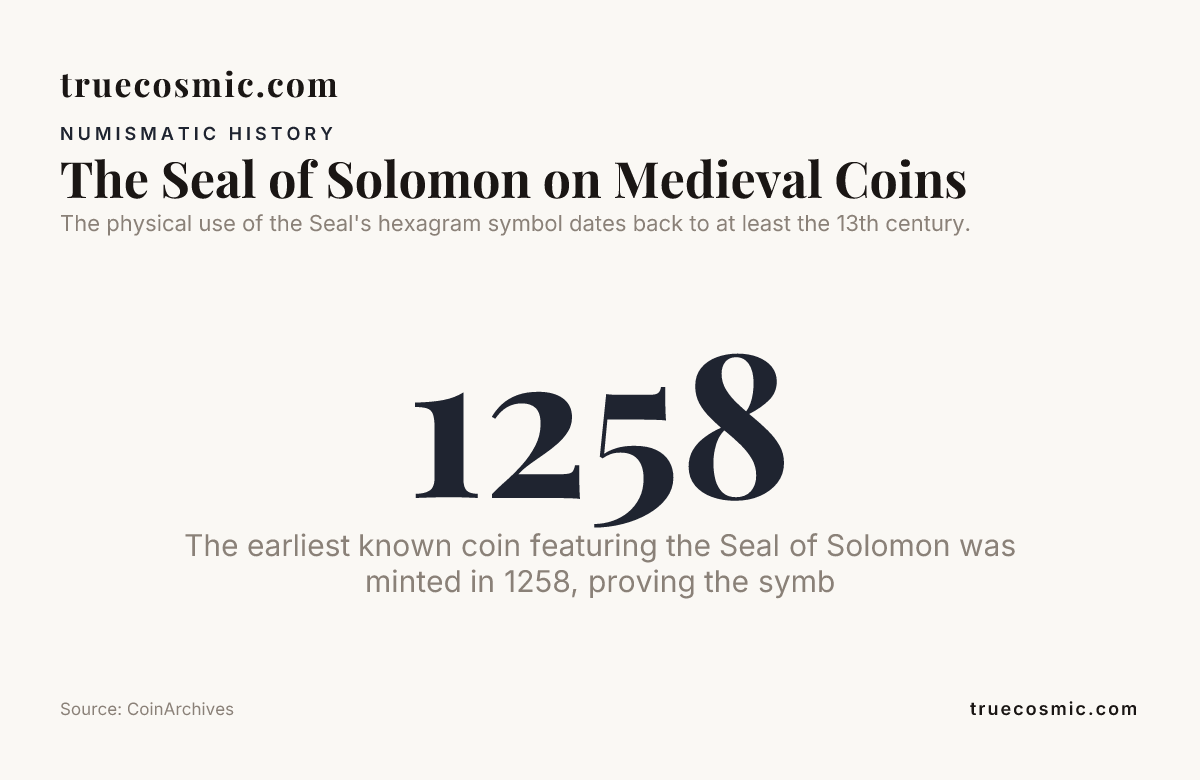
The physical use of the Seal’s hexagram symbol dates back to at least the 13th century.
What the Seal of Solomon Meaning Points to for Your Own Mind
We spend most of our time on this site reading scripture as a precise psychological map of consciousness rather than a plain historical record. The Seal of Solomon, even sitting outside the biblical text itself, still points toward something worth taking seriously.
The biblical Solomon’s defining trait, according to 1 Kings 3, was wisdom. Not wealth first. Not military strength first. Wisdom, asked for directly and granted first. The legend that grew up around him took that one trait and turned it into a symbol of total authority, a ring that supposedly gave him command over forces that would otherwise control him.
Read symbolically rather than literally, that’s a striking parallel to something we teach constantly here: the person who knows their own imagination rightly is not at the mercy of external, unruly conditions. We are not saying the hexagram literally means the Law of Assumption. That would be forcing a connection the symbol never made for itself.
What we are saying is this: wisdom, rightly understood, is authority. The 3D world is a reflection, not a final truth, and the “spirits” a wise mind learns to command are not literal demons but the unruly assumptions, fears, and reactive states that otherwise run a person’s life unchecked. Solomon’s legendary ring is a picture, however extra-biblical, of a principle that runs straight through scripture itself: the mind that governs its own imagination governs its circumstances.
We spent years treating spiritual authority as something external, something to seek from a ring, a talisman, or a title, rather than something already present in a rightly ordered inner state. The seal of Solomon meaning, read this way, becomes less about magic objects and more about a mind that has stopped being ruled by what it once feared.
Conclusion
The Seal of Solomon is a real and richly documented symbol, but it is not a biblical one. The seal of Solomon in the Bible simply isn’t there; the wise, wealthy, temple-building king of 1 Kings 1-11 wears no magic ring in that text. What we do have is a legend that grew across Jewish, Christian, and Islamic tradition over roughly two thousand years, starting in the Talmud, taking sharper shape in the Testament of Solomon, and later branching into the hexagram and pentagram forms, the Star of David comparison, and the grimoire material tied to the 72 seals of Solomon.
None of that makes the symbol worthless or fake. It makes it exactly what it is: a genuinely old, genuinely cross-cultural mark of wisdom and protection, carrying different weight in different hands, and worth understanding honestly rather than through either fear or overstatement.
No matter what you are facing — housed within you lies the solution to every problem and the fulfilment of every desire. The same power that animates and created this entire universe exists in you, at your beck and call. Only you are the operant power. You have to activate it. And when you do, no problem, no circumstance, no situation can stand in its way. Fear not.
Frequently Asked Questions
What is the Seal of Solomon?
The Seal of Solomon is a symbol, most commonly a six-pointed hexagram made of two overlapping triangles, traditionally described as the design on King Solomon’s signet ring. Legend says this ring gave him power over demons and spirits, though this detail comes from later tradition rather than the Bible itself.
Is the Seal of Solomon in the Bible?
No, the Seal of Solomon is not in the Bible. The seal of Solomon bible connection is a popular myth; the actual biblical account in 1 Kings 1-11 describes Solomon’s wisdom, wealth, and temple building, but never mentions a magic ring or seal.
What is the difference between the Seal of Solomon and the Star of David?
Historically, very little. The seal of Solomon vs star of David distinction is mostly a matter of naming and context; medieval sources used both terms for the same hexagram shape before the Star of David became specifically tied to Jewish identity, especially after 1948.
Is the Seal of Solomon satanic?
No, the symbol itself is not inherently satanic. Its darker reputation comes mainly from the medieval grimoire tradition, while its older and more widespread use across Jewish and Islamic tradition has centered on protection and wisdom.
What does the Seal of Solomon mean in Islam?
The seal of Solomon in Islam ties to Sulayman, recognized in the Quran as a prophet given authority over the jinn, winds, and the language of birds. The hexagram associated with this legend appears widely across Islamic art and architecture, often as decorative geometric design.
Is the Seal of Solomon a hexagram or a pentagram?
Both. Historically, the seal of Solomon symbol has taken two forms, the six-pointed hexagram and the five-pointed pentagram, and both appear under this same name across different manuscripts and eras.
What is the meaning of the Seal of Solomon today?
Today, the meaning of the Seal of Solomon still centers on its historical roots in wisdom and protection, even though its exact form and use have shifted across Jewish, Islamic, and Western occult traditions over the centuries.

Michael Sutherland is the founder of TrueCosmic and a devoted student and practitioner of Neville Goddard teachings. His path to this work was not academic — it was forged in crisis.
Raised as a devout Jehovah Witness and Baptist, Michael walked away from the church at eighteen and spent the next 25 years in what scripture calls the far country — the prodigal son, wandering. He built a life by the world rules, searching without knowing what he was searching for.
When the biggest crisis of his life arrived, he turned back — not to the church, but to scripture itself. Through Neville Goddard teachings he found what the church had never shown him: that the God of scripture is not an external being to be feared and appeased. God is your own awareness. Your own consciousness. Your own imagination. The I AM within.










0 Comments