
As in the days of Noah, says the Jesus of scripture, people will be living their ordinary lives when the Son of Man comes. For many of us this passage was taught as a threat. Read closely, it is an invitation to look at what being awake really means.
What “As in the Days of Noah” Means in Matthew 24
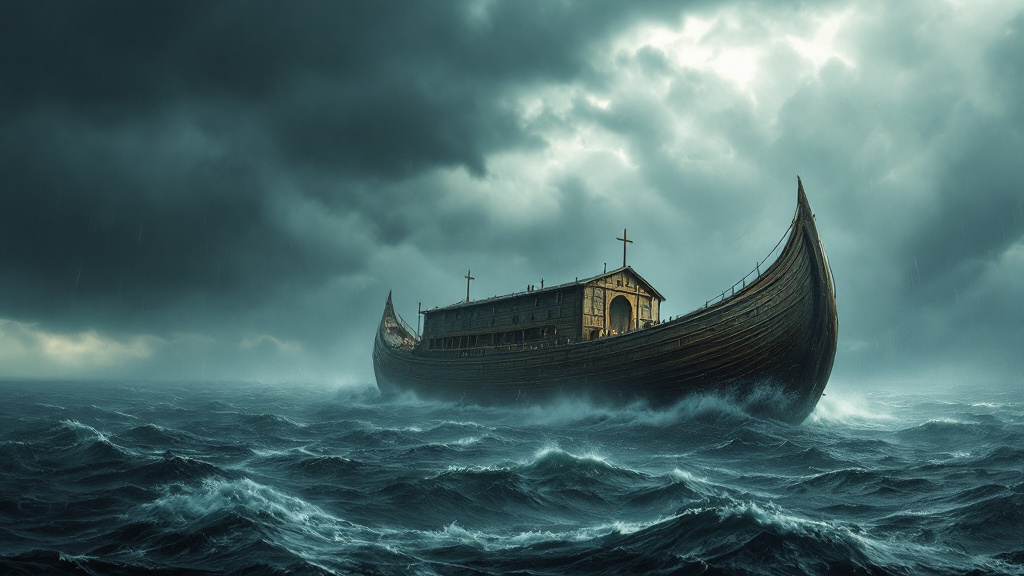
“But as the days of Noe were, so shall also the coming of the Son of man be. For as in the days that were before the flood they were eating and drinking, marrying and giving in marriage, until the day that Noe entered into the ark, And knew not until the flood came, and took them all away; so shall also the coming of the Son of man be.” (Matthew 24:37 to 39, KJV)
The King James Version spells Noah as “Noe” in this passage, from the Greek form of the name. The comparison is simple: the people before the flood were unaware, and the coming of the Son of Man will find people just as unprepared.
I was raised as a Jehovah’s Witness and later a Baptist. I was taught to fear an external, judgemental God, and “the days of Noah” was preached to us as a warning that destruction was coming. I walked away from the church at 18.
Here I read the passage as wisdom carried in story form about an inner event, not as a countdown to a date. If you read it literally, as a future return, you are welcome here, and nothing in this article asks you to give that up. This is written for anyone who was raised on fear and still feels something real in these pages.
Why Ordinary Life Matters in the Warning
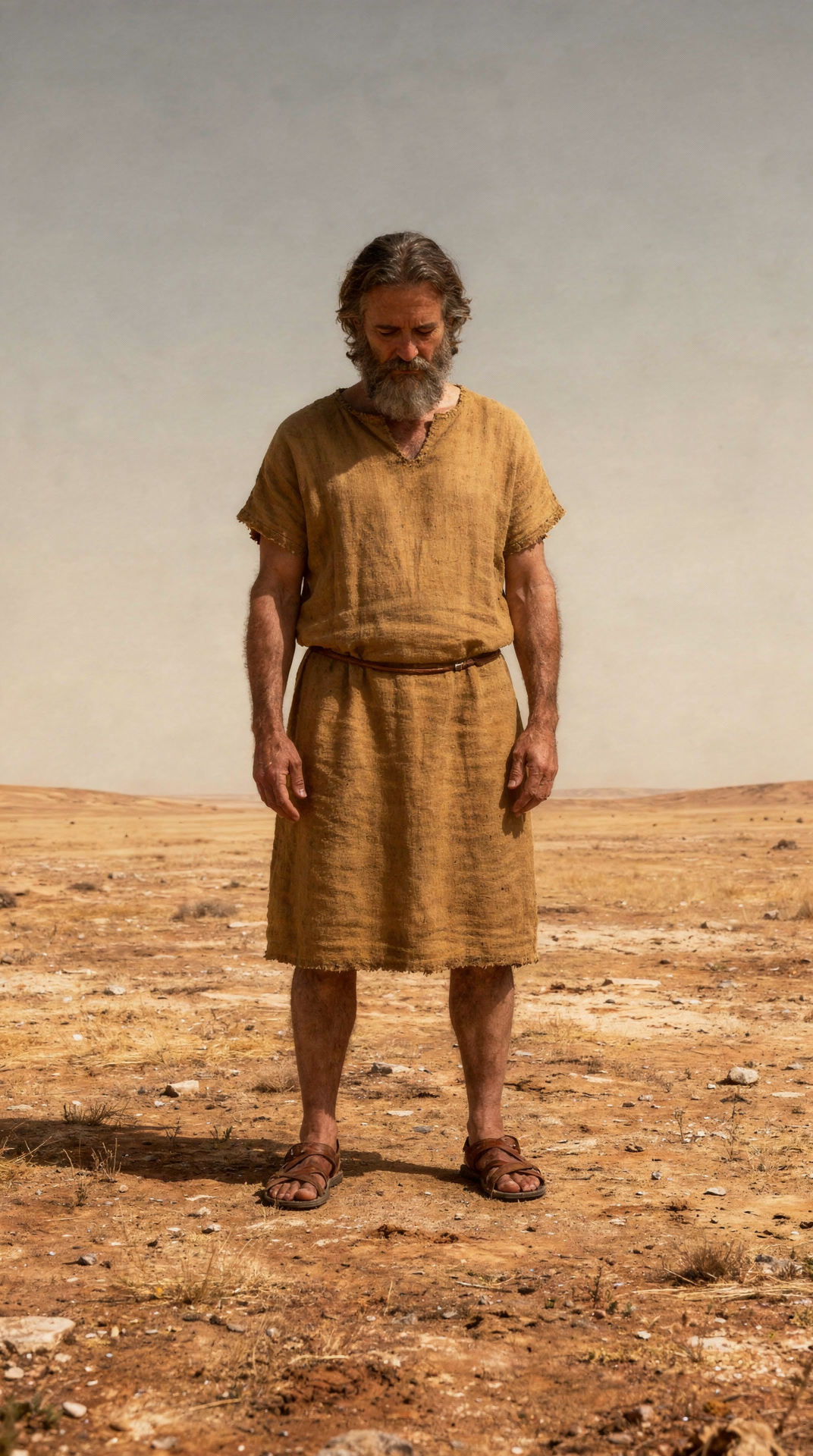
Eating, drinking, marrying and giving in marriage are ordinary parts of human life. The passage does not call them sins. The warning is not a command to reject food, family or celebration.
The key words are “and knew not”. The people carried on with their routines until the flood came. What the passage puts at the centre is awareness, not the activities themselves.
Why mention such familiar things? Because routine can fill your attention so completely that you stop asking what your choices mean, what is changing within you, and whether you are awake to the inner life you say you value.
What Genesis Says About the World Before the Flood
Genesis 6 describes widespread wickedness and violence. That gives the flood story its moral setting. But the detail Matthew highlights is different: people did not recognise the moment they were in.
Noah stands apart in the Genesis account as a man who “walked with God” (Genesis 6:9, KJV) and did what he was told. Elsewhere, 2 Peter 2:5 calls him “a preacher of righteousness”. The text does not give us his sermons or tell us how each person responded.
Genesis 6 also mentions the “sons of God”, the “daughters of men” and the Nephilim. Readers have understood the sons of God as heavenly beings, as powerful rulers, or as the line of Seth. The wording has prompted real disagreement, and it is fair to keep what the text says separate from what later writers built on it.
Reading the Flood as an Inner Event
In an inner reading, the flood is the flood of the senses: the endless stream of appearances, reactions and assumptions that soaks up your attention. You see only what is happening outside you and mistake it for the whole truth of your life.
Neville Goddard put it plainly: “In the spiritual sense we are in the flood, and when the dove appears he floats until the individual emerges.” (Neville, lecture “One Thousand Two Hundred Sixty Days”)
In another lecture he described the ark itself: “Having entered the boat (called the ark) God fell asleep and there he remains until the dove brings him word that the flood of illusion is over.” (Neville, lecture “Freedom“)
And he was clear about where the ark is: “Man is the ark of God, containing everything within himself.” (Neville, lecture “Christmas – Man’s Birth As God”)
Read this way, the ark is the inner place where you keep faith with a chosen state while the outer world seems to say otherwise. The question changes from “When will destruction arrive?” to “What state am I living from right now?” I go deeper into the ark, the dove and the Gilgamesh flood in the meaning of Noah’s Ark, and the wider approach is set out in our guide to esoteric Bible interpretation.
What the Coming of the Son of Man Can Mean
In the surrounding teaching, the day and hour are said to be unknown, and the call is to watch. Whatever your reading, the point is readiness, not a timetable. Many Christians understand the coming as a future event and the flood as a historical judgment, and that is the passage’s most direct reading.
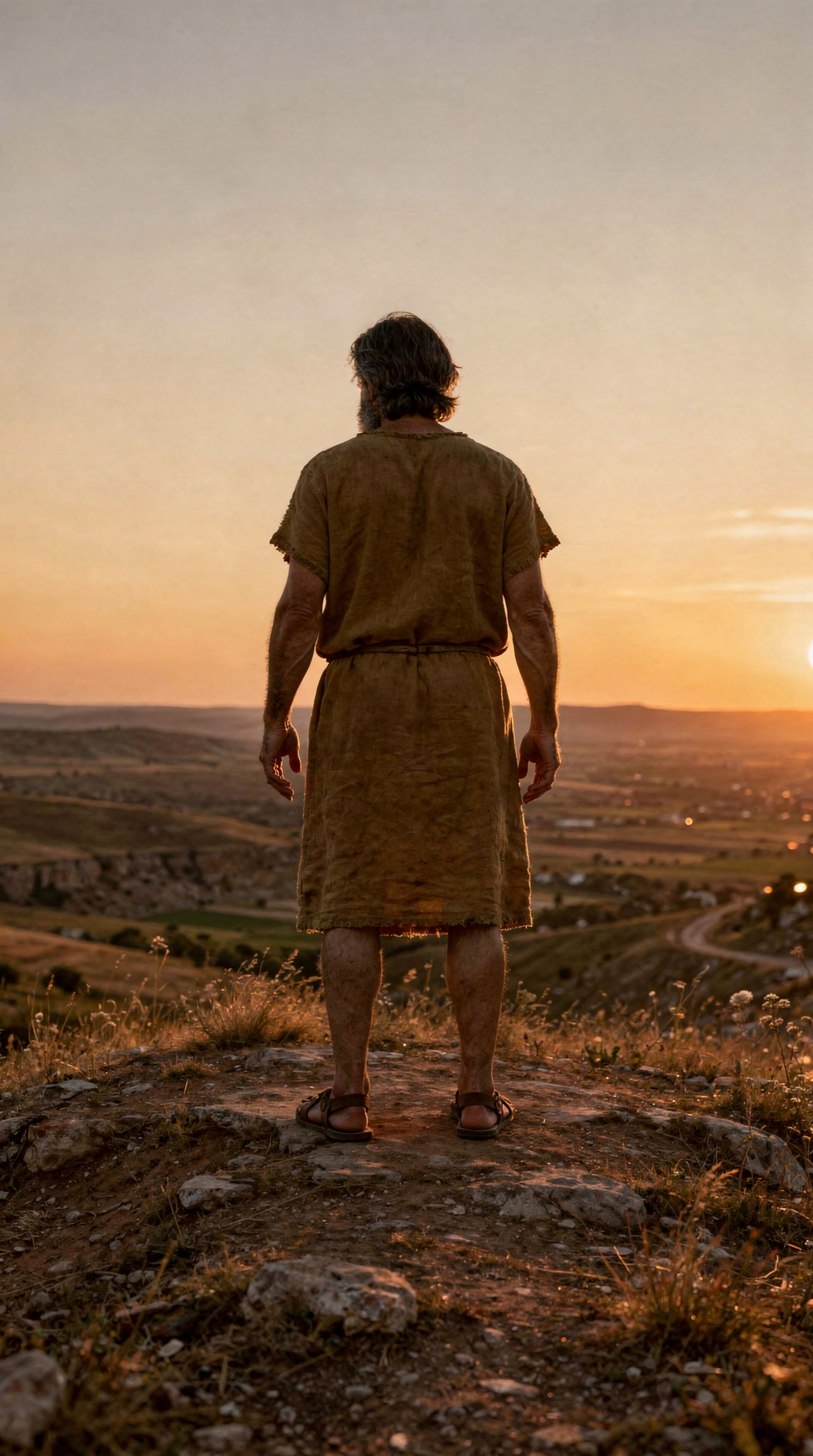
In the inner reading, the coming of the Son of Man is an awakening within you. It arrives unannounced, by grace, not by your arranging its hour. When it comes, it reveals the states you have been living from and shows you that an old identity no longer has the same hold on you.
So readiness does not mean treating every alarming headline as proof that the end is near. It means sustained attention to your own inner life.
How Luke Adds the Days of Lot
“And as it was in the days of Noe, so shall it be also in the days of the Son of man. They did eat, they drank, they married wives, they were given in marriage, until the day that Noe entered into the ark, and the flood came, and destroyed them all.” (Luke 17:26 to 27, KJV)
Luke echoes Matthew, then adds the days of Lot, when people were eating, drinking, buying, selling, planting and building before judgment came. The shared concern is the same: people carried on without being awake to what was happening.
Meals, marriage, work and building are not condemned. They simply show how ordinary routine can run right up to a moment of change.
From Fear to Freedom
Neville Goddard later showed me that God is not external. God is my own awareness, my I AM. There is no intermediary, no church and no pastor between you and that. Understanding this freed me from a life of fear, and it is how I came to read the days of Noah as something that happens in me rather than to me.
When the coming is understood as an inner event, the threat falls away. What is left is an invitation: wake up now, in the life you already have. If you want to know where my own questions began, here is the question that started it for me.
How to Build Your Ark While Life Looks Normal
Noah built while the sky was clear. You can do the same. Choose the inner state you want to live from before circumstances change. When your senses report delay or difficulty, notice what they show you without letting their report decide who you are.
Think of an archer. The work is not to demand that every arrow hits at once. It is to return to the stance, set the aim and release, again and again. The Law is a practice, not a trick. Your chosen state becomes steady through repeated return, not through panic over instant results.
Each night, enter a short scene that implies your desire is already done. Feel it as real. Then go about your day the way Noah did, building quietly while others ate, drank and laughed.
Three Signs You Are Living As in the Days of Noah
The people in the story were not monsters. They were busy. That is what makes the passage so personal. Here are three quiet signs that the flood of the senses has your full attention.
1. Your inner conversation only repeats the news
Listen to the voice in your head for one hour. If it only replays what happened, what might go wrong and what other people said, you are living from the outside in. Noah’s neighbours talked about what they could see. Noah lived from what he had been shown within.
2. You wait for proof before you change your state
Most of us say, “I’ll feel secure when the money arrives,” or “I’ll relax when the test result comes back.” That is waiting for the rain before building the ark. The practice is the other way round: assume the state first, and let the evidence follow.
3. Routine has replaced reflection
Eating, working and sleeping are good. But if days pass without a single moment where you ask what you are assuming about yourself, routine has become the whole of life. A few minutes each night, in that drowsy state just before sleep, is enough to begin building again.
The Dove: How You Know the Flood Is Over
In Genesis the dove returns with an olive leaf, and Noah knows the waters have gone down. In Neville’s reading, the dove is the feeling of assurance that comes once your new state has taken hold. You stop checking. You stop striving. Something in you simply knows.
That is the opposite of fear. Fear keeps you scanning the horizon for disaster. Assurance lets you rest in what you have already accepted as true, long before the dry land appears. When people tell me the days of Noah used to terrify them, this is what I point to. The same story that was used to frighten us carries, in its own symbols, the promise of peace.
Frequently Asked Questions
Is reading “as in the days of Noah” as an inner event heresy?
It can feel that way if you were raised as I was. But reading scripture for its inner meaning is very old, and nothing here asks you to drop a literal reading. You can hold both and let each deepen the other.
Why does the King James Version spell Noah as “Noe” in Matthew 24?
“Noe” reflects the Greek form of the name used in the New Testament, while “Noah” comes from the Hebrew in Genesis. It is the same figure.
Does the passage mean Christians should avoid eating, drinking or marrying?
No. Those familiar routines are used to show how people can become absorbed in daily life. They are not forbidden.
What does “one shall be taken, and the other left” mean?
Matthew 24:40 places the saying beside two people working together. Christians differ on whether being taken signals judgment or rescue, so it is best read with the surrounding teaching rather than on its own.
What were the sins in the days of Noah?
Genesis describes the world before the flood as marked by wickedness, corruption and violence. Matthew’s focus is different: people did not know what was coming.
Fear Not
As in the days of Noah, the passage asks you to notice the difference between being busy and being awake. You do not need to turn scripture into a threat to take its call seriously.
Whatever is rising around you right now, the answer to it is already within you. The same power that formed everything that exists lives in you and responds to you. You are the one who sets it in motion, and once you do, no flood of circumstance can hold it back. Fear not.

Michael Sutherland is the founder of TrueCosmic and a devoted student and practitioner of Neville Goddard teachings. His path to this work was not academic — it was forged in crisis.
Raised as a devout Jehovah Witness and Baptist, Michael walked away from the church at eighteen and spent the next 25 years in what scripture calls the far country — the prodigal son, wandering. He built a life by the world rules, searching without knowing what he was searching for.
When the biggest crisis of his life arrived, he turned back — not to the church, but to scripture itself. Through Neville Goddard teachings he found what the church had never shown him: that the God of scripture is not an external being to be feared and appeased. God is your own awareness. Your own consciousness. Your own imagination. The I AM within.






0 Comments