
What did Ham do to Noah? Genesis 9:20 to 27 says Ham saw his father uncovered in his tent and told his two brothers, while Shem and Japheth covered Noah without looking at him. Later readers have proposed explanations beyond the actions Genesis names, and one of those later readings was twisted into something deeply harmful.
What Did Ham Do to Noah in Genesis 9?
At TrueCosmic, we read this story as wisdom carried in story form, rather than as a historical record. You are welcome to read it literally; either way, start with what the passage actually says before weighing what readers have inferred.
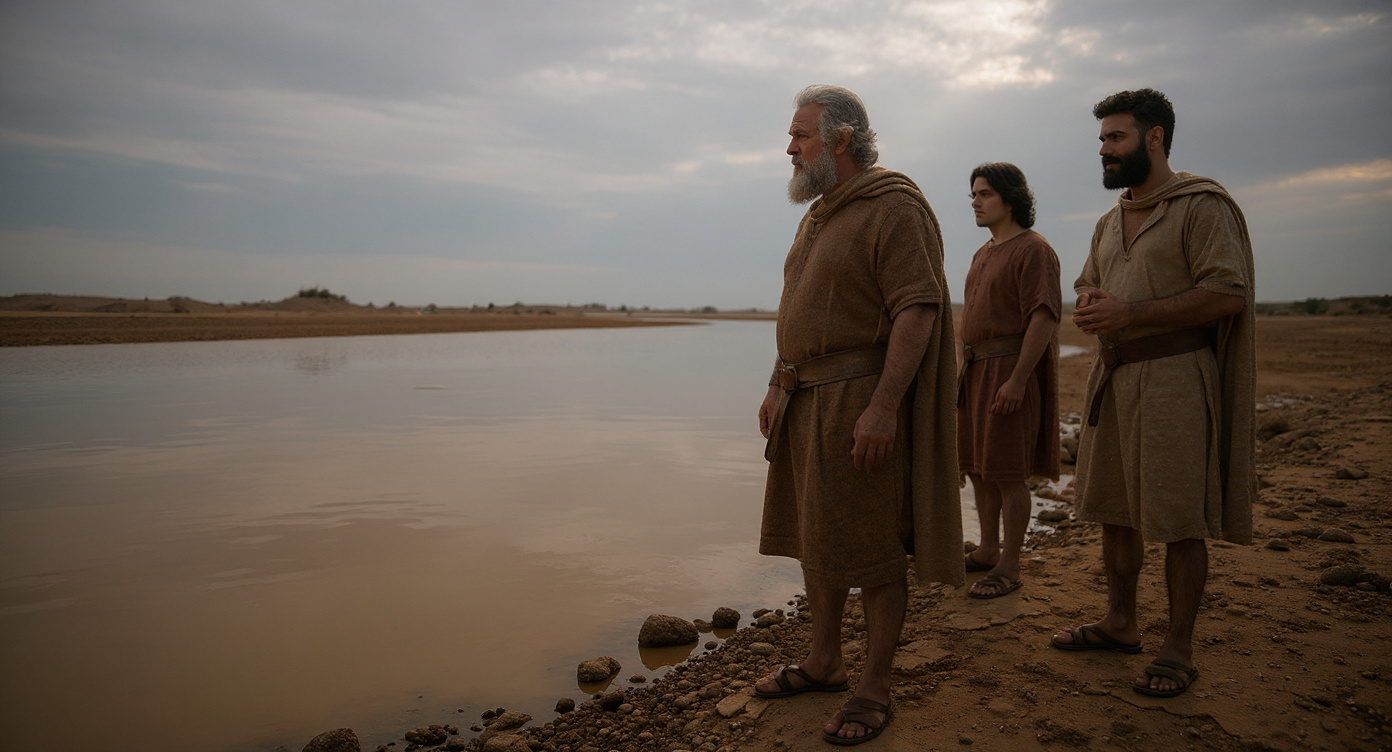
Genesis says Noah planted a vineyard, drank wine, became drunk, and lay uncovered in his tent. Ham saw his father’s nakedness and told his brothers outside, while Shem and Japheth entered backward and covered Noah. When Noah woke, he cursed Canaan, Ham’s son. You can read the full chapter in the King James Version of Genesis 9.
20 And Noah began to be an husbandman, and he planted a vineyard:
21 And he drank of the wine, and was drunken; and he was uncovered within his tent.
22 And Ham, the father of Canaan, saw the nakedness of his father, and told his two brethren without.
23 And Shem and Japheth took a garment, and laid it upon both their shoulders, and went backward, and covered the nakedness of their father; and their faces were backward, and they saw not their father’s nakedness.
24 And Noah awoke from his wine, and knew what his younger son had done unto him.
25 And he said, Cursed be Canaan; a servant of servants shall he be unto his brethren.
26 And he said, Blessed be the LORD God of Shem; and Canaan shall be his servant.
27 God shall enlarge Japheth, and he shall dwell in the tents of Shem; and Canaan shall be his servant.
The wording matters. Ham sees his father uncovered, then tells his brothers. Genesis does not narrate a sexual act, an act of physical harm, or another person entering the tent. Some traditional readings understand Ham’s behaviour as disrespect, because he tells his brothers instead of protecting Noah’s privacy. Other proposals, including sexual violation, incest, or castration, infer an act beyond the actions the passage names.
That distinction gives you a careful answer to what did Ham do to Noah: the text reports seeing and telling, then says Noah learned what his son had done. The exact nature of Ham’s conduct remains debated, so a proposed explanation should not be presented as a detail Genesis plainly supplies.
Separate What the Text Says From What Readers Infer
You can keep three layers distinct as you read. First, Genesis explicitly says Ham saw Noah uncovered and told his two brothers. Second, readers infer what that choice meant. Third, later traditions add details beyond the account.
The phrase “seeing nakedness” should not be forced into one meaning in every passage. Leviticus 18 uses “uncover nakedness” as a sexual euphemism, but Genesis 9 uses different wording and places it in a specific scene: Noah is uncovered in his tent, and Ham sees him. The parallel invites comparison, but it does not prove that Genesis describes a sexual act.
The disrespect reading relies on the contrast between Ham telling his brothers and the brothers covering Noah without looking. It treats Ham’s response as an act of dishonour, but the passage does not spell out his motive.
Sexual-violation, incest, and castration readings go further. Each proposes an additional act to explain Noah’s words in verse 24 or the severity of his response, but Genesis does not name a sexual act, identify an accomplice, or describe castration. These are proposals from interpretation and later tradition, not details reported by the narrative.
For a wider approach to reading biblical stories as symbolic teaching, see our guide to esoteric Bible interpretation, and the story that comes just before this one, the meaning of Noah’s Ark.
Why Shem and Japheth Cover Noah
Ham tells his brothers about Noah’s uncovered state. Shem and Japheth take a garment, walk backward into the tent, and cover their father without looking at him. Their actions create the story’s clearest contrast: one son reports the exposure, while the other two protect Noah’s privacy.
You can read their covering as an act of respect and care. Still, Genesis does not give either brother a speech explaining what he thought, so you should avoid claiming that the passage directly states their motives.
The episode follows the flood story. Noah survives the flood, begins a new life by planting a vineyard, and then becomes drunk and exposed. Renewed life does not keep this family from shame, tension, or harsh words.
That is worth sitting with. The same man who trusted enough to build an ark before the rain is shown, a few verses later, drunk and exposed in his own tent. Scripture does not tidy its heroes up. Read inwardly, that honesty is a gift: even after a great deliverance, you can fall back into an old state, and the way forward is not shame but a return to the state you know is true.
Why Noah Curses Canaan, Not Ham
Genesis directs Noah’s curse at Canaan, not Ham. Ham is the son whose behaviour the story has just described, while Canaan is Ham’s son and the person named in Noah’s words. The passage does not explain why Canaan becomes the target, so no proposed explanation should be presented as the answer Genesis supplies.
Readers have connected the curse to later relations between Israel and Canaan, but that is an interpretation. Genesis names Canaan without saying that Canaan entered the tent or why he is singled out.
How the “Curse of Ham” Was Misused
The so-called “curse of Ham” was misused for centuries to justify racism and slavery. That reading is false to the text: Genesis curses Canaan, not Ham, and says nothing about skin colour. It gives no permission to extend Noah’s words to all of Ham’s descendants or to people grouped by race today.
The racialised reading did not arise from the wording. In defences of slavery, interpreters widened the target from Canaan to Ham and his descendants, then recast a family curse as a claim about Black people and hereditary servitude. That argument depends on substitutions Genesis does not make: it changes the named person, turns lineage into a racial category, and adds skin colour, which the story never mentions.
TrueCosmic rejects using this passage to defend racism, slavery, or discrimination, completely. The Throughlines essay on the racialised history of the curse traces how such readings developed.

The Secret Neville Saw in Ham
Neville Goddard offers a symbolic reading of Noah and his sons. You can consider it on its own terms, without mistaking it for the only traditional interpretation.
In Freedom for All, Chapter Three, Neville writes: “The first son is called Shem, which means name. Ham, the second son, means warm, alive. The third son is called Japheth, which means extension.” In this reading, Shem represents the name or idea of what you desire, Ham represents the feeling that gives the idea life, and Japheth represents its extension into visible experience.
“In the story of Noah it is recorded that Ham saw the secrets of his Father [Genesis 9:22], and, because of his discovery, he was made to serve his brothers, Shem and Japheth [9:25]. Ham, or feeling, is the secret of the Father, your I AM, for it is through feeling that the consciousness desiring is joined to the thing desired.”
For Neville, Noah is your own awareness. As he puts it in the same chapter, “You are Noah, the knower, the creator.” Shem is the idea you hold, Ham is feeling, the warmth that makes it alive, and Japheth is the visible result. Ham “serves” because feeling is what joins the idea to the experience you desire.
“Your present objectified world is Japheth which was made visible by Ham.”
Neville’s point is not that you merely repeat a name and wait. You enter into the feeling of the wish fulfilled, so the idea becomes real within your awareness before it appears in your visible life.
“Be as wise as Ham and make this discovery that you too may have the joy of serving your brothers Shem and Japheth; the joy of making the word or name flesh.”
Practice: Shem, Ham and Japheth in Your Own Life
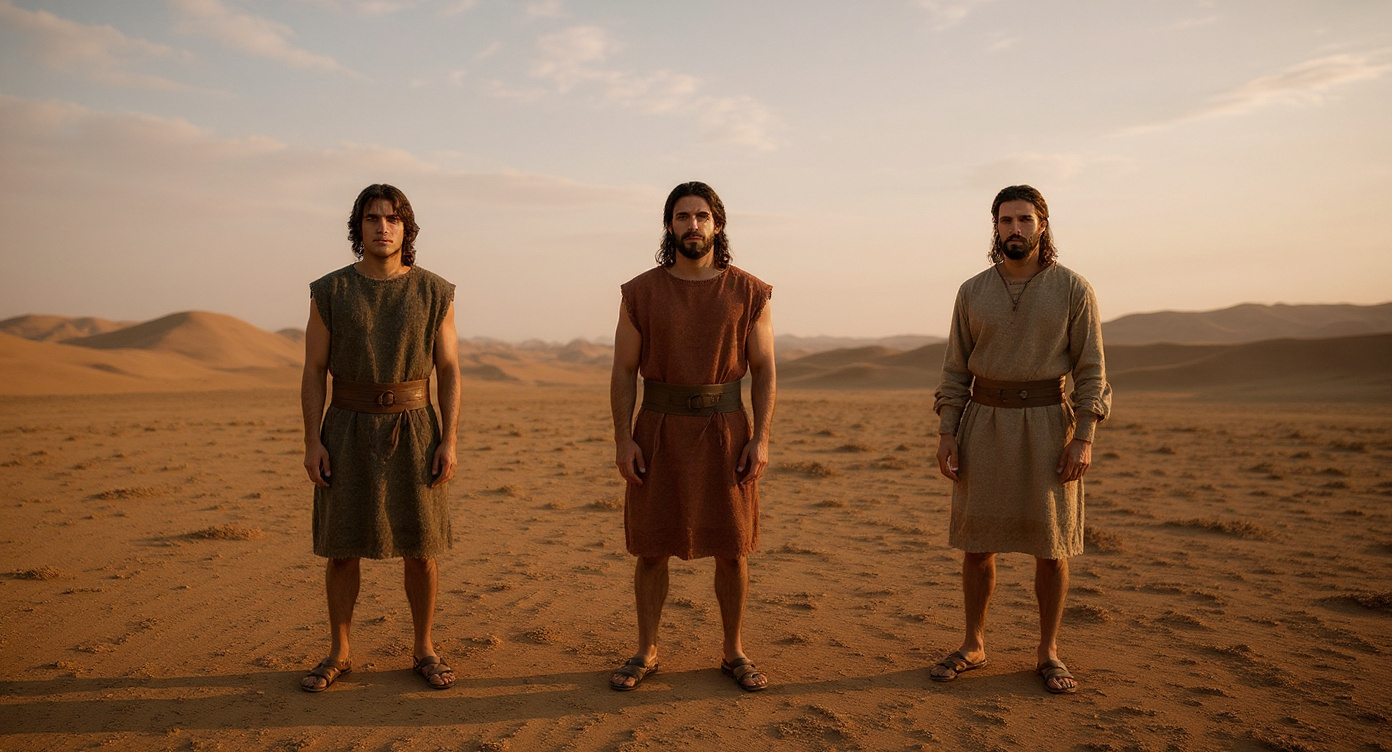
Choose one desire and name it clearly. That is Shem, the idea you want to hold. Then feel it as done until the thought is warm and alive. That is Ham. Then let the visible result appear in its own way, without trying to control the route. That is Japheth.
Think of a sourdough starter: you prepare it, feed it, and give it time to develop. You do not pull it apart every hour to demand proof that it has changed. In the same way, let the feeling take root rather than turning the practice into a test for instant results. The law is a practice, not a trick.
Frequently Asked Questions
Is reading Ham’s story symbolically a form of heresy?
Reading scripture for its inner meaning is an old tradition, and it does not require you to deny the literal account. The symbolic reading sits alongside the story; it never asks you to give up your faith, only to look deeper into it.
Does Genesis say Ham laughed at or mocked Noah?
No. The account reports Ham seeing Noah exposed and telling his brothers, without describing laughter or mockery.
Does Genesis say Canaan was present in Noah’s tent?
No. Genesis does not place Canaan inside the tent or say that he witnessed what happened. It names him later as the target of Noah’s curse.
Is the curse of Ham about skin colour?
No. Genesis curses Canaan, not Ham, and never mentions skin colour. The racial reading was invented much later to defend slavery and racism, and TrueCosmic rejects it completely.
Which son disobeyed Noah?
No command from Noah appears in this episode, so there is no disobedience to identify.
Conclusion: Read the Account Clearly
So, what did Ham do to Noah? Genesis says he saw his father uncovered and told his brothers; it does not plainly describe a further act. Shem and Japheth covered Noah, and Noah’s curse named Canaan, not Ham. The racist misuse of the passage has no foundation in the text.
And inwardly, the story hands you a key. Whatever you are hoping for, the warmth that makes it real is already in you. The same power that brought everything into being lives in you and waits on your word. Only you can bring the feeling to it, and once you do, nothing outside you can stop the idea becoming flesh. Fear not.

Michael Sutherland is the founder of TrueCosmic and a devoted student and practitioner of Neville Goddard teachings. His path to this work was not academic — it was forged in crisis.
Raised as a devout Jehovah Witness and Baptist, Michael walked away from the church at eighteen and spent the next 25 years in what scripture calls the far country — the prodigal son, wandering. He built a life by the world rules, searching without knowing what he was searching for.
When the biggest crisis of his life arrived, he turned back — not to the church, but to scripture itself. Through Neville Goddard teachings he found what the church had never shown him: that the God of scripture is not an external being to be feared and appeased. God is your own awareness. Your own consciousness. Your own imagination. The I AM within.










0 Comments