
Joseph’s coat of many colours is the detail most of us remember from Sunday school, but for me the part of the story that rings truest is what happened when Joseph started telling people his dreams. I grew up in a poor neighbourhood with lots of big dreams and plans, and those dreams were often mocked by my friends.
Most of my friends grew up in council houses. Owning property was not on anyone’s list. Mine was simple and, to them, ridiculous: I was going to get a mortgage and own my own home at 21. I would often ask, “Why not us? Why can’t we?” When I finally declared I was getting my first house, some friends visited me only once and never came round again. So when I read “Behold, this dreamer cometh,” I know exactly what that tone sounds like.
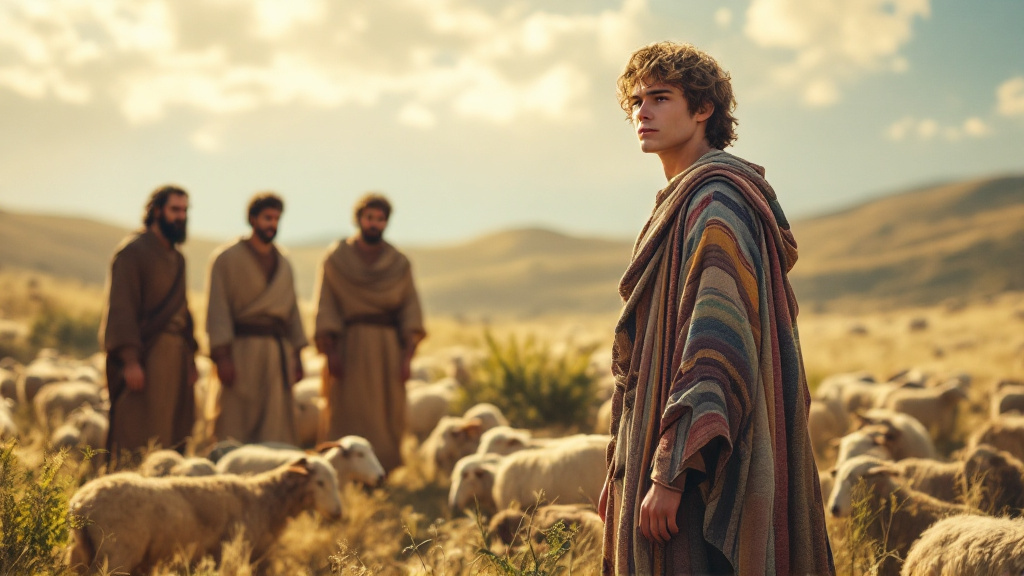
On TrueCosmic, I do not read the story of Joseph as a record of what happened to one family in the ancient Near East. I read it as a story that was told on purpose, because a story can carry what a list of facts never could. The sages who shaped it wrapped something precious inside it, and our job is to unwrap it. When we do, we find it is describing us, and the finding stirs a power in us that has been lying asleep.
This is written for people who still hold the Bible as sacred but are tired of the way it was taught to them, or worn down by the hypocrisy they saw in religious institutions. It is not an attack on anyone’s faith. If you read Joseph’s life as literal history, you are honoured here. But I will not pretend the two readings are equals: the literal is where we start, and the inner meaning is where the dream is leading.
The story of Joseph’s coat in Genesis
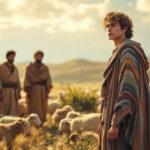
The story opens in Genesis 37. Jacob, who by now carries the name Israel, has twelve sons, and he does not hide which one he loves most:
“Now Israel loved Joseph more than all his children, because he was the son of his old age: and he made him a coat of many colours.” (Genesis 37:3, KJV)
His brothers resent the favour, and then Joseph makes things worse. He dreams that his brothers’ sheaves of grain bow down to his sheaf, and later that the sun, the moon and eleven stars bow down to him. He tells them both dreams. “And Joseph dreamed a dream, and he told it his brethren: and they hated him yet the more” (Genesis 37:5, KJV).
When his father sends him out to check on his brothers in the fields, they see him coming:
“And they said one to another, Behold, this dreamer cometh. Come now therefore, and let us slay him, and cast him into some pit, and we will say, Some evil beast hath devoured him: and we shall see what will become of his dreams.” (Genesis 37:19 to 20, KJV)
They strip him of the coat and throw him into a dry pit. Rather than kill him, they sell him to traders bound for Egypt, dip the coat in goat’s blood and let their father believe he is dead. In Egypt, Joseph serves in Potiphar’s house, is falsely accused and thrown into prison. There he interprets dreams, and in time he is called to interpret Pharaoh’s: seven years of plenty, then seven of famine. Pharaoh raises him to govern the land.
When famine comes, his brothers travel to Egypt to buy grain, not knowing who stands in front of them, and “Joseph’s brethren came, and bowed down themselves before him with their faces to the earth” (Genesis 42:6, KJV). The dream has come true.

What Neville says about the coat of many colours
Neville Goddard spoke about Joseph directly. In his lecture “Prophetic Sketches 1967”, he said:
“In the 37th chapter of the Book of Genesis, Joseph – the one God loves most and who is the prototype of Christ Jesus – is made a coat of many colors.”
And in the same lecture he told his audience how to read stories like this one:
“These prophetic sketches are sketches of events which will happen in you.”
That is the key to the whole story. Joseph is not someone far away and long ago. He is a pattern that plays out inside you, and by linking him to the Jesus of scripture, Neville marks him as the beloved son in every one of us.
Neville did not walk through every stage of the story in these words, so the reading that follows is TrueCosmic’s own, built on his principle that these events happen in you.
The inner reading: the dreamer, the pit and the prison
The coat: the many-coloured self
The father gives the coat. It is not earned or bought. In this reading, the coat of many colours is your imagination: the many-coloured self that can take on any state, wear any shade, picture any outcome. It is the gift the Father gives to the beloved son, and it is what makes Joseph a dreamer in the first place.
This way of reading clothing is far older than Neville. The mystic Manly P. Hall, in The Secret Teachings of All Ages (1928), explains in his chapter “The Human Body in Symbolism” that the garments in sacred stories were never just costume:
“The garments and ornamentations supposedly worn by the gods are also keys, for in the Mysteries clothing was considered as synonymous with form.”
(Manly P. Hall, The Secret Teachings of All Ages)
Hall adds that, in the old teaching, a person “was clothed in his own accomplishments and adorned by his attainments.” Put that beside Neville and the coat comes alive. A garment is a form you step into, and a state is exactly that: something you put on and wear until the world sees you in it. In TrueCosmic’s reading, the many colours are every state the imagination can wear. They are not decoration. They are the range of who you can become.
The brothers: the voice of the outer world
The brothers are the outer world, and the doubts inside you that side with it. They see the coat and they hate it, because the coat says you are more than your circumstances. When you speak your dream out loud, the outer world answers just as they did: “we shall see what will become of his dreams.”
That was my experience. Where I grew up, declaring I was getting my first house sounded like Joseph telling his brothers about the sheaves. The friends who visited once and never came round again were simply living in a different state, and my declaration did not fit inside it.
The pit and the prison: the in-between
Then comes the pit. Genesis says “the pit was empty, there was no water in it” (Genesis 37:24, KJV). The coat is gone, the dream looks dead, and there is no sign of anything that could keep it alive. After the pit comes the prison. This is the in-between, the long stretch between the assumption and its fulfilment when every piece of evidence says it was all a fantasy.
As with most manifestations, I had my own pit. There is always a period when things look doomed. The house I was originally due to buy fell through because I was in a chain, and the whole procedure had to start over again. If you are in a season like this, I have written more about spiritual guidance during life transitions.
The dream was never in the coat. They could strip the coat off Joseph, but not the dream out of him.
The interpreter of dreams: God hidden in plain sight
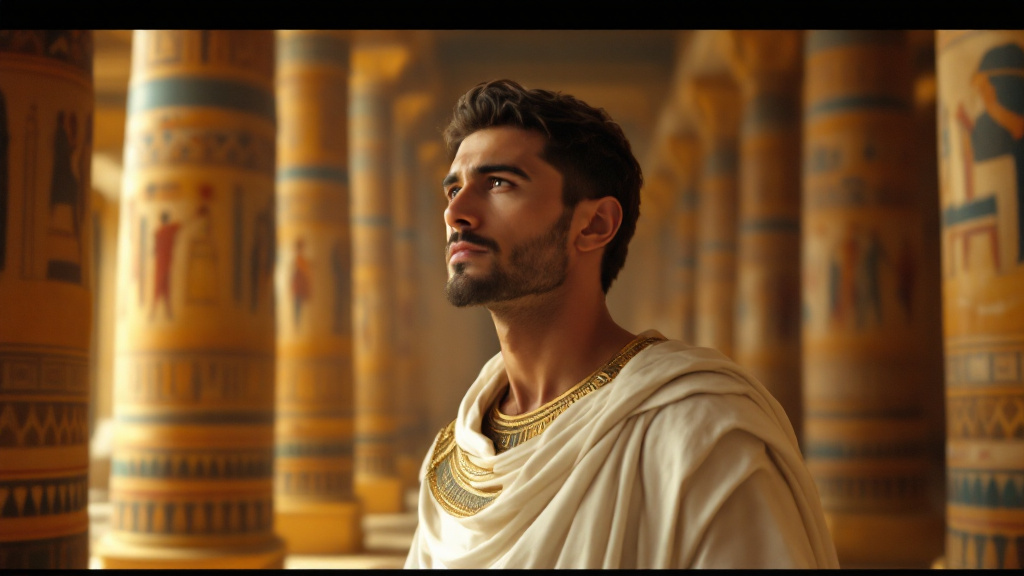
There is a deeper layer here that most readers walk straight past. Joseph is not only a dreamer. He interprets dreams: the butler’s, the baker’s and, in the end, Pharaoh’s. When the two prisoners are troubled because no one can explain their dreams, Joseph answers: “Do not interpretations belong to God? tell me them, I pray you” (Genesis 40:8, KJV). Then he interprets them himself.
Neville saw exactly what that means. In his lecture “A Movement of Mind”, he said:
“Now, if only God can interpret a dream, why tell Joseph? Because he is a personification of God.”
And in his lecture “Esau Jacob Israel”, he named the faculty at work:
“He could not only dream, he could interpret dreams, for this faculty in man that dreams is man’s imagination, and any interpreter of dreams is man’s imagination.”
This is the central character of scripture, hidden in plain sight. The divine is not a distant figure watching the story from outside. It is the dreamer and the interpreter inside it, and that is who we are too. Remember, this is our story.
Neville even pointed to the shape of Genesis itself. The book opens with “In the beginning God” and closes with Joseph: “he was put in a coffin in Egypt” (Genesis 50:26, KJV). In his lecture “Moses-Elijah-Jesus”, he said:
“Joseph is human imagination – it is of one tissue with divine imagination, but here it is human imagination, placed in a coffin.”
God opens the book and Joseph closes it, because they are one being: the divine imagination, asleep in us, dreaming our lives into being until it wakes.
Egypt and the bridge of incident
Joseph does not reach his throne by any route he could have planned. Sold, enslaved, accused and forgotten in a cell, every step turns out to be the road to Pharaoh’s court. Egypt, in this story, is where the dream is worked out in the world of form. You can read more about this symbol in our article on what Egypt represents in the Bible.
Neville described this exact movement in his lecture “The Lord, Our Potter”:
“Then wait in confidence for ways to open that you could not devise. No one knows how or when it will happen, but it will. You will find yourself walking across some bridge of incident that you did not consciously devise, which takes you to your freedom”
The bridge of incident is often unpredictable. I did not get my house at 21. I got a house a year later, and the house I got in the end was far better than I could have imagined: bigger, in a better area, and cheaper. The route I had planned fell through, and the end arrived better than the one I had pictured.
That is the biggest mistake people make with the Law: micromanaging how the result arrives. Had I clung to that first house, I would have lost the better one. Decide the end, and leave the route open.
The brothers bow, and forgiveness
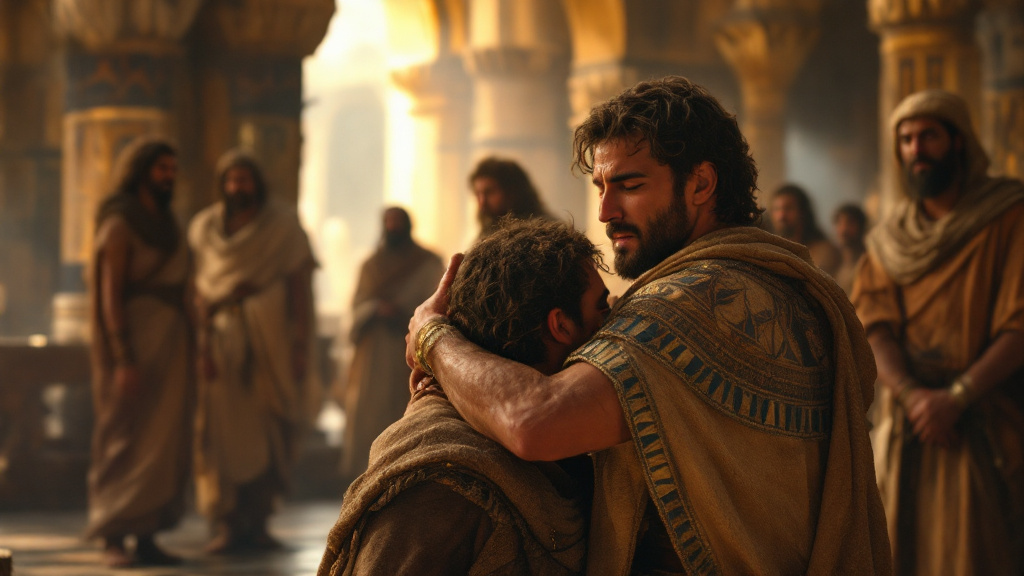
When the brothers finally bow, Joseph does not take revenge. Instead he says:
“But as for you, ye thought evil against me; but God meant it unto good, to bring to pass, as it is at this day, to save much people alive.” (Genesis 50:20, KJV)
They meant evil against him, and that is exactly the point. Neville highlighted this in his lectures again and again. Along the bridge of incidents, events can look, through our limited awareness, like a wrongdoing, an injustice, even evil. Only in the end do you realise that every one of them was necessary for the wish to be fulfilled. Neville gave a very practical example in his lecture “Live In The End”, about someone who wanted to rise at work:
“I have seen that. It takes someone to fire you to get you into a better job. I have seen that time and again. I wouldn’t go out and quit the job. You may be promoted in the job, or you may be invited by some other concern that is competitive to join them”
He knew it from his own life. In his lecture “Freedom”, he described being let go from J. C. Penney, where he ran the elevator and worked as the errand boy, and he said:
“But my dreams, my desires, transcended my position there, so they had to do what they did in order for my desires to be realized.”
Joseph’s brothers did exactly what they did, and it took him all the way to Pharaoh’s court.
This is the part of the story I understand best in hindsight. I was raised a Jehovah’s Witness and a Baptist, and I left the church at 18. Today I am actually grateful to my former church members. Had they not reacted to my questioning the way they did, I might still be in the sleep of Adam, not awakened to the truth of who I am.
Neville put it this way in Seedtime and Harvest, Chapter One:
“According to the Scriptures, we sleep with Adam and wake with Christ. That is, we sleep collectively and wake individually.”
Awakening is always triggered by adversity or a burning desire to know the truth. This was simply my own path. What looked like evil against me was the very thing that pushed me towards waking up. And Neville is clear about where that path ends. In his lecture “Follow The Pattern”, he said: “You are destined to awaken as God!” I sincerely believe that, which is why there is nothing left to hold against anyone.
How to apply it
- Put the coat back on. Name one dream you have quietly given up on because it seemed too big for where you come from. Ask yourself, as I used to, “Why not me?”
- Be careful who you tell. Joseph’s brothers hated him “yet the more” for sharing his dream. Keep your dream with people who can hold it, and let your inner conviction do the talking.
- Treat the pit as part of the road. When a plan falls through, refuse to read it as the end. Remind yourself that the bridge of incident is often unpredictable, and the route you planned is not the only one. This is the heart of the Law of Assumption: you hold the end, not the means.
- Release the brothers. Think of someone who mocked or opposed your dream. Ask how their reaction may have pushed you towards who you are becoming, and let the resentment go.
- Enter the scene nightly. In the drowsy state before sleep, enter one short scene that would only happen if your dream were already fulfilled. It might be a friend congratulating you, or turning a key in your own front door. Feel it as done, and fall asleep in it.
This is a practice, not a trick. Think of a marathon runner. Nobody finishes a marathon on the strength of one good morning. The runner trains day after day, through tired legs and grey weather, and on race day the distance that once looked impossible is simply run. The pit and the prison are the same: miles in the middle that every dream has to cover.
Unwrapping the story of Joseph is like finding a key that was in your pocket all along. The coat, the pit, the prison and the throne were never only about one man in Egypt. They describe a door inside you that has stayed locked while you believed the outer world’s verdict on your dreams. When you see the pattern, the key turns, and the dormant power behind that door begins to move.
Frequently Asked Questions
What does Joseph’s coat of many colours symbolise?
On the surface, the coat is a sign of Jacob’s special love for Joseph. In TrueCosmic’s inner reading, it is the imagination, the many-coloured self given by the Father, able to take on any state. Neville called Joseph “the one God loves most,” which points to the beloved son within each of us. The mystic Manly P. Hall noted that in the ancient Mysteries clothing was treated as a symbol of form, which fits this reading closely.
Why did Joseph’s brothers hate him?
Genesis gives two reasons: their father loved Joseph more than the rest of them, and Joseph told them dreams in which they bowed down to him. Read inwardly, the brothers are the outer world, which always resists a dream that goes beyond present circumstances.
What does the pit mean in the Joseph story?
Literally, it is the dry pit his brothers threw him into before selling him to traders. Inwardly, it is the in-between: the season after you assume your dream when everything looks lost. It is not the end of the story.
Is reading Joseph’s story as an inner allegory going against the Bible?
Not at all. Reading scripture for its hidden meaning is ancient: Philo of Alexandria read the stories of Genesis as allegories of the soul. The literal reading comes first, like Joseph’s older brothers. And just as they bowed to the dreamer in the end, the outer reading comes to serve the inner one. And that realisation is not a side note: it is the very catalyst for transformation.
Did Neville Goddard teach about Joseph?
Yes. In his lecture “Prophetic Sketches 1967,” Neville called Joseph “the prototype of Christ Jesus” and taught that these sketches are “events which will happen in you.” In “A Movement of Mind” he went further: because only God can interpret a dream, Joseph the interpreter “is a personification of God.”
Conclusion: Joseph’s coat and the dream that comes true
Joseph’s coat was taken from him, but the dream it stood for never was. Through the pit, the prison and Egypt, the dream kept moving towards its fulfilment by roads Joseph could never have planned, and it ended not in revenge but in forgiveness. Mine did the same, a year late and better than I had pictured.
Whatever pit you find yourself in today, the way out is not somewhere outside you. It is already inside you, together with the very power that brought the universe into being, waiting on your word. You are the one who sets it in motion, and once you wake it, no circumstance and no mocking voice can block its path. Fear not.

Michael Sutherland is the founder of TrueCosmic and a devoted student and practitioner of Neville Goddard teachings. His path to this work was not academic — it was forged in crisis.
Raised as a devout Jehovah Witness and Baptist, Michael walked away from the church at eighteen and spent the next 25 years in what scripture calls the far country — the prodigal son, wandering. He built a life by the world rules, searching without knowing what he was searching for.
When the biggest crisis of his life arrived, he turned back — not to the church, but to scripture itself. Through Neville Goddard teachings he found what the church had never shown him: that the God of scripture is not an external being to be feared and appeased. God is your own awareness. Your own consciousness. Your own imagination. The I AM within.












0 Comments