

Who Is the Founder of Christianity? Jesus, Paul, Constantine, and the Inner Christ Within
The founder of Christianity is a question with no single clean answer, because the movement grew through multiple historical forces, and the deeper pattern is still unfolding inside you. Before we talk about the esoteric Bible meaning through consciousness, we must fix the real historical misconception that still confuses millions, especially people asking who invented Christianity and who is the creator of Christianity.
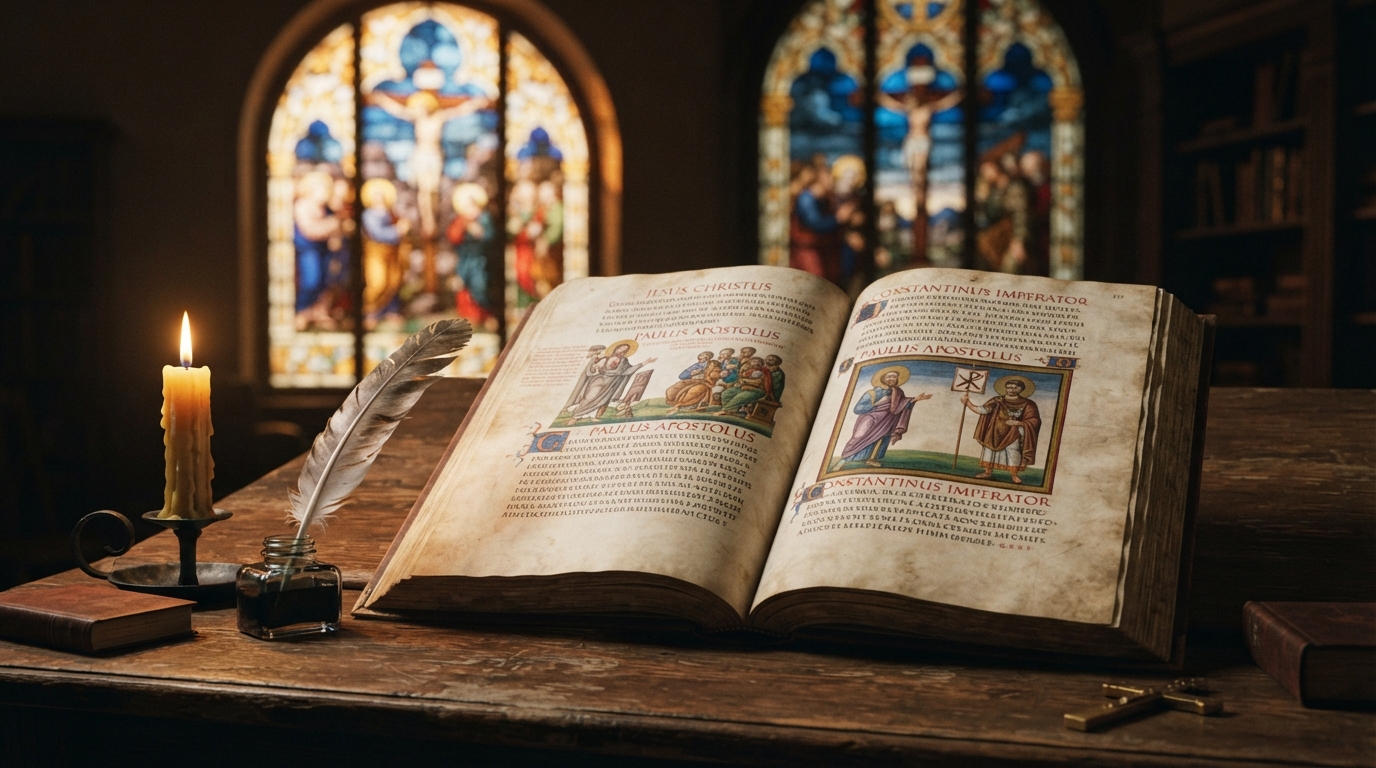
Key Takeaways
| Question people ask | Clear answer from history |
| Who is the founder of Christianity? | No single founder, Jesus of Nazareth inspired, Paul organized and spread, Constantine legalized and standardized later, about 300 years after the movement began. |
| Who invented Christianity? | Not one person, it developed from a Jewish movement that expanded through preaching, letters, and community life. |
| Did Constantine start Christianity? | No, Constantine did not invent Christianity, he legalized it in 313 AD and convened Nicaea in 325 AD. |
| Founders of Christianity, plural? | Common figures are Jesus, Paul, and Constantine, but the institutional doctrine stabilized much later. |
| Where does “founding” happen? | TrueCosmic emphasizes the founding in inner consciousness, the Christ as the awakened imagination, see Christ consciousness versus Christianity. |
| What is the practical path? | Persistent assumption, living in the end, and disciplined practice, not quick tricks. |
First, the historical answer: who founded Christianity, really?
If you ask for the founder of Christianity in the historical sense, the most honest answer is this, no one invented the whole movement as a finished product. The movement began in Judea, it carried Jewish roots, and it spread through teaching, letters, communities, and gradual institutional shaping.
Still, some figures matter greatly. The biblical figure commonly called the Jesus of Nazareth inspired the movement. Paul the Apostle did the most to organize and spread the theology beyond Judea. Emperor Constantine did not invent Christianity, he legalized it through the Edict of Milan in 313 AD and convened the Council of Nicaea in 325 AD, where doctrine became standardized, roughly three centuries after the religion already existed.
This directly corrects the popular myth that Constantine “invented” Christianity. He did not. He played a state role in legalizing and standardizing, and those processes can be confused with invention simply because people encounter the later institutional form first.
Why Constantine is often misnamed as “the founder”
The question “did Constantine start Christianity” gets asked because the name Constantine is tied to major church councils in popular memory. But legality and standardization are not the same as founding origin.
Here is the clean distinction. Constantine’s relationship to Christianity is better understood as state alignment with a movement that already had its own beliefs, its own texts in circulation, and its own communities across regions.
So when someone hears “Council of Nicaea,” they sometimes assume it created Christianity. In reality, the council is best viewed as doctrinal consolidation. It happened when the movement had already matured for generations through lived practice, debate, and regional differences.
Paul matters most for the expansion, but he was not the sole “founder”
If you search “founders of Christianity,” you will often land on Jesus and Paul, because Paul’s letters and mission journeys show a powerful organizer at work. Paul was historical, he wrote widely preserved epistles, and he carried the message into broader cultural contexts.
But Paul still did not “invent” Christianity from scratch. Paul worked within an existing Jesus movement, he interpreted it, he defended it, he systematized it for new audiences, and he spread it beyond Judea. That is why many people ask who is the creator of Christianity, and the answer they feel in their bones is “someone must have built the structure,” yet structure came through an evolution, not a single blueprint.
If you want to feel how TrueCosmic reads these patterns psychologically, we link the “outer events” to inner states. We teach that the biblical record often functions as a precise psychological map of consciousness, not only a chronological report, see Christ consciousness versus Christianity for how we separate orthodoxy from inward revelation.
The deeper pivot, TrueCosmic’s position: the “Christ” is not a monopoly
Now we step into our actual frame. Institutional Christianity has one contested founder in the way people often ask it, the founder of Christianity as a single historical person who “started it.” But the pattern the movement is named for, the Christ, is not a historical monopoly on any one body, city, or empire.
In TrueCosmic teaching, the Christ is the human imagination, and the God of scripture is your imagination. That means the name Christ points to an awakening state that can be symbolized in many traditions through different languages, but the inner mechanism stays recognizably the same.
So when you wonder “who invented Christianity,” from our perspective it is not just about who had the first meetings. It is about who entered the living state, who learned to hold an assumption until it crystallised into form.
If you want the esoteric Bible interpretation content we use, it goes like this. Esau is the outer world that constantly negotiates with your attention. Jacob is the inner imagining that decides the outcome before it appears. Israel is the awakened state that stabilizes the new sense of being.
This is why we emphasize inner founding. No matter what someone is facing, the solution already lives within them, and they are the one who has to activate that power through disciplined assumption.
Esoteric Bible meaning, Jesus, Paul, and the inner maker
We must be careful here. We do not force you into a debate about historicity in this article. We only use the roles that scripture and church history assign to these figures as symbolic anchors.
Still, the pattern is clear in how the messages land. The Jesus of scripture points you toward inward alignment. Paul represents the revelation of a mental configuration that stops begging and starts embodying. And Constantine represents how quickly outer institutions can become louder than inner truth.
TrueCosmic also connects all of this to the nature of God as imagination. When you read The Creator and The Nature Of God, you see the same law stated differently. Inner and outer creation correspond. The imaginal act is not decoration. It is the beginning of manifestation.
So if you keep asking who is the creator of Christianity, we will ask you a sharper question back. Are you asking who made a religion, or are you asking who makes the lived experience?
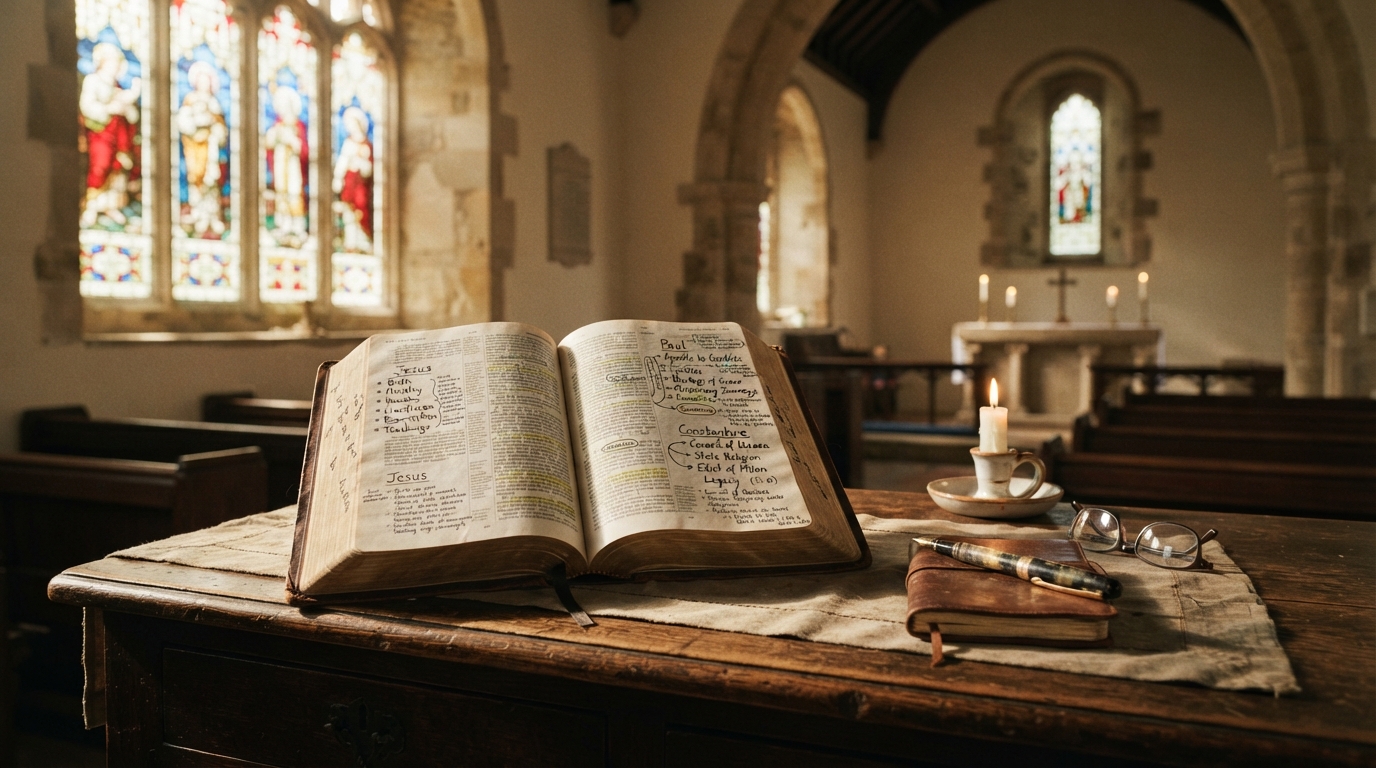
Practice the law, the way it actually works, not like a quick trick
Here is where many people fail, they treat the Law as an instant trick. Reject the intermittent efforts and the fast results myths. The Law is a discipline, not a button.
We teach this with a simple metaphor you can feel in your body, a blacksmith. A blacksmith does not strike a piece of metal once and declare it transformed. The blacksmith heats, checks, returns to heat, corrects the shape, and keeps working until the form holds.
Use that method for your inner “founding” process. When your current evidence contradicts your assumption, you do not panic and switch states. You reheat your imagination, you return to the living end, you persist until your inner map of consciousness becomes stable.
Blacksmith practice steps for assumption discipline
- Heat the right state, choose one clear inner condition that matches your wish fulfilled.
- Strike with attention, live as if the new identity is already normal, not emotional performance.
- Quench the doubt, notice the old evidence trying to pull your attention back, then stop feeding it your focus.
- Return daily, you do not “try once,” you cultivate persistent assumption, the way a forge is maintained.
- Let the new form settle, you do not force outcomes through strain, you allow the inner decision to set the direction.
In our approach, the work is internal. Your reasonable mind and outer senses may deny it, but if you persist, your assumption tends to find its way into experience.
Why “the founder of Christianity” keeps changing in people’s minds
Part of the reason this question never goes away is that institutions leave marks on history, and people confuse that mark with origin. Constantine, the councils, and standardized doctrine are visible. The slower inner work is not.
Many seekers today are done with surface-level religion. They still use the language of faith, but they are seeking the living method beneath it. This is exactly where Neville Goddard’s Bible interpretation can feel like a homecoming for people who were tired of fear-based orthodoxy.
If you struggle to accept this kind of Bible reading, we created a page about it. It includes the psychological transition many people face from traditional Christianity into Neville’s method, see Struggling To Accept Neville Goddard Bible Interpretation? Read This!
And if you want to connect the “inner maker” directly to daily practice, read Your Maker. It frames imagination as the place where your future is accepted first.

What Jesus, Paul, and Constantine each “founded” in their own way
Let us be precise, this is where “founder” language gets useful when you define it. Different people founded different layers.
- The Jesus of scripture inspired a movement and pointed toward inward transformation through the Christ pattern, even when later theology shifted focus.
- Paul the Apostle advanced theology beyond Judea and helped structure communities through letters, guidance, and mission.
- Emperor Constantine did not found Christianity, he enabled it in public life through legalization and shaped consolidation through Nicaea, later doctrine became more standardized.
So if someone asks “who is the founder of Christianity,” the historical answer is multi-part. If someone asks “who is the creator of Christianity” in a deeper sense, the answer we teach is: your consciousness creates your felt experience, and the Christ is your awakened imagination.
Conclusion: the founder of Christianity and the inner Christ you activate
The founder of Christianity is not a single name that cleanly resolves the whole story. Jesus of Nazareth inspired the movement, Paul the Apostle organized and spread its theology beyond Judea, and Emperor Constantine did not invent or found Christianity, he legalized it in 313 AD and convened Nicaea in 325 AD to standardize doctrine about 300 years later. That corrects the “did Constantine start Christianity” myth with historical clarity.
Then we pivot, because we are not only interested in origins on paper. Institutional Christianity has one contested founder, but the Christ pattern is not a historical monopoly. Esoteric wisdom shows the same psychology underneath many forms, Esau to outer negotiation, Jacob to inner imagining, Israel to the awakened state.
No matter what someone is facing, the solution already lives within them, and they are the one who has to activate that power through disciplined assumption, living in the end, and persistence until the inner decision holds. That is the founding we cannot skip, it happens inside the one who chooses a new state, and it shows up outside once that choice takes hold.
Frequently Asked Questions
Who is the founder of Christianity?
The founder of Christianity is best answered as a multi-part origin, the movement was inspired by the Jesus of scripture, expanded greatly through Paul the Apostle, and later institutional doctrine was consolidated under Emperor Constantine. No single person “invented” the entire religion, and the deeper “Christ” pattern is understood inwardly in the TrueCosmic model.
Who invented Christianity?
Who invented Christianity is not a fair single-name question, because Christianity developed out of an existing Jesus movement and spread through communities and writings over time. Constantine is sometimes credited with invention, but historically his role was legalization and doctrinal standardization after Christianity already existed.
Did Constantine invent Christianity or did Constantine start Christianity?
Constantine did not invent or found Christianity. He legalized it in 313 AD via the Edict of Milan and convened the Council of Nicaea in 325 AD to standardize doctrine centuries after the faith had already formed.
Did Constantine choose the Bible’s books?
The idea that Constantine directly chose the Bible’s books is a common misconception. Councils and church leaders influenced what texts were widely used, but the New Testament canon emerged through a broader and gradual process, not a single moment where Constantine picked every book.
Who wrote most of the New Testament, Paul?
Most of the New Testament letters attributed to specific authors include a large portion written by or associated with Paul the Apostle, depending on how you classify debated texts. When people ask who wrote most of the New Testament, they are usually pointing to Paul as the dominant letter writer among the traditional attributions.
What did the Jesus of scripture actually found, and what did the institution become?
The Jesus of scripture inspired the movement and pointed toward inward transformation through the Christ pattern. Over time, the institution became a structured religion with doctrine, councils, and schools of interpretation, which is why the identity of “founders” becomes contested.
No matter what you are facing, the answer is not somewhere out in history books to be settled by a debate. It is already alive in your own awareness. The same power that shaped the whole of creation is available to you, right now, and only you can put it to work. Do that, and no circumstance holds its ground for long. There is nothing here to fear.

Michael Sutherland is the founder of Truecosmic, a global platform dedicated to Neville Goddard’s teachings and the Law of Assumption. Passionate about empowering individuals through conscious creation, Michael blends esoteric wisdom with practical insight to help people transform their lives from within.
Michael Sutherland is the founder of TrueCosmic and a devoted student and practitioner of Neville Goddard teachings. His path to this work was not academic — it was forged in crisis.
Raised as a devout Jehovah Witness and Baptist, Michael walked away from the church at eighteen and spent the next 25 years in what scripture calls the far country — the prodigal son, wandering. He built a life by the world rules, searching without knowing what he was searching for.
When the biggest crisis of his life arrived, he turned back — not to the church, but to scripture itself. Through Neville Goddard teachings he found what the church had never shown him: that the God of scripture is not an external being to be feared and appeased. God is your own awareness. Your own consciousness. Your own imagination. The I AM within.














0 Comments