

The Tower of Babel meaning I was handed as a child was a warning about pride in bricks and mortar. The meaning I live by now is far closer to home. In my search for the truth I wandered down many dead-end alleyways, as I call them: numerology, energy work, the Law of Attraction, crystals, to name a few. Each one spoke with its own voice, and each voice told me a different way.
Then I found the pearl of great price. I had to sell every other belief but one: that my consciousness, my awareness, my very I AM-ness is the God spoken of in scripture. I tell that as my own journey, not as a verdict on anyone else’s path. Many sincere people find real comfort in the places I passed through. For me they were rooms in a city I eventually had to leave.
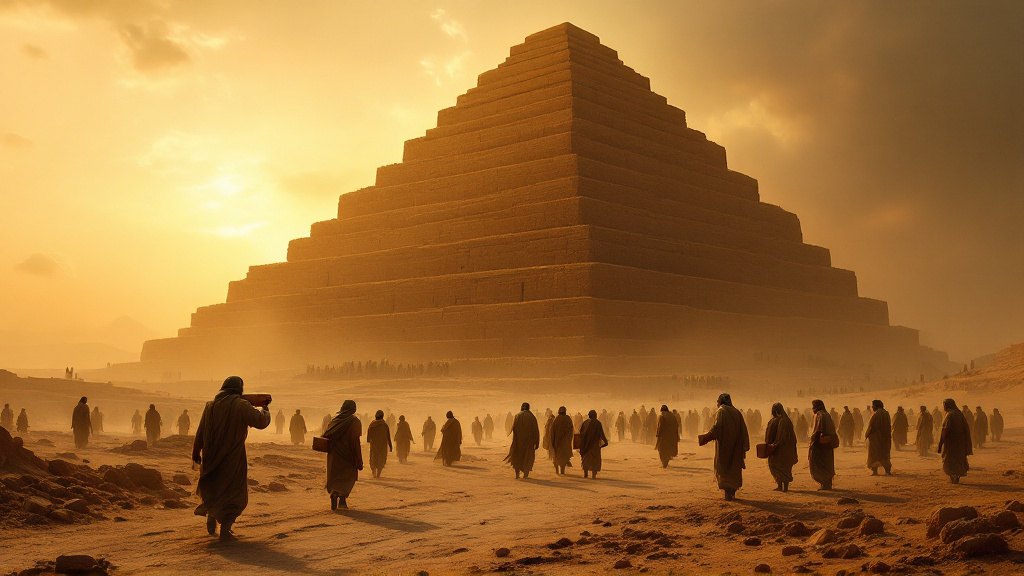
On this blog I read the Bible as a vessel of meaning rather than a record of events. The sages who shaped these pages could have written chronicles; they chose story, because a story can carry a truth past the guard of the reasoning mind. Our task is to unwrap it with care. What lies inside is never really about a vanished city on a Mesopotamian plain: it is a portrait of you, and in recognising yourself there a power that has long lain dormant begins to stir.
I write for those who still hold the Bible as sacred but have grown weary of how it was taught to them, or of the hypocrisy they met in religious institutions. None of this is an attack on faith. If you read Genesis literally, you are honoured here, and that reading is a genuine first rung; but it is a rung, not the summit, and in time it gives way to the inner reading, just as the elder serves the younger in the story of Esau and Jacob.
How tall was the Tower of Babel? The honest answer
People often ask how tall the Tower of Babel was, and the honest answer is that scripture never says. Genesis gives no height, no measurements and no number of storeys. It records only the builders’ ambition:
“And they said, Go to, let us build us a city and a tower, whose top may reach unto heaven; and let us make us a name, lest we be scattered abroad upon the face of the whole earth.” (Genesis 11:4, KJV)
Any figure you meet elsewhere comes from later tradition and speculation, not from the text itself. And that silence is telling. A story that cared about engineering would have given us dimensions, as Genesis does for Noah’s ark. This one gives us an aim instead: a top that may reach unto heaven. The writers were not describing a structure. They were describing a direction of the mind.
The story as Genesis tells it
The account is short, only nine verses at the opening of Genesis 11. It begins in unity: “And the whole earth was of one language, and of one speech” (Genesis 11:1, KJV). The people journey east, settle on a plain in the land of Shinar, and resolve to build.
Their materials are worth noticing: “And they said one to another, Go to, let us make brick, and burn them throughly. And they had brick for stone, and slime had they for morter” (Genesis 11:3, KJV). Not quarried stone, but bricks of their own making, held together with slime.
Then the LORD comes down to see the city and the tower, and the response is not fire or flood but something quieter and stranger: “Go to, let us go down, and there confound their language, that they may not understand one another’s speech” (Genesis 11:7, KJV). The building stops. The people are scattered. And the place receives its name:
“Therefore is the name of it called Babel; because the LORD did there confound the language of all the earth: and from thence did the LORD scatter them abroad upon the face of all the earth.” (Genesis 11:9, KJV)
Read as history, it is an account of how the nations came to speak different languages. Read from within, it is something far more personal.
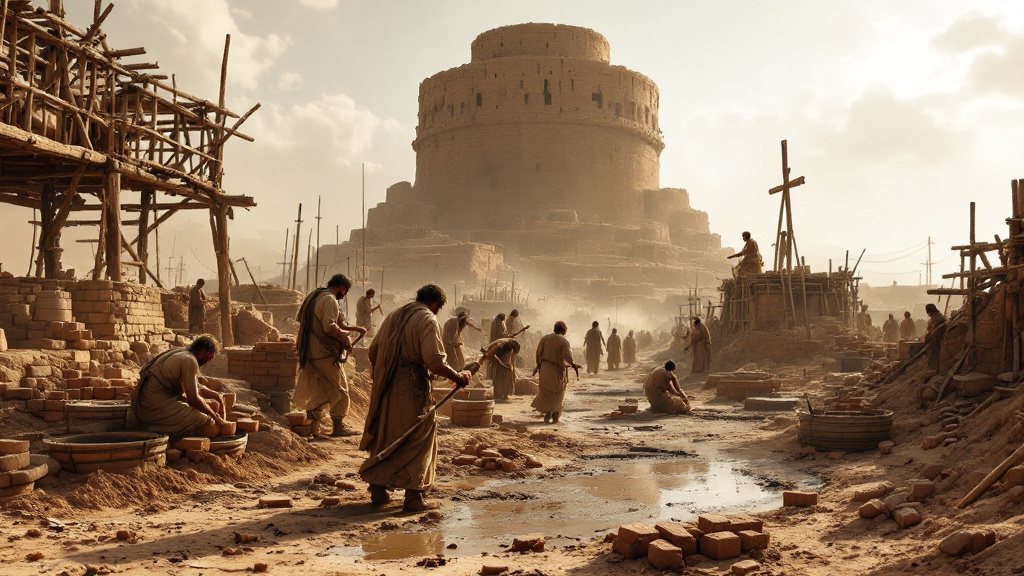
The Tower of Babel meaning: a state of mind, not a building
Neville Goddard did read Babel inwardly, and he was explicit that the confusion of tongues was not about French, Hebrew or Greek. In his lecture “The First Principle” he put it this way:
“if someone tells you: “This is the way,” and another says: “No. This is the way,” and they don’t agree – you are in Babel, a city of confusion in the pathway of the spirit.”
That single sentence turns the whole story inside out. Babel is not somewhere you visit on a map. It is the condition you enter whenever competing voices pull you in opposite directions about what is true, what is possible and who you are. One teacher says do this; another says never do that. One method promises the answer; the next contradicts it. The mind becomes a building site where no two workers understand each other, and nothing gets finished.
I know that city well. Each of my dead-end alleyways had its own vocabulary, its own rules and its own promise. Individually they were not foolish. Together they were a confusion of tongues, and I was the one standing in the middle trying to obey all of them at once.
Notice, too, the building materials. The builders made bricks for themselves and bound them with slime. Inwardly, these are the beliefs we fashion by our own effort and borrow from every passing voice, then try to stack high enough to reach heaven. The mystic Manly P. Hall, in The Secret Teachings of All Ages (1928), turned the same image on the religious systems of his day:
“The great theological Tower of Babel, with its confusion of tongues, was built of bricks of mud and the mortar of slime.”
Hall’s quarrel was with dogma, not with the people caught inside it, and so is mine. The tower is any structure of second-hand belief raised to reach God from the outside. It can never succeed, because the God it seeks was never above the clouds in the first place.
Why the tower always falls
The builders wanted to “make us a name.” That is the heart of the matter. They were trying to climb to heaven by their own construction, as if the divine were a summit to be scaled rather than a presence to be recognised. When God was revealed to Moses, the name given was not a destination but a statement of being: “I AM THAT I AM” (Exodus 3:14, KJV).
You do not build your way up to I AM. You are already standing in it. Every time you say “I am,” you speak the very name the builders were trying to reach. So the tower falls, not as a punishment, but because it was always aimed in the wrong direction. The scattering is mercy of a kind: it breaks the spell of the outer search and sends you looking somewhere else.
This is why I describe the dead ends as necessary rather than shameful. Each one taught me what the truth was not. Only when the tower of borrowed voices had collapsed could I hear the one voice that had been speaking all along.

The way out of Babel: the pearl of great price
If Babel is the confusion of many voices, the way out is not a better voice from outside. It is the decision to sell everything for one truth. The Jesus of scripture tells it in two short verses:
“Again, the kingdom of heaven is like unto a merchant man, seeking goodly pearls: Who, when he had found one pearl of great price, went and sold all that he had, and bought it.” (Matthew 13:45 to 46, KJV)
Neville did not, as far as the transcripts on our site show, connect this parable to Babel, so the pairing that follows is TrueCosmic’s own reading. The merchant had been seeking goodly pearls, plural, which is exactly what I was doing. When he found the one of great price, he did not add it to his collection. He sold all that he had. One pearl replaced many.
Hall shows how ancient this image is. Writing of the old initiates in the chapter “The Sun, A Universal Deity”, he says:
“Thus the seeker after truth became a pearl-fisher: he descended into the sea of material illusion in search of understanding, termed by the initiates “the Pearl of Great Price.””
For me the pearl was the realisation that my own awareness of being is the God spoken of in scripture. Selling everything for it did not mean despising what I had explored. It meant I could no longer serve two masters. When the I AM is your one truth, the many voices lose their authority over you, and the city of confusion simply empties. If you want a fuller picture of that one truth in practice, our guide to the Law of Assumption sets it out step by step.
How to apply the meaning of Babel
- Notice when you are in Babel. When you feel pulled between opposing instructions about your life, name it: “I am in the city of confusion.” Recognising the state is the first step out of it.
- Count the voices. Write down the methods, rules and opinions you are currently trying to obey. Seeing them on one page often reveals how many contradict one another.
- Choose your pearl. Return to the one principle beneath them all: your own I AM is the creative power. Let every other belief be measured against it, and quietly let go of what cannot stand beside it.
- Decide the end, not the route. Settle on one outcome you desire and refuse to dictate how it must arrive. The voices of Babel love to argue about methods. Leave the method to the intelligence within you.
- Enter the scene each night. In the drowsy state before sleep, step into one short scene that would only happen if your wish were already fulfilled. Hear one line of dialogue, feel it as done, and fall asleep inside it.
This is a practice, not a trick. Think of a language learner. Nobody becomes fluent by memorising a phrasebook over a weekend; they listen, stumble, repeat and return to the language day after day, until one morning they find they are thinking in it. Living in the I AM is the same. You learn to speak from the wish fulfilled through steady, devoted return, not through one dramatic attempt.
The commonest way back into Babel is micromanagement: deciding not only what you want but exactly how it must come. That is the old tower again, a plan of your own bricks pushed towards heaven. Decide the end, and leave the road open.

When you unwrap this story, something changes in the way you listen. The world does not grow quieter, but you become like someone who hears one clear voice above the noise of a crowded room. The chatter goes on around you, yet it no longer commands you, because you have recognised the voice that was always yours: the I AM. That recognition is the dormant power waking. For more on how that power works in everyday life, see what manifesting really is.
Frequently Asked Questions
How tall was the Tower of Babel?
The Bible does not say. Genesis 11:4 describes only “a tower, whose top may reach unto heaven,” with no measurements of any kind. Any height you read elsewhere comes from later tradition and speculation, not scripture, and the inner reading suggests the writers cared about the direction of the builders’ minds rather than the size of their tower.
What is the spiritual meaning of the Tower of Babel?
Read inwardly, Babel is a state of mind: the confusion that comes from trying to obey many competing voices about what is true. The tower is the structure of borrowed belief we build to reach God from the outside. The way out is to return to one truth, the I AM within you.
Is it heresy to read Babel as a state of consciousness?
Reading scripture for its hidden sense is very old; Origen, one of the most influential early Christian teachers, taught that the Bible has an inner meaning beneath the letter. But the literal reading is where we begin, not where we stay, and it gives way to the inner one. Recognising that shift for yourself is often the very moment transformation begins.
What did Neville Goddard say about the Tower of Babel?
In his lecture “The First Principle,” Neville said that when one person tells you “This is the way” and another contradicts them, “you are in Babel, a city of confusion in the pathway of the spirit.” He made clear he was not talking about the many languages of the world but about conflicting voices on the spiritual path.
What does the pearl of great price have to do with Babel?
In TrueCosmic’s reading, the pearl is the remedy for Babel. The merchant in Matthew 13 stops collecting many pearls and sells everything for one, just as the seeker leaves the city of many voices for one truth: that their own awareness of being is God.
Conclusion: leaving the city of confusion
The Tower of Babel meaning is not hidden in the ruins of an ancient plain. Genesis gives no height because the tower was never about height; it was about a mind straining upward through borrowed voices, and the confusion that always follows. The way out is the merchant’s way: sell everything for the one pearl.
Whatever you are facing today, you do not need another voice from outside to tell you the way. The answer is already within you, carried by the same power that brought the whole universe into being, and it waits on your word. You alone are the operant power; it is yours to awaken, and once you do, no circumstance, however loud, can stand against it. Fear not.

Michael Sutherland is the founder of Truecosmic, a global platform dedicated to Neville Goddard’s teachings and the Law of Assumption. Passionate about empowering individuals through conscious creation, Michael blends esoteric wisdom with practical insight to help people transform their lives from within.
Enter your email and get instant FREE access to your report.
No credit card required. 🔒 Your details are secure. You can unsubscribe at any time.















0 Comments