
In 2020, during the first COVID lockdown, I tore my rotator cuff.
The pain was extreme. Hospitals were closed to non-emergency cases. Surgery was not accessible. I had no idea when I would be able to get proper treatment. I was in severe pain with almost no options.
So I used a technique I had been practising for years. A simple phrase. Over and over, in a relaxed state, with as much feeling as I could bring to it:
“I remember when my shoulder was injured. I remember when I was in that pain. I remember when I couldn’t move my arm properly.”
Spoken as a memory. As something already in the past. As a chapter that had already closed.
I recovered without surgery.
I am not telling you this to make an extraordinary claim. I am telling you this because it is what happened, and because this technique deserves to be understood for what it actually is — not a positive thinking exercise, but a precise inner tool for shifting the assumption your subconscious is operating from.
“I remember when” is a simple phrase that many people use to shift inner belief, so their present begins to feel more like the outcome they want. TrueCosmic traces this approach back to Neville Goddard, where imagination becomes the tool for changing how you experience your life.
Key Takeaways
- You repeat “I remember when” to mentally place your past as something that has already changed.
- You do the technique in a good mood (or at least relaxed), because emotional heaviness can muddy the effect.
- You name the desire, then phrase it as something you have already learned to live with.
- After you do the practice, you keep moving through your normal day without obsessing.
What the “I Remember When” Technique Really Does
The core idea is straightforward. When you say “I remember when …” you use imagination to convince your mind that your present is better than your past. Instead of treating your old situation as proof that it will continue, you frame it like a memory from a time you have already surpassed.
In the Truecosmic understanding of this method, the subconscious responds by treating your new emotional reality as the direction you are already walking in. That is why you will often hear people connect the technique to outcomes like more stability, healthier conditions, and improved money mindset.

Step 1: Use the Phrase in the Right Emotional State
Start practicing the wording in daily life. The first emphasis is on mood. Neville Goddard’s inspired approach in this technique asks you to do it when you feel ecstatic or, at minimum, calm and relaxed. Trying it during a gloomy moment can lead to an opposite effect, because the emotional tone matters.
Here is how to frame your early practice. Keep the “bad” parts as memories in the past, and bring the “good” parts into the present through the way you speak. You are not pretending reality is fake, you are training your inner assumption about what life feels like now.
Example framing: “I remember when I struggled to have enough money for myself.” (You say it like a memory of an earlier phase, not a prophecy.)
Many people begin with small comparisons. If, in the past few years, you earned around $1,000 and now your salary is about $1,100, you can use the technique to make your mind recognize the improvement as something already real. That is the practice foundation.
Step 2: Identify Your Desire, Then Speak It as “Already True”
Once you can say “I remember when” naturally in a good mood, you shift to a specific desire. This is where you make your mind rehearse a new identity around what you want.
Choose the wish you are trying to manifest, then start affirming statements that imply you already possess the state you want. In this technique, the language matters because it compares two situations, the “then” and the “now.” You feel the past tension, then you feel relief as if the present version is yours.
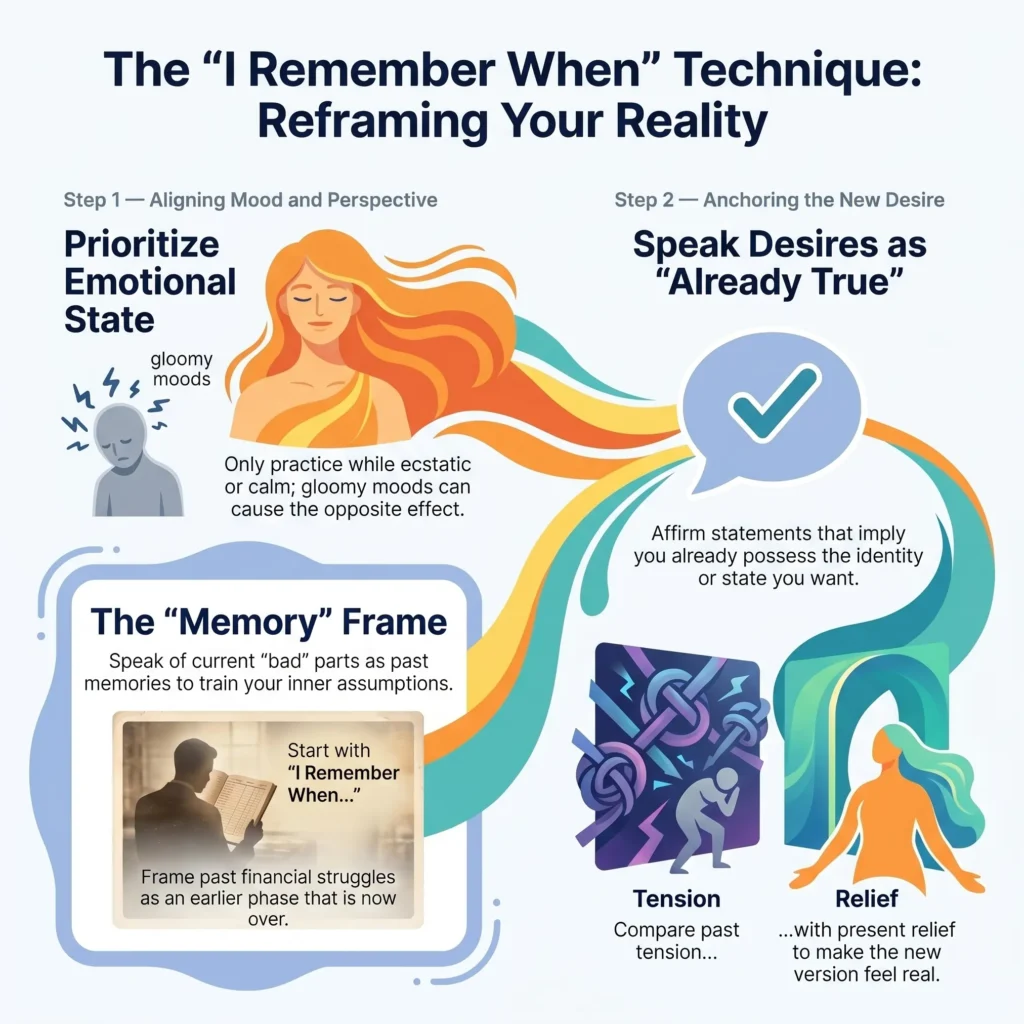
Health example (as in the Neville-style instruction)
If your desire is health, you might use lines like these, structured exactly as memories of a time you no longer live in:
- I remember when I was not healthy enough to walk by myself.
- I remember when manifesting health for myself wasn’t easy.
Notice what you are doing. You are not only stating a goal, you are “placing” your past experience as something that has been resolved. You compare, you release the old strain, and you allow the new condition to feel believable.
And yes, it is not typically a one-time ritual. Truecosmic’s Neville-inspired guidance emphasizes practice. Even a short session, like two minutes, can work if you genuinely feel the meaning behind “I remember when.”
Step 3: Let It Go and Return to Your Day
The last step is release. After you do the statements, you do not hover in analysis or try to force the result with obsession. Instead, you go about your usual routine as you normally would.
In the Neville Goddard framing behind this method, you do your part through imagination and inner assumption, then you allow the universe to respond from there. This is why the technique often feels powerful for people who struggle with constant worrying, because it gives you a clean “do it, then drop it” structure.
If you find yourself re-playing old worries all day, that is a sign you have more work to do on maintaining the inner “present is better” feeling after the practice.
Applying “I Remember When” for Money, Health, and Anxiety Relief
This technique is especially used when you want to rewrite how you see your future. When you repeat “I remember when” in a way that suggests money or well-being has already improved, your subconscious mind starts to believe you are already in motion toward that outcome.
For example, the money logic in the technique goes like this. If your inner belief becomes “I started earning a lot, therefore I have a lot,” then you act as though wealth is something you already belong to. People often notice that this belief invites further alignment, because your mental environment stops arguing against it.
For health desires, the method works similarly. You compare the “then” (when you were not healthy) with the “now” (when walking, living, and daily routines feel good). You add feeling, not just words, so relief becomes part of the inner rehearsal.
Truecosmic also positions this practice as an antidote to future anxiety. If you constantly feel tense about what might happen, “I remember when” gives your mind a new story to inhabit, one that expects peace in the present rather than fear in the unknown.
How to Build Consistency (A Simple Daily Routine)
Because this technique relies on inner feeling, consistency matters more than length. A short practice you repeat often usually outperforms a long practice you do inconsistently.
A practical routine you can use
- Pick a relaxed time. Morning, lunch break, or before sleep can work well.
- Say the “I remember when” phrase first. Let it bring you into the memory-based feeling.
- Add your desire. Use two lines that imply the past has already changed.
- Feel the contrast. Experience the old tension, then the relief of the present outcome.
- Release. Once you finish, return to your normal day without re-checking worries.
If you want more foundation for this style of practice, explore Manifestation 101, which supports beginners with practical steps for building consistent skills.
Truecosmic Resources to Support Your Practice
If you want to deepen your understanding of how inner state shapes outer experience, Truecosmic offers multiple Neville Goddard inspired materials that complement the “I remember when” technique.
Neville Goddard: The Law and The Promise
This resource explores living in the end and the inner condition required for manifestation. It aligns well with the “then and now” comparison inside “I remember when.”
Neville Goddard: Imagination Creates Reality (Audiobook)
If you prefer listening, the audiobook edition supports the key concept that imagination shapes reality through living in the end.
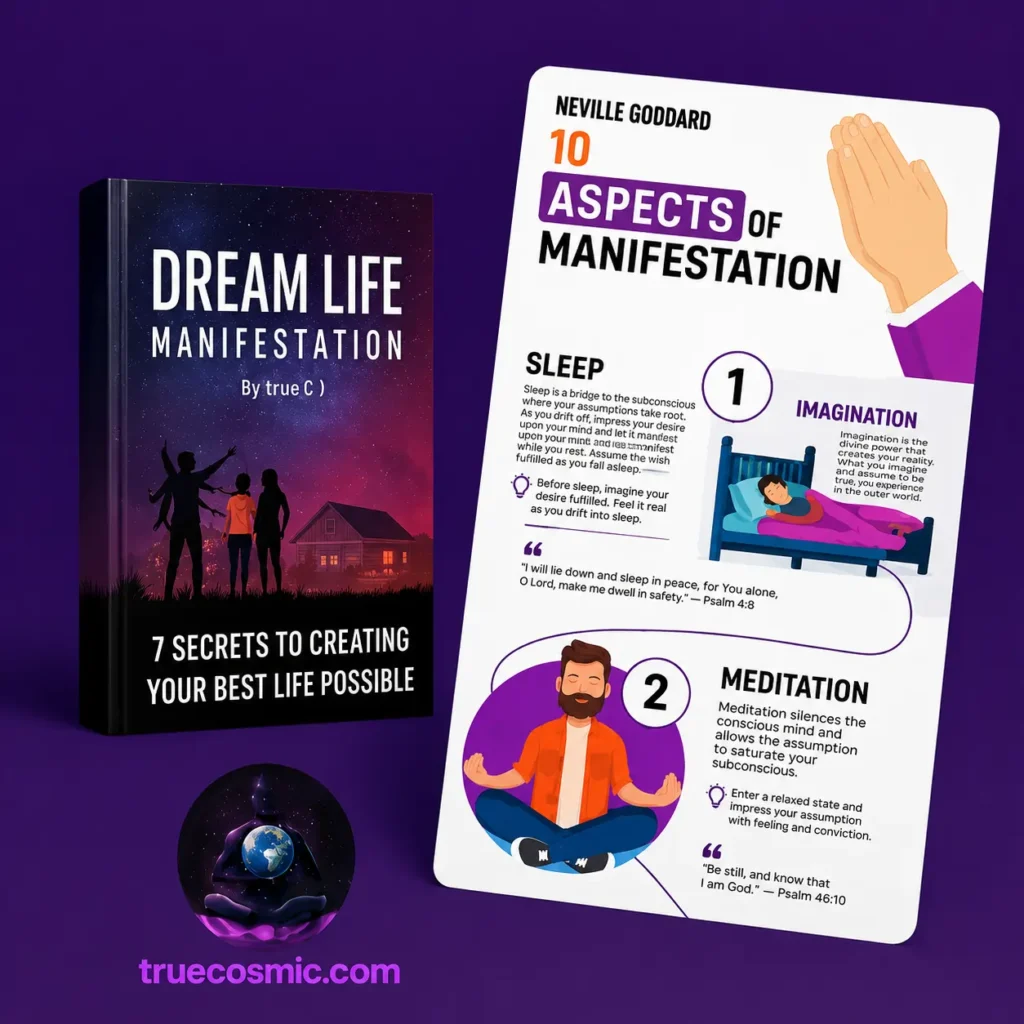
Dreamlife Manifestation Ebook
This ebook takes a “dream-life” framing and offers strategies for aligning daily life with desired outcomes, which pairs naturally with repeating your “I remember when” lines in real time.
Neville Goddard Manifesting Tip
For quick reinforcement, this page focuses on how inner states influence outer experience and stresses persistence even when appearances do not match yet.
If you want more Neville-style guidance, browse Neville Teachings and also explore Law of Attraction for related ideas in the Truecosmic catalog.
And if you enjoy identity-focused work, you may also find it helpful to connect this technique with state-based inner reframing through Learn Proven Identity Reframing Techniques Today.
Common Questions About “I Remember When” Manifestation
Q: Do I need to visualize while saying it?
A: Visualization is not required for the technique as written here. The emphasis is on imagination and feeling the contrast between a past you have resolved and a present you now live in. If visualization helps you feel it more vividly, use it, but do not force it.
Q: What if I do not feel happy when I practice?
A: The inspired instruction is to use it when you are ecstatic or at least relaxed. If you feel heavy or gloomy, pause and choose a better time. The emotional tone supports the effect.
Q: How long should I practice?
A: Practice is the key. The method notes that even two minutes can be enough when you genuinely feel the “I remember when” statement and the relief of the desired present.
Q: Should I keep thinking about my desire after I finish?
A: No. After you do the technique, release and keep going with your day. This approach avoids obsessing and relies on the inner shift you made during the practice.
Conclusion: Use the Past as a Memory, Live the Present as the Change
The “I remember when” manifestation technique is powerful because it changes what your mind treats as real by turning your past into a finished chapter. When you say the phrase in a relaxed, positive state, identify the desire, and feel the relief of the now, you train belief from the inside out.
Try it consistently. Do a short session, make it meaningful, and then let it go. If you want additional support for inner-state work and Neville Goddard teachings, explore the resources in the Truecosmic catalog, starting with Manifestation 101.

To learn more about Neville Goddard’s life and complete body of work, read our definitive guide: Neville Goddard — The Complete Guide.

Michael Sutherland is the founder of Truecosmic, a global platform dedicated to Neville Goddard’s teachings and the Law of Assumption. Passionate about empowering individuals through conscious creation, Michael blends esoteric wisdom with practical insight to help people transform their lives from within.















0 Comments